
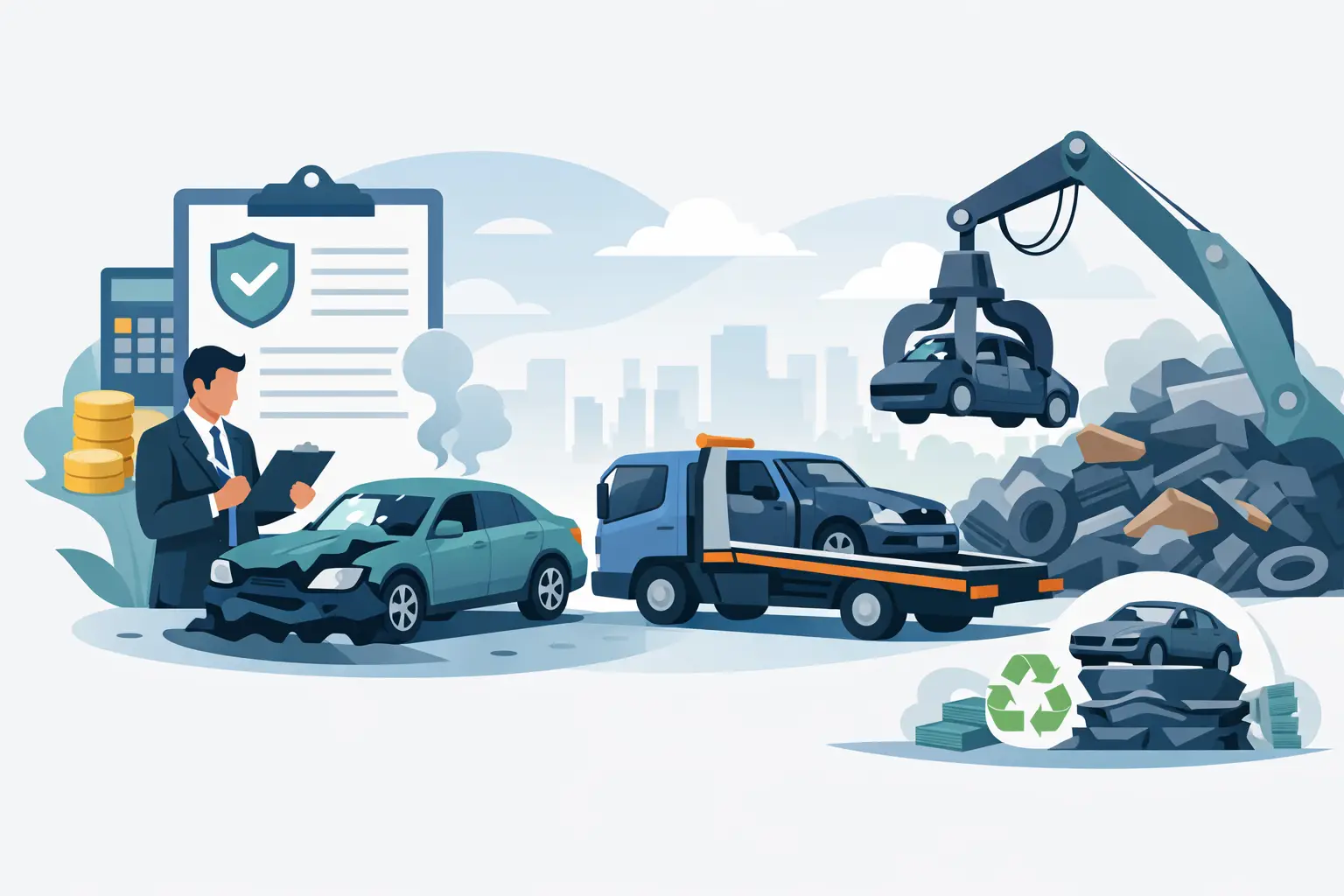
One phone call from your insurer can leave you with a lot to sort out very quickly. If your car has been declared a scrap insurance write off, the main questions are usually simple: can you keep it, who collects it, what paperwork matters, and how do you make sure you are not left out of pocket.
A write off does not always mean the same thing in every case, and that is where people get caught out. Some cars are suitable for repair and return to the road. Others are only fit to be dismantled and recycled. Knowing the difference helps you avoid delays, wasted time, and the wrong decision on payout or disposal.
What a scrap insurance write off actually means
A scrap insurance write off is a vehicle your insurer has decided is not worth repairing, or should not go back on the road. That decision is usually based on repair costs, the car’s market value, and the extent of the damage.
If the numbers do not stack up, the insurer may class the vehicle as a total loss. In practice, that means they settle the claim instead of paying for repairs. What happens next depends on the insurance category given to the vehicle.
In the UK, the category matters more than the phrase write off. A damaged car may still be repairable, or it may be suitable only for scrap. If it falls into the scrap-only side of the system, the route is much more straightforward: the car should be recycled through an authorised process and not put back on the road.
Which insurance write off categories mean scrap?
The categories most people hear about are A, B, S and N. For a true scrap insurance write off, Category A and, in practical terms for private sellers, often Category B are the key ones to understand.
Category A
A Category A vehicle must be crushed in full. It has suffered such serious damage that no part of the vehicle should be reused. If your insurer gives the car this category, it is scrap, full stop.
Category B
A Category B vehicle is also not allowed back on the road. The shell must be crushed, although some components may be removed before that happens. For most private owners, the important point is simple: it cannot be repaired for road use.
Category S and Category N
These are still write offs, but not necessarily scrap. Category S means structural damage. Category N means non-structural damage. Both can sometimes be repaired and used again if repaired properly and legally. That is why not every insurance write off should be treated as a scrap vehicle.
Why insurers choose to write a car off
People often assume a write off means the car is destroyed beyond recognition. Sometimes that is true after a serious accident, flood, or fire. But quite often the decision is financial rather than dramatic.
Modern cars are expensive to repair. Labour costs are high, parts are costly, and even moderate damage can push the repair bill beyond the car’s pre-accident value. Add storage charges, recovery fees, and administration, and an insurer may decide it makes no financial sense to repair a car that still looks fairly ordinary from the outside.
That can be frustrating if the vehicle was driving well before the accident. But from the insurer’s point of view, the decision is based on economics and risk, not sentiment.
What happens after your car is declared a scrap insurance write off
Once the insurer confirms the vehicle is a total loss, they will usually make a settlement offer based on the market value of the car before the damage. If you accept, they normally take ownership of the vehicle. From there, collection and disposal are arranged through their salvage process.
If you are dealing with a scrap-only category, there is not much room for negotiation on keeping the vehicle for future road use. The main thing is to check the valuation carefully and make sure the insurer has taken account of the car’s age, mileage, condition, service history, and any genuine extras that add value.
It is also worth confirming whether the insurer expects you to provide documents such as the V5C logbook, keys, and proof of identity. Small admin delays can hold up payment, and most owners just want the matter closed quickly.
Can you keep a scrap insurance write off?
It depends on the category. With Category A, no. With Category B, the vehicle itself cannot return to the road, and private owners generally do not have a practical reason to retain it. With Category S or N, keeping the vehicle may be an option, subject to the insurer’s terms.
This is where confusion often starts. Many people use write off as a catch-all term, but legally and practically there is a big difference between a repairable insurance loss and a scrap-only vehicle. If your insurer has said the car is for scrap, ask them to confirm the category in writing so you know exactly where you stand.
How scrap value fits into the payout
When a car is classed as a total loss, the insurer’s settlement is usually based on market value, not what you originally paid. Scrap value sits in the background as part of the insurer’s salvage calculation.
If the insurer keeps the vehicle, they recover whatever salvage value remains through their disposal channels. If there is any option for you to retain the vehicle in a non-scrap case, the final payment may be reduced to reflect that retained salvage value. For a genuine scrap insurance write off, the process is usually more controlled because the vehicle has to follow the correct disposal route.
This is why owners sometimes feel the offer is lower than expected. The issue is not just damage. It is what the vehicle was worth immediately before the loss, compared with what the insurer expects to recover afterwards.
If the insurer is not collecting the vehicle
Most insurers will arrange removal, but not every situation runs smoothly. Storage deadlines, access issues, missing documents, or a vehicle sitting at home rather than in a recovery yard can all slow things down.
If you need the car removed quickly, a professional scrap collection service can make life much easier, provided ownership and insurer authority are clear. The key is making sure the vehicle is released properly and the paperwork matches the insurer’s position. You do not want a car disappearing from your driveway while the claim is still in dispute.
For owners in Peterborough, speed often matters as much as price. A damaged or non-running car taking up space is a headache, especially if it cannot be driven and the claim has already dragged on. Fast collection and straightforward paperwork support can remove a lot of that stress.
Paperwork you should not ignore
The paperwork around a scrap insurance write off is usually less complicated than people fear, but it still matters. You should make sure the insurer confirms the total loss category, the agreed valuation, and whether they or another party are collecting the vehicle.
You may need to hand over the V5C, though the exact process can vary depending on how the disposal is being handled. Keep copies of any correspondence and make sure you have written confirmation once the vehicle has been transferred or collected. If the car is being scrapped, you want a clear record showing you are no longer responsible for it.
If there is private plate retention, outstanding finance, or missing documents, deal with those issues early. They can slow everything down if left until collection day.
Common mistakes to avoid with a scrap insurance write off
The first mistake is assuming every write off is scrap. It is not. The second is accepting the insurer’s valuation without checking local market comparisons for similar vehicles. The third is letting the vehicle sit for weeks because nobody is certain who is meant to move it.
There is also the practical issue of access. If the car is badly damaged, parked awkwardly, or has no wheels, collection needs planning. A decent service will ask the right questions up front so there are no surprises when the driver arrives.
Finally, do not overlook cancellation or transfer of insurance and vehicle tax once the matter is settled. People focus on the damaged car itself and forget the admin attached to it.
When scrapping is the simplest option
If your vehicle is clearly beyond economical repair, non-running, badly damaged, or assigned a scrap-only category, there is rarely any benefit in dragging the process out. The best outcome is usually a fair settlement, prompt collection, and proper disposal with the paperwork dealt with correctly.
That is exactly why many owners prefer a no-fuss service. They do not want to chase recovery firms, argue over logistics, or wonder whether the vehicle has been handled properly. They want a clear price, free collection, and payment without delays. Scrap Cars Peterborough works in that same straightforward way, which is what most people need when a car has already caused enough disruption.
If you have been told your car is a scrap insurance write off, the smart move is to get the category confirmed, check the valuation properly, and make sure collection is handled by people who know the process. The faster the loose ends are tied up, the sooner the whole thing stops being your problem.
Leave a Reply