
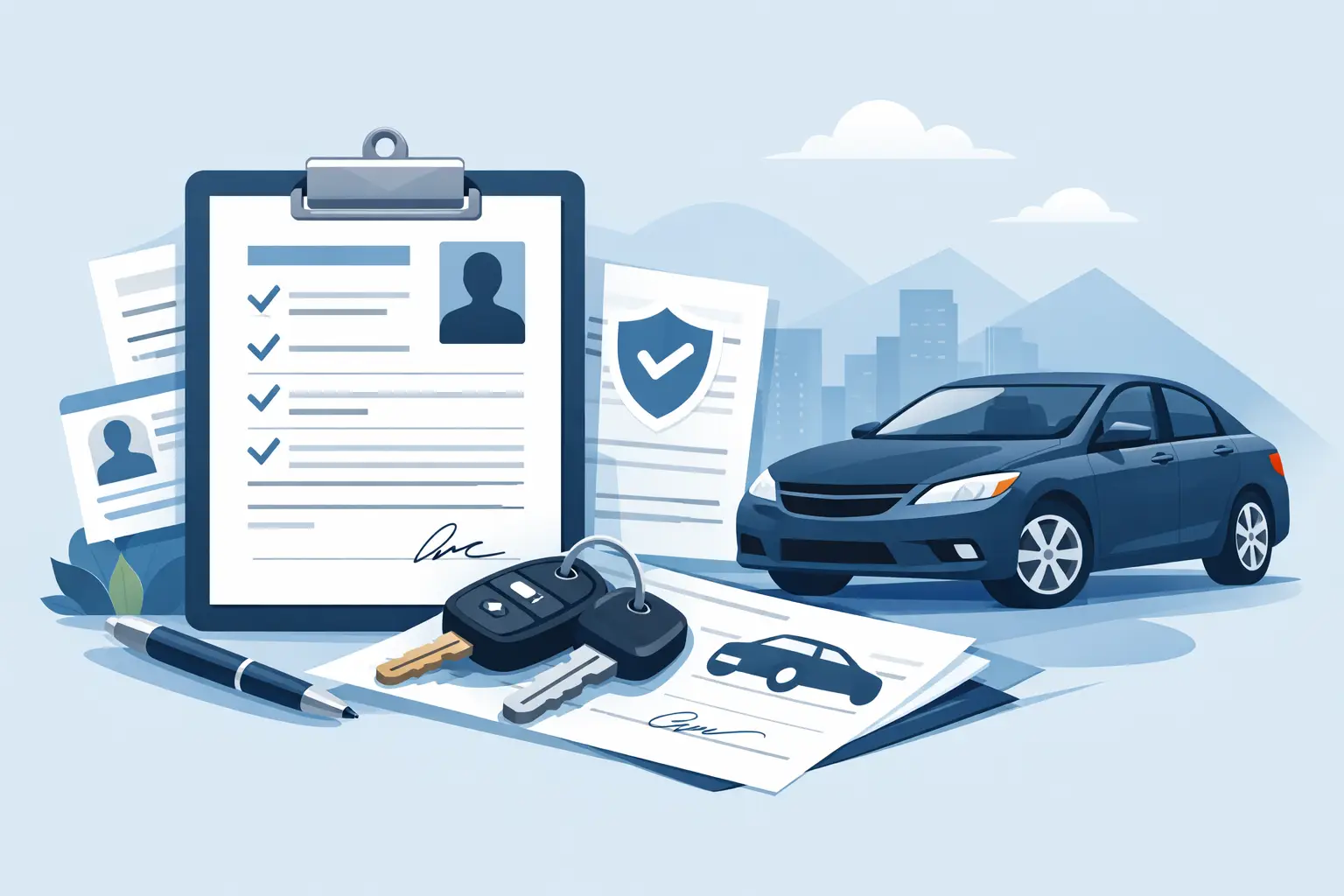
When your car is ready to go, the last thing you want is a delay because someone asks for paperwork you were not expecting. Knowing the documents needed for car collection before the driver arrives saves time, avoids stress, and helps the whole process move quickly.
If your vehicle is old, damaged, non-running or already sitting on the drive taking up space, collection should feel simple. In most cases, it is simple – but only if the basic paperwork is ready. Some documents prove the vehicle is yours to sell. Others help the collection and payment process run properly. And if something is missing, that does not always mean the collection cannot go ahead.
Documents needed for car collection in the UK
For most UK vehicle collections, the key document is the V5C logbook. This is the main proof that you are the registered keeper, and it gives the buyer or recycling service the details needed to process the vehicle correctly. If you have the V5C, keep it ready for collection day.
You will also usually need photo ID. A valid driving licence or passport is commonly accepted. This helps confirm that the person handing over the vehicle matches the booking details. In some cases, proof of address may also be requested, especially if the collection address is different from the address on the paperwork.
Payment details matter too, even though they are not always thought of as a document. Scrap and salvage payments are typically made by bank transfer, so having your bank details ready avoids unnecessary back and forth. Cash is not normally used for scrap car transactions in the UK.
If the car is being collected from somewhere other than your home, such as a garage, workplace or family member’s address, it helps to make sure the collector knows this in advance and that the person on site is authorised to release it.
The V5C logbook – why it matters
The V5C is the document most people ask about first, and for good reason. It confirms the vehicle registration, keeper details and other core information. If you have it, the handover is usually more straightforward.
That said, the V5C is not the same as proof of legal ownership in every possible situation. It identifies the registered keeper, which is what collection companies normally need to see. For private vehicle sellers, that is usually enough to move ahead without any issue.
If your logbook is missing, do not assume the car cannot be collected. Many vehicles are still collected without one, provided you can show suitable ID and answer a few extra questions. You may need to give a reason why the V5C is unavailable, and the buyer may carry out additional checks before confirming the booking.
This is one of those areas where it depends on the vehicle and the service handling the collection. Some companies are stricter than others. The sensible move is to mention it early rather than waiting until the driver is outside.
What if you do not have the logbook?
Missing paperwork is common with scrap cars. Older vehicles get left unused, documents go astray, and plenty of owners only realise the V5C is gone when they decide to get rid of the car.
If that is your situation, you can often still arrange collection. You will usually be asked for photo ID and basic vehicle details, including the registration number, make, model and collection address. You may also be asked to confirm how long you have had the vehicle and whether it is registered in your name.
In some cases, you might be able to apply for a replacement V5C before collection. But if speed is the priority, that may not be practical. If the vehicle is genuinely ready to go and you want it removed quickly, it makes more sense to speak to the collection service first and find out what they can accept instead.
A missing logbook may affect the offer slightly with some buyers, but not always. What matters most is being upfront. Delays usually happen when information is held back, not when it is explained clearly from the start.
Other documents that can help
The V5C and your ID are the main items, but a few extra documents can make things smoother. If you have any service history, MOT paperwork or receipts for recent work, these can help confirm the vehicle’s details. They are not usually essential for scrap collection, but they can be useful if there is any discrepancy over the car’s identity or condition.
If the car has been written off, insurance paperwork can also help. The same applies if the vehicle belonged to a relative and you are handling the sale on their behalf. In that situation, you may need additional documents showing that you are authorised to act.
This does not mean every collection turns into a paperwork exercise. Most do not. But if there is anything unusual about the vehicle’s history, it is better to have supporting documents ready than to start searching for them while the driver is waiting.
Documents needed for car collection when someone else is present
Sometimes the registered keeper cannot be there in person. Maybe you are at work, away from home, or arranging collection for a parent or partner. That can usually be managed, but the collection company needs to know in advance.
If someone else is handing over the vehicle, they may need their own ID as well as confirmation from the registered keeper that they are authorised to do so. Depending on the circumstances, a simple written note may be enough, or the company may want to speak directly with the keeper before collection.
This is another area where assumptions cause problems. If the booking is in one person’s name but a different person appears with no explanation, the driver may not be able to remove the vehicle. A quick call beforehand avoids that.
How to prepare for collection day
Good preparation is not complicated. Make sure the car is accessible, remove all personal belongings, and keep your documents in one place. If the vehicle does not start, say so in advance. If it is blocked in, mention that too. The more accurate the information, the smoother the pickup.
You should also remove anything you want to keep before the collection vehicle arrives. Check the glovebox, boot, door pockets and under the seats. People often leave behind paperwork, sunglasses, parking permits and house keys. Once the car has gone, getting those items back may not be possible.
If there is a private registration involved, deal with that before the vehicle is collected. Do not leave it until the last minute. Number plate retention is a separate process, and if you want to keep the plate, it needs sorting first.
Common reasons paperwork causes delays
Most delays come from simple issues rather than major problems. The name on the booking may not match the ID. The V5C may still show an old address. The seller may not realise the car is being collected from a different postcode than the one originally quoted. None of these is impossible to fix, but they can slow things down.
Another common issue is expecting the driver to complete every step on the spot without the right information. A professional collection service can guide you through the paperwork, but they still need accurate details from you. That is why a fast process works best when both sides are clear from the start.
For local sellers using a service such as Scrap Cars Peterborough, this is where experience makes a difference. A well-run collection process should feel straightforward, with clear instructions before the vehicle is picked up, not confusion on the day.
Do you need every document to get started?
No. You do not need a folder full of paperwork just to request a quote or book a collection. In many cases, all you need to begin is the registration number, postcode and a few honest details about the vehicle’s condition.
The documents needed for car collection become more relevant once the booking is confirmed and the handover is arranged. That is the point where identity, keeper details and payment information need to line up. If something is missing, it is often still manageable – provided you raise it early.
The easiest car collections are not always the ones with perfect paperwork. They are the ones where the seller knows what they have, says what they do not, and deals with a company that handles the process properly.
If you are planning to get rid of an unwanted vehicle, keep it simple. Find your logbook if you have it, get your ID ready, check the car for personal items, and ask questions before collection day rather than during it. A good service will make the paperwork feel manageable, not like one more problem attached to a car you already want gone.
Leave a Reply