
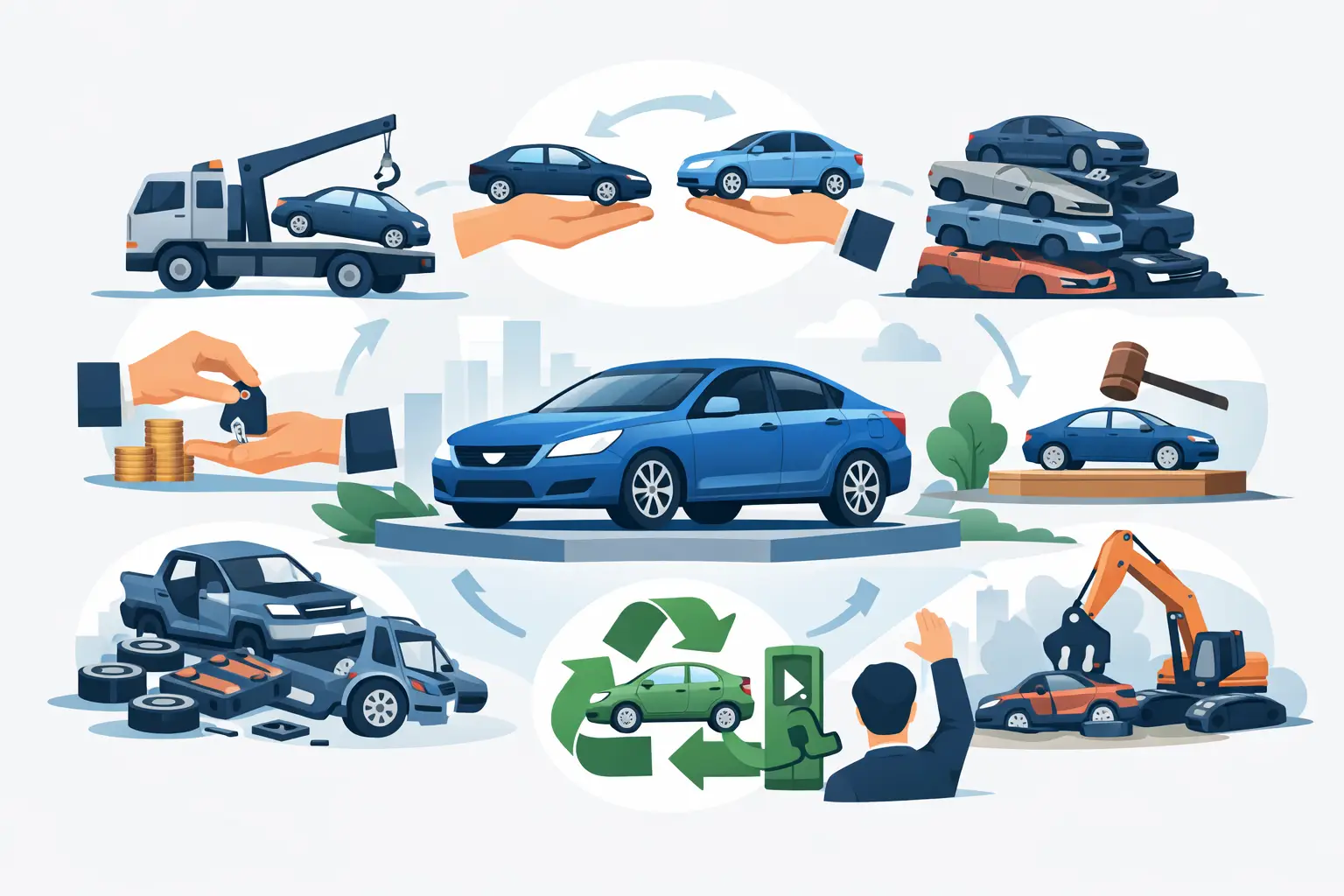
That dead car on the drive usually stops being “something to sort later” the moment it fails an MOT, won’t start, or starts costing more than it is worth. If you are looking for the best ways to dispose car problems without wasting time, the right option depends on its condition, its value, and how quickly you need it gone.
For some owners, the best route is a private sale. For others, that means scrapping it, selling it as non-runner, or handing it over to a professional collection service that deals with the paperwork as well. The main thing is to choose a method that is legal, practical, and worth your effort.
Best ways to dispose of a car – start with its real condition
Before you decide anything, be honest about the car. A ten-year-old hatchback with cosmetic damage and a long MOT is a very different prospect from a non-runner with engine failure and flat tyres. People often overestimate what a damaged or end-of-life vehicle is worth on the private market, then lose days answering messages that go nowhere.
If the car still drives well, has service history, and could be used by another owner, selling it as a used vehicle might make sense. If it is accident-damaged, uneconomical to repair, or sitting unused because it cannot be driven safely, scrappage or salvage sale is usually the cleaner option.
That first judgement matters because it affects price, speed, and hassle. The more serious the faults, the less likely a private buyer will be the best answer.
Sell it privately if the car still has usable market value
A private sale can bring the highest price, but only when the car is still attractive to normal buyers. That usually means it starts, runs, has paperwork in order, and does not need major immediate repairs. If that sounds like your vehicle, advertising it yourself may be worth the time.
The trade-off is effort. You will need to clean it, photograph it properly, write an honest advert, respond to calls and messages, and deal with viewings. Some buyers will haggle hard. Others will not turn up. If the car has known faults, you also need to describe them clearly to avoid disputes later.
For people with a broken, damaged, or non-running vehicle, this route often looks better on paper than it works in reality. The moment transport is needed or repair costs are obvious, buyers disappear quickly.
When private sale is worth it
This route suits cars with a sensible resale market, not end-of-life vehicles. If your car has passed the point where most buyers would consider it, you are usually better off choosing disposal based on convenience and certainty rather than chasing a figure you may never get.
Part exchange if you are replacing the car anyway
If you are already buying another vehicle, part exchange can be one of the easiest ways to dispose of the old one. It is straightforward, quick, and avoids the need to market the car yourself. For busy owners, that simplicity can be worth accepting a lower offer.
The catch is value. Dealers often price conservatively, especially if the vehicle is old, high-mileage, or difficult to resell. If the car is damaged or non-running, some dealerships may not want it at all. Others may offer very little and simply pass it into the motor trade or scrapyard.
Part exchange works best when convenience matters more than getting the last pound out of the car.
Sell it as a non-runner or damaged car
There is a middle ground between private sale and scrappage. If a car still has repair potential, somebody in the trade or a specialist buyer may want it as a damaged vehicle or non-runner. That can apply to cars with gearbox issues, failed engines, accident damage, or major electrical faults.
This option can beat scrap value in some cases, especially for newer vehicles or models with stronger demand. But it depends on the make, model, age, and extent of the damage. A relatively recent vehicle with one major fault is different from an older car with several problems and no MOT.
Be careful not to confuse interest with commitment. Plenty of buyers will make a rough offer, then reduce it when they arrive. If you go this route, give accurate details from the start and confirm whether collection is included.
Scrap it through an authorised service
For many owners, this is one of the best ways to dispose of a car because it removes the biggest headaches in one go. If the car is at the end of its life, does not run, or would cost too much to repair, scrapping it through a professional service is usually the fastest and most reliable choice.
A proper scrap car service should offer a clear quote, collection if needed, payment by bank transfer, and help with the official process. That matters because disposal is not just about getting the vehicle removed. It also needs to be handled correctly so you are not left worrying about what happens next.
This route is especially useful when the car is stranded at home, at a garage, or on a workplace car park. You do not need to arrange towing or try to move an unroadworthy vehicle yourself. In areas around Peterborough, that kind of collection-based service is often the difference between sorting the problem today and leaving it for another month.
Why scrappage suits end-of-life vehicles
Scrappage is usually the right fit when the vehicle has little or no realistic resale value. Think failed MOTs with expensive advisories, serious corrosion, accident write-offs, fire damage, flood damage, or cars that have simply been standing too long. At that point, convenience and compliance matter more than chasing a private sale.
Donate it if value is not your main concern
Some owners prefer to donate a vehicle rather than sell or scrap it for cash. That can feel like a positive option if the car still has some use or if supporting a cause matters more than the return. It is a valid route, but it is not always the most practical one.
Not every organisation will accept every car. Condition, location, and collection arrangements can all affect whether donation is possible. If your vehicle is badly damaged or incomplete, donation may not be accepted at all. It also tends to be a slower process than a direct sale or scrap collection.
If your priority is speed, guaranteed removal, and quick payment, donation is unlikely to be the strongest option.
Make sure the paperwork is handled properly
No matter which disposal route you choose, the paperwork matters. This is the part many owners worry about, especially if the car is being collected and never driven again. You want confirmation that the transfer or scrappage has been dealt with correctly and that your responsibility for the vehicle has ended.
A reputable disposal service should explain exactly what happens with the V5C and any other official steps. If a vehicle is being scrapped, it should go through the proper process. If it is being sold, ownership details need to be updated correctly. Never hand over a car casually and assume the rest will sort itself out.
That is one reason many people choose an established service rather than an unknown cash buyer. The price matters, but so does knowing the disposal is legitimate and documented.
Think beyond price – collection, speed and certainty matter too
People naturally focus on the offer first, but the headline number is not the whole story. A slightly higher offer can quickly lose its shine if you need to pay for transport, wait several days, or deal with endless renegotiation. The best disposal option is often the one that gives you a fair return with the least disruption.
Free collection is a major factor for non-runners and damaged vehicles. So is how quickly payment is made. If a service can quote promptly, collect at a time that suits you, and pay by bank transfer without fuss, that has real value. Scrap Cars Peterborough is built around exactly that kind of straightforward process for local owners who want the car gone without complications.
The best option depends on what problem you are solving
If you want maximum price and the car is still saleable, private sale may win. If you want zero hassle and the car is beyond economical repair, scrappage is often the better answer. If you are replacing the car anyway, part exchange may be good enough. There is no single right route for every vehicle.
What usually saves people the most time is being realistic early. A car that is worth disposing of quickly is not always worth selling slowly. Once you match the method to the vehicle’s actual condition, the decision becomes much easier.
If your car is old, damaged, non-running or simply no longer worth the trouble, the best next step is the one that gets it collected, paid for, and properly dealt with without dragging the process out.
Leave a Reply