
That dead car on the drive usually sits there longer than anyone planned. One failed MOT turns into a repair quote you do not fancy paying, then a flat battery, then a month of saying you will sort it next weekend. A scrapping car from driveway example makes the process much easier to picture, especially if the vehicle does not start and you are not sure what happens with collection, payment or the paperwork.
For most owners, the big concern is not whether the car needs to go. It is how to get rid of it without paying for recovery, chasing buyers who never turn up, or ending up confused about what to do with the logbook. If the car is on private property and cannot be driven, driveway collection is often the simplest route. The process is straightforward when it is handled properly.
A real-world scrapping car from driveway example
Imagine this. You have a 2009 diesel hatchback parked on your driveway in Peterborough. It has been off the road for months after developing engine trouble. The MOT has expired, the battery is flat, and the cost of repairs is more than the car is worth. You want it gone, but you do not want the hassle of arranging towing or negotiating with private buyers.
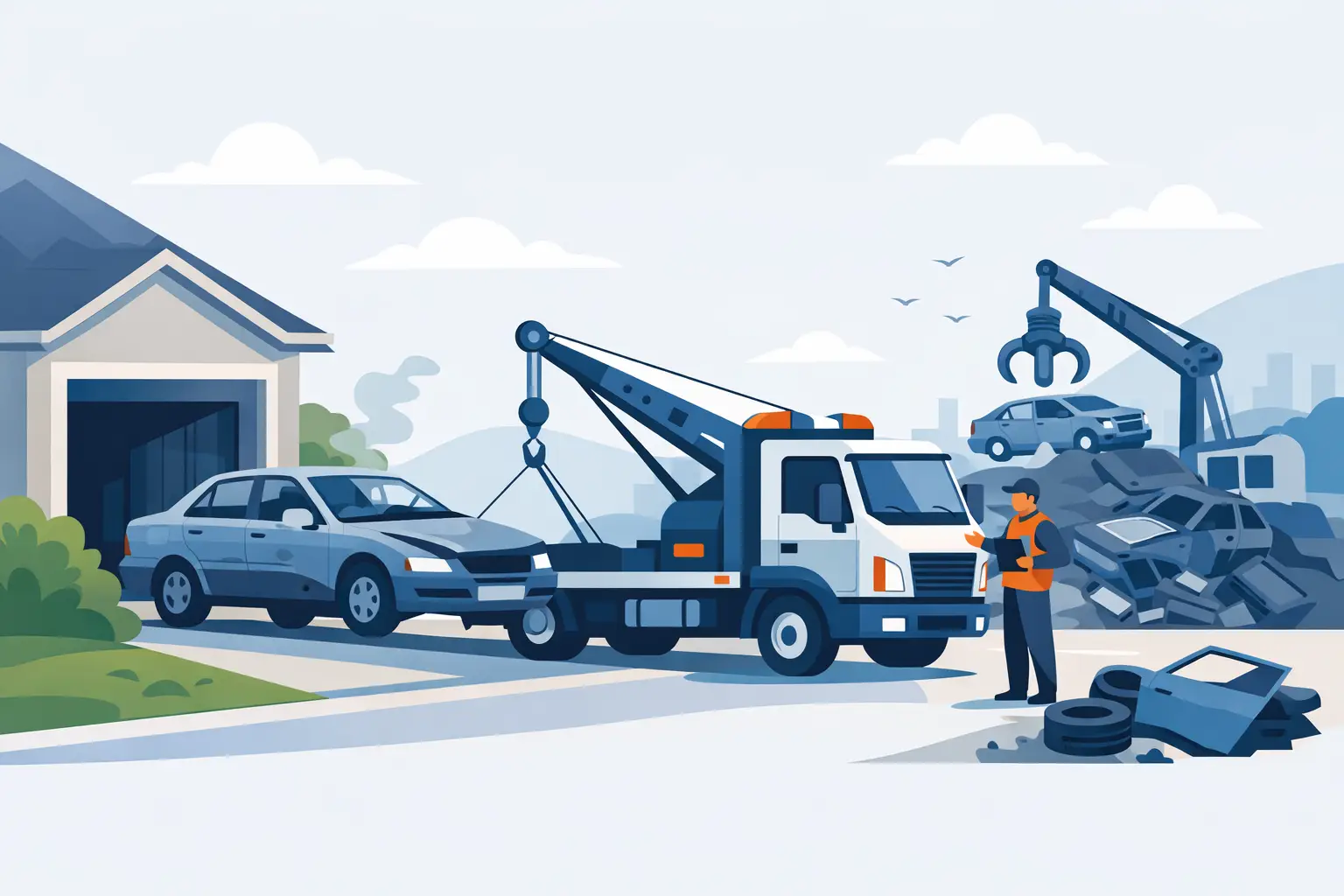
You request a quote using the registration and postcode. Based on the vehicle details, condition and current scrap values, you receive an offer. If you are happy with the price, you book a collection slot. On the agreed day, a driver arrives, checks the vehicle details, loads the car from the driveway, and the payment is sent by bank transfer. The final paperwork is completed so the vehicle is recorded as being handled correctly.
That is the basic shape of it. In practice, each case varies a little, but the steps are much the same whether the car has failed mechanically, has accident damage, or has simply reached the end of its useful life.
What happens before collection
The first stage is usually simpler than people expect. You do not need to write an advert, take polished photos, or explain every fault to a string of strangers. A scrappage quote is generally based on the registration, your location, and some honest information about the car’s condition.
If the car is non-runner, say so. If there is body damage, mention it. If wheels are missing or access is tight on the drive, that matters too. Giving accurate details early helps avoid delays or price changes later. A fair quote depends on a fair description.
This is also the point where people often ask whether they need the car to be on the road. They do not. If it is parked on a driveway, garage forecourt or other private property with reasonable access, collection can normally be arranged without you moving it. That is one of the main benefits. You are not expected to sort out transport for a vehicle that is no longer fit to drive.
How driveway collection usually works
Driveway collection is designed for convenience, but access does matter. If the car is boxed in by another vehicle, has no wheels, or is parked in a very narrow space, that should be flagged when booking. It does not always stop collection, though it may affect what vehicle or equipment is sent.
In a typical scrapping car from driveway example, the collection driver arrives within an agreed time window and confirms the registration and condition. The vehicle is then loaded safely for removal. If it does not start, that is not unusual. If the steering is locked or tyres are completely flat, the collection team simply needs to know in advance.
The main thing is clarity. People worry that a non-running car on a driveway will be a problem, but it usually is not. Surprise issues cause more trouble than difficult vehicles. If the service knows what is waiting on the drive, the collection can be planned properly.
Pricing – what affects the offer
Owners often compare the quote in their head to what the car used to be worth when it was still running well. That is understandable, but once a vehicle has become uneconomical to repair, the value is based on different factors.
Age, weight, make, model, condition and current market demand all affect the offer. A complete vehicle may achieve more than one with major missing items. Some models also attract stronger prices than others. Location can play a part too, simply because logistics and transport costs vary.
There is no single fixed rate for every scrap vehicle. That is why quotes are done case by case. If someone promises a top figure before checking the registration, condition and collection details, it is worth being cautious. The strongest offers tend to come from a process that actually looks at the vehicle properly rather than guessing.
Paperwork without the usual confusion
Paperwork is where many sellers hesitate. They know the car needs to go, but they are unsure what they are meant to do with the V5C logbook or how to notify the right authorities.
The good news is that the process is not complicated when it is handled correctly. In most cases, you should have identification available and, if possible, the V5C. If you do not have the logbook, collection may still be possible, but you should say so at the start. It is better to sort that out before the vehicle is booked than during collection.
You should also make sure your personal belongings are removed from the car. It sounds obvious, but old cars often become storage spaces for charging cables, tools, coats, child seats and paperwork you forgot was in there. Once the vehicle goes, you do not want to realise your house keys were in the glovebox.
A professional service will guide you through the official side of the handover so you are not left guessing what has been done and what still needs your attention. That reassurance matters, especially if this is the first time you have scrapped a vehicle.
Payment – when and how you get paid
People want two things here: speed and certainty. If the car is being collected from your driveway, you should know the agreed amount and how payment will be made before the vehicle is taken away.
Bank transfer is the standard method. It is cleaner, safer and easier to track. In a typical driveway collection, payment is arranged promptly once the vehicle details have been checked and the handover is complete. If there is any reason the amount might change, such as major undisclosed damage or missing components, that should be explained clearly.
This is why accuracy at the quote stage matters so much. The smoother the information upfront, the smoother the payment on the day.
When scrapping from a driveway is the better option
Not every old car should be scrapped immediately. If a vehicle still runs, has a valid MOT and only needs minor work, private sale might bring more money. But that route takes time, brings tyre-kickers to your door, and often involves haggling you do not want.
Driveway scrappage makes more sense when the car is non-running, badly damaged, uneconomical to repair, or simply not worth the effort of selling privately. It is also the better option when you need the space back quickly. A dead vehicle can become part of the scenery until you suddenly need the driveway for a replacement car, family visit or building work.
For owners in and around Peterborough, that speed matters. If the car is going nowhere under its own power, a service that quotes quickly, collects from home and handles the process properly removes most of the friction.
Common mistakes to avoid
The biggest mistake is giving incomplete information and assuming it will sort itself out on the day. If the car has no keys, missing wheels, severe damage or awkward access, mention it early. The second mistake is leaving paperwork and personal items inside until the last minute.
The third is waiting too long in the hope the car will somehow become worth repairing. Sometimes that happens. Often it does not. Meanwhile, the vehicle sits on the drive losing value and taking up space.
There is also a practical point people forget. If the car is leaking fluids or deteriorating badly, dealing with it sooner is usually better. A vehicle that has clearly reached the end of the road rarely improves by sitting outside for another six months.
A straightforward option when the car is finished
If you have an unwanted vehicle parked at home, the process does not need to be difficult. Scrap Cars Peterborough deals with exactly this sort of job every day – non-runners on drives, failed MOT cars, accident-damaged vehicles and older cars that are simply no longer worth fixing. The aim is simple: fair quote, free collection, fast bank payment and no unnecessary running around.
Most people do not need a complicated lesson in car disposal. They just need to know that if the vehicle is on the driveway and ready to go, there is a clear way to get it collected, paid for and dealt with properly. Once that old car is gone, the relief is usually bigger than expected.
Leave a Reply