
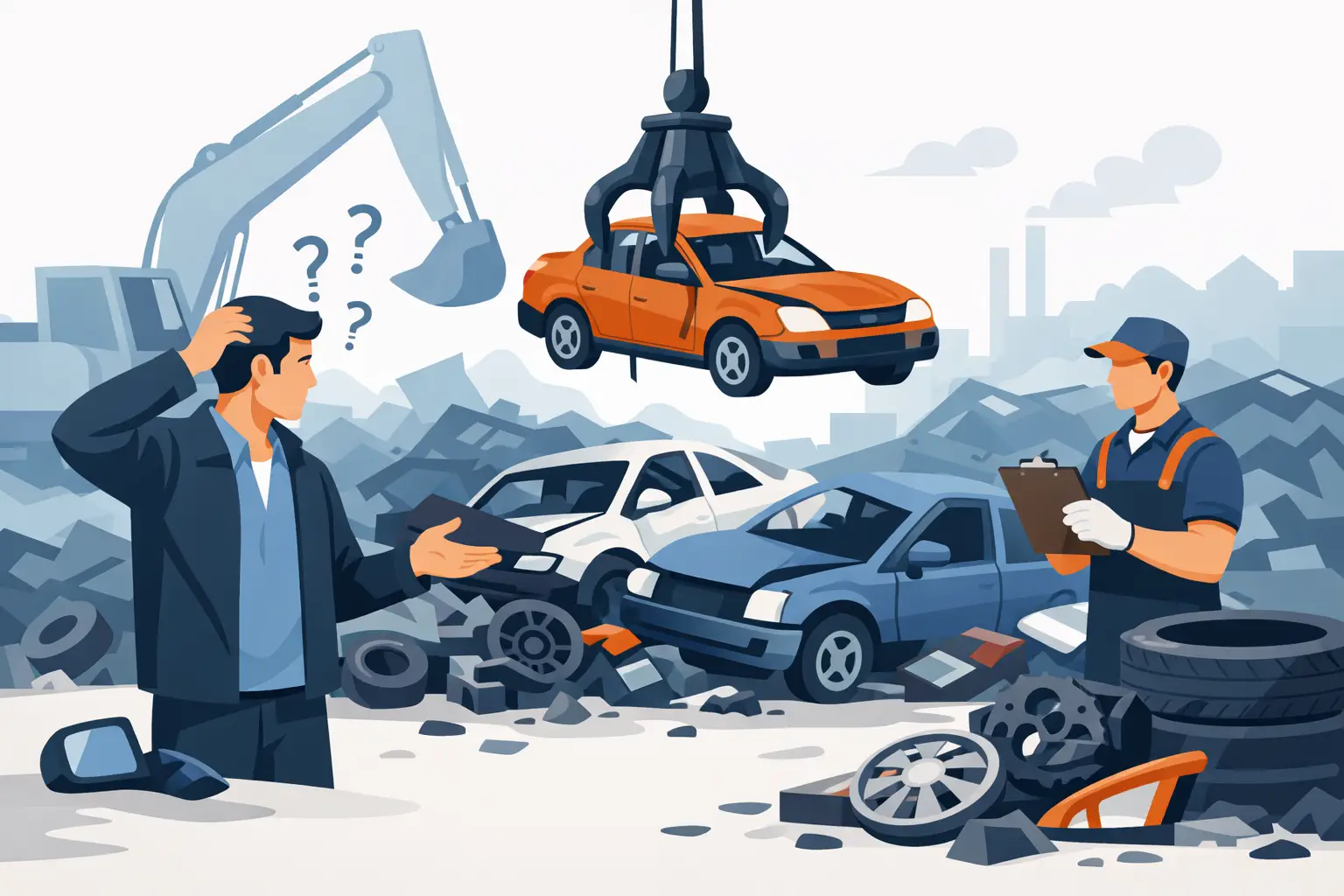
A surprising number of people lose money on their old vehicle before it even leaves the drive. The top mistakes when scrapping cars are rarely dramatic – they are usually simple things like accepting the first low offer, missing paperwork, or not checking how collection and payment will work. If your car is damaged, non-running or simply not worth repairing, getting the process right saves time, stress and unnecessary back-and-forth.
For most owners, scrapping a car is not something they do often. That is exactly why mistakes happen. You are trying to clear space, get paid fairly and avoid hassle, while someone else does this every day. A straightforward process should still be checked properly, especially when the vehicle does not start or you need quick collection.
The top mistakes when scrapping cars usually start with price
The first mistake is focusing only on the headline figure without asking what is actually included. A quote can look strong at first glance, but if collection charges, admin fees or last-minute deductions appear later, the final amount may be far lower than expected.
This matters most with non-runners, accident-damaged vehicles and cars parked somewhere awkward. Collection should be clear from the start. If your car cannot be driven, you need to know whether recovery is included and whether that affects the price. A fair quote is not just the highest number on screen. It is the amount you will actually receive, with the vehicle collected properly and without surprises.
There is also a timing issue. Some owners wait too long, hoping to squeeze a little more value out of a car that is only getting worse. If it has been sitting unused for months, has fresh damage, or has started to fail mechanically, its value does not usually improve with time. In many cases, delaying simply creates more inconvenience.
Not checking who is collecting the vehicle
Another common error is assuming every buyer handles collection in the same way. They do not. Some can collect quickly and professionally, while others offer vague time slots, poor communication or cancellations that leave you chasing updates.
If you are scrapping a car because it is blocking the driveway, taking up space at work, or stranded at a garage, reliability matters as much as price. You want to know when the vehicle is being picked up, what documents are needed, and when you will be paid. If those basics are unclear before booking, the process is already heading in the wrong direction.
For drivers in Peterborough and nearby areas, this is often where local responsiveness makes a real difference. A fast collection service with clear communication is not just convenient – it prevents a simple sale turning into a week of phone calls and rearranged plans.
Paperwork mistakes that create bigger problems later
One of the biggest top mistakes when scrapping cars is treating the paperwork as an afterthought. Owners are often so focused on getting the vehicle gone that they forget the official side of the process.
The V5C logbook is the obvious one. If you have it, keep it ready. If you do not, that does not always stop the sale, but you should say so early rather than springing it on the collector. The details on the vehicle record need to be dealt with properly so you are not left wondering whether the car is still linked to you.
People also leave personal items in the vehicle far more often than they expect. It is never just sunglasses and old charging cables. It can be paperwork with your address on it, parking permits, work documents, house items in the boot, or even a spare key tucked away in the glovebox. Once the car has gone, recovering those things is not always simple.
Then there is the issue of cancelling insurance and checking vehicle tax arrangements once the sale is complete. Missing those admin steps can cost you money for no good reason. Scrapping a car should clear a problem, not leave a trail of loose ends behind it.
Assuming every old car is only worth scrap weight
Some owners undervalue their vehicle because it is old, failed an MOT, or no longer runs. That can be a mistake. Scrap value is not based on one factor alone. Make, model, age, overall condition, damage level and demand can all affect the offer.
This is why basic quote details matter. Registration and postcode are a good start, but accurate information about whether the car starts, whether it rolls, and what damage it has can make the process smoother and more accurate. If you say the vehicle is driveable when it is not, problems appear on collection day. If you describe it honestly, the quote is more likely to hold up.
There is a balance here. You do not need to overcomplicate it, but you should not guess either. Being clear about the condition helps avoid haggling at the kerbside, which is one of the most frustrating parts of using the wrong service.
Leaving the number plates, fuel and access issues unchecked
Small practical details can slow down collection more than people realise. If the car is blocked in, has a flat tyre that makes loading harder, or is parked in a restricted area, mention it in advance. The same goes if the steering is locked or you have lost the keys.
None of these problems mean the car cannot be scrapped. They simply need planning. What causes delays is when the collection team arrives expecting one situation and finds another. The more accurate the booking, the smoother the handover.
Owners also ask whether they should run the fuel level down first. Usually, if the car still starts, they think they should use up every drop before collection. In reality, that depends on whether the car is still being used and whether doing so creates more inconvenience than value. A tiny amount of fuel is not the thing that makes or breaks a sensible scrappage decision.
Accepting vague payment terms
Payment should be clear before collection is booked. That sounds obvious, but many people still fail to ask the right question: exactly when will the money reach my bank?
Fast payment is one of the main reasons people scrap a car rather than trying to sell it privately. If the answer on payment is fuzzy, that should ring alarm bells. You should know whether payment is made on collection, after processing, or at some later stage. Clear expectations prevent arguments and make the handover much less stressful.
The same applies to proof of the transaction. If you are selling an unwanted vehicle, especially one that has not moved for months, you want confidence that the process is documented properly. Professional handling is not just about turning up with the right vehicle recovery equipment. It is about making the sale feel organised from start to finish.
Forgetting that convenience has value too
People sometimes spend days chasing tiny price differences while ignoring the overall hassle involved. If one service offers a slightly higher figure but cannot collect for several days, wants awkward arrangements, or leaves you to sort out parts of the process yourself, that is not always the better deal.
Convenience matters most when the car is already causing a problem. Maybe it has failed beyond economical repair. Maybe it is sitting outside the house taking up space. Maybe you need it gone before moving home or before a landlord, neighbour or family member gets fed up with looking at it. In those situations, speed and certainty are worth something.
A professional service should remove friction, not add to it. That means a simple quote, free collection where agreed, prompt payment and help with the official side. If you are doing half the work yourself, it stops being the easy option.
Rushing because the car feels worthless
When a vehicle is old and unreliable, owners often rush the decision because they just want it out of sight. That feeling is understandable, but it can lead to poor choices. Even if the car is clearly at the end of its life, you still want the process handled correctly.
Take ten minutes to check the quote details, gather your documents, remove belongings and confirm collection arrangements. That small pause can save a lot of annoyance later. Scrapping a car should be one of the easiest ways to dispose of an unwanted vehicle, but only when the basics are done properly.
If you are choosing a service, look for one that is direct about price, collection and paperwork support, and one that does not make you chase for answers. Scrap Cars Peterborough is built around exactly that kind of straightforward process – quick quotes, free collection and fast payment without making the owner do the legwork.
A scrap car does not need to become a bigger job than it already is. Avoid the common mistakes, ask the practical questions early, and the whole thing becomes much simpler.
Leave a Reply