
June 4, 2026
9 Signs Your Car Is Beyond Repair
Learn the key signs your car is beyond repair, from major engine failure to rust and repair costs…
Read article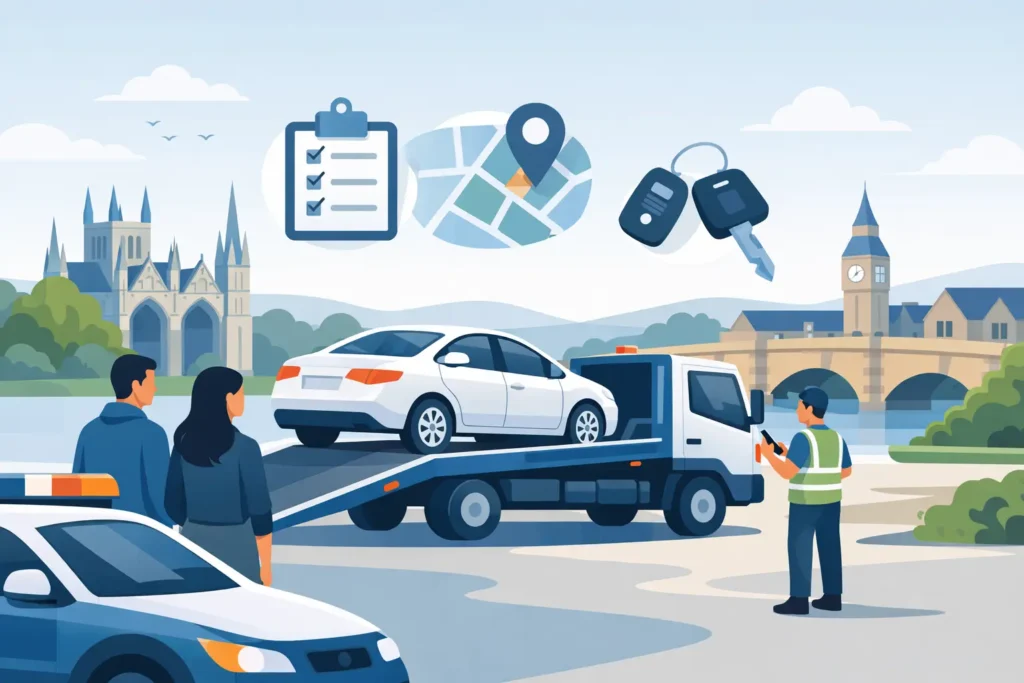
A car that will not start on the drive can quickly become more than an inconvenience. It takes up space, may be costing you insurance or tax, and leaves you wondering whether you need to arrange a tow. This guide to vehicle collection process sets out what normally happens from the first quote to the final paperwork, so you can arrange collection without unwanted surprises.
For most unwanted, damaged and end-of-life vehicles, collection is the practical option. You do not need to make an unroadworthy car roadworthy simply to deliver it somewhere. A professional collector can collect it from your home, workplace, garage or recovery location, provided they can safely access the vehicle.
The quickest quotes are usually based on your registration number and postcode. The registration identifies the vehicle’s make, model, age and engine details, while the postcode helps establish collection availability and local demand. You may also be asked whether the vehicle starts, rolls, has wheels fitted, has its keys and is complete.
Answer these questions honestly. A non-runner is not a problem when you have booked a proper collection, but it can affect the equipment needed and therefore the price offered. The same applies if the car has serious accident damage, missing major items, locked wheels or limited access around it.
A fair quote should make clear whether collection is included. For a straightforward scrap vehicle collection, you should not be presented with a surprise collection charge on arrival. If the circumstances have changed since the quote – for example, the car is no longer complete or cannot be reached by the collection vehicle – discuss this before confirming the booking.
Once you accept a quote, you will agree a collection date and a suitable time window. For busy households, this is often the key benefit: the vehicle can be collected from where it sits rather than you taking time off to arrange transport. Collections can often be arranged seven days a week, including weekends and bank holidays, subject to availability.
Before booking, give clear details about the location. Tell the team if the car is on a narrow street, behind a locked gate, in a multi-storey car park, on a steep drive or parked where another vehicle may block access. A recovery operator needs enough room to load safely. Good information at this stage prevents delays on collection day.
If the vehicle is on private land, make sure you have permission for it to be collected. If it is on a public road, do not leave it uninsured or untaxed while waiting unless it is legally covered. A vehicle that is declared off the road must be kept off the public highway.
Keep the V5C log book ready if you have it, along with photo identification if requested. The collector may also need the keys, particularly if the steering is locked or the vehicle needs to be moved a short distance before loading.
Take a few minutes to empty the car properly. Check the glovebox, door pockets, boot, under-seat storage and any phone holders. Remove personal documents, parking permits, sunglasses, house keys, charging cables and anything else you want to keep. It is much easier to do this before the vehicle leaves than afterwards.
Also remove your number plates only if you intend to retain the registration and have followed the appropriate process. Otherwise, leave the vehicle as agreed. Removing items or making changes after receiving a quote can affect the collection arrangement and value.
The driver or recovery operator will arrive within the agreed window and check the vehicle against the booking details. This is a sensible safeguard for everyone. They will confirm the registration, assess its condition and make sure it can be loaded safely.
For a running car with clear access, collection may be very quick. A vehicle that does not run can still be collected using suitable recovery equipment. However, access and condition matter. A car with seized wheels, a flat tyre, no keys or a tight collection point may take longer. Mentioning these details in advance gives the collector the chance to arrive prepared.
You do not normally need to be mechanically minded or organise a tow yourself. Your job is to make the vehicle available, hand over the agreed documents and ensure the collector can reach it. If you cannot be there, ask in advance whether another authorised person can meet the driver and what identification or paperwork will be needed.
Payment should be agreed as part of the booking, not left vague until the vehicle is loaded. Reputable services generally pay by bank transfer, which creates a clear record and avoids the risks of handling cash.
Make sure the bank details you provide are correct and belong to the person selling the vehicle. Check the payment has arrived or that you have clear confirmation of it before treating the transaction as complete. If someone asks you to hand over the car without the agreed payment arrangement or supporting documentation, stop and ask for clarification.
The final amount should match the accepted quote unless there is a genuine, explained reason for a change. For example, a quote may need reviewing if the vehicle was described as complete but major components are missing, or if the stated collection conditions are materially different. A professional operator will explain this plainly rather than pressure you into a decision.
Paperwork matters because the registered keeper remains responsible for the vehicle until the DVLA record is updated. Do not assume that handing over the keys automatically removes your responsibility.
If you have the V5C, use the relevant section to notify the DVLA that the vehicle has been sold or transferred to a motor trader, or use the DVLA’s online service where appropriate. Keep a record of the date, the receiving business details and any reference number. If you do not have the V5C, tell the collection service before booking. It does not always prevent collection, but the correct procedure must be followed.
For a vehicle being scrapped, ask what documentation you will receive after collection. Where an end-of-life vehicle is processed through an authorised treatment facility, a Certificate of Destruction may be issued. This is useful evidence that the vehicle has been taken out of use through the correct route. The exact paperwork can depend on the vehicle’s condition and how it is being processed, so ask if anything is unclear.
After notifying the DVLA, you may be due a refund for any full remaining months of vehicle tax. Insurance is separate: contact your insurer once the sale or disposal is confirmed to cancel or amend your policy. Do not simply stop paying by direct debit without checking the policy status.
Most collections are straightforward, but a few situations need extra care. If the vehicle is financed, leased, subject to a logbook loan or involved in an insurance claim, you may not have the right to sell or scrap it until the finance company or insurer has confirmed this. Resolve that first.
Vehicles with private registrations need attention too. If you want to keep the plate, apply to retain it before the vehicle is disposed of. Once the car has been scrapped, it may be too late to recover the registration.
Location can also change the plan. In Peterborough and nearby areas such as Stamford, Spalding, March and Huntingdon, collection can usually be arranged from homes and workplaces. But underground parking, height restrictions, inaccessible compounds and vehicles on unsafe ground may require an alternative pickup point or a different recovery vehicle. Being upfront gets the right solution faster.
Before the collector arrives, make sure you have done five things:
A vehicle collection should remove a problem from your day, not create a new one. With an accurate quote, clear collection details, prompt bank payment and the right DVLA notification, your unwanted vehicle can be dealt with quickly and responsibly. If you are ready to clear the space, Scrap Cars Peterborough can help arrange the practical next step.
Ready to get a fair price for your scrap car?
Get a Free Quote
Learn the key signs your car is beyond repair, from major engine failure to rust and repair costs…
Read article
Do you need ID to scrap a car? Find out what UK recyclers usually ask for, what paperwork…
Read article
Should you use a vehicle recycler or dealer? Learn which option suits scrap, damaged or unwanted cars, and…
Read article