
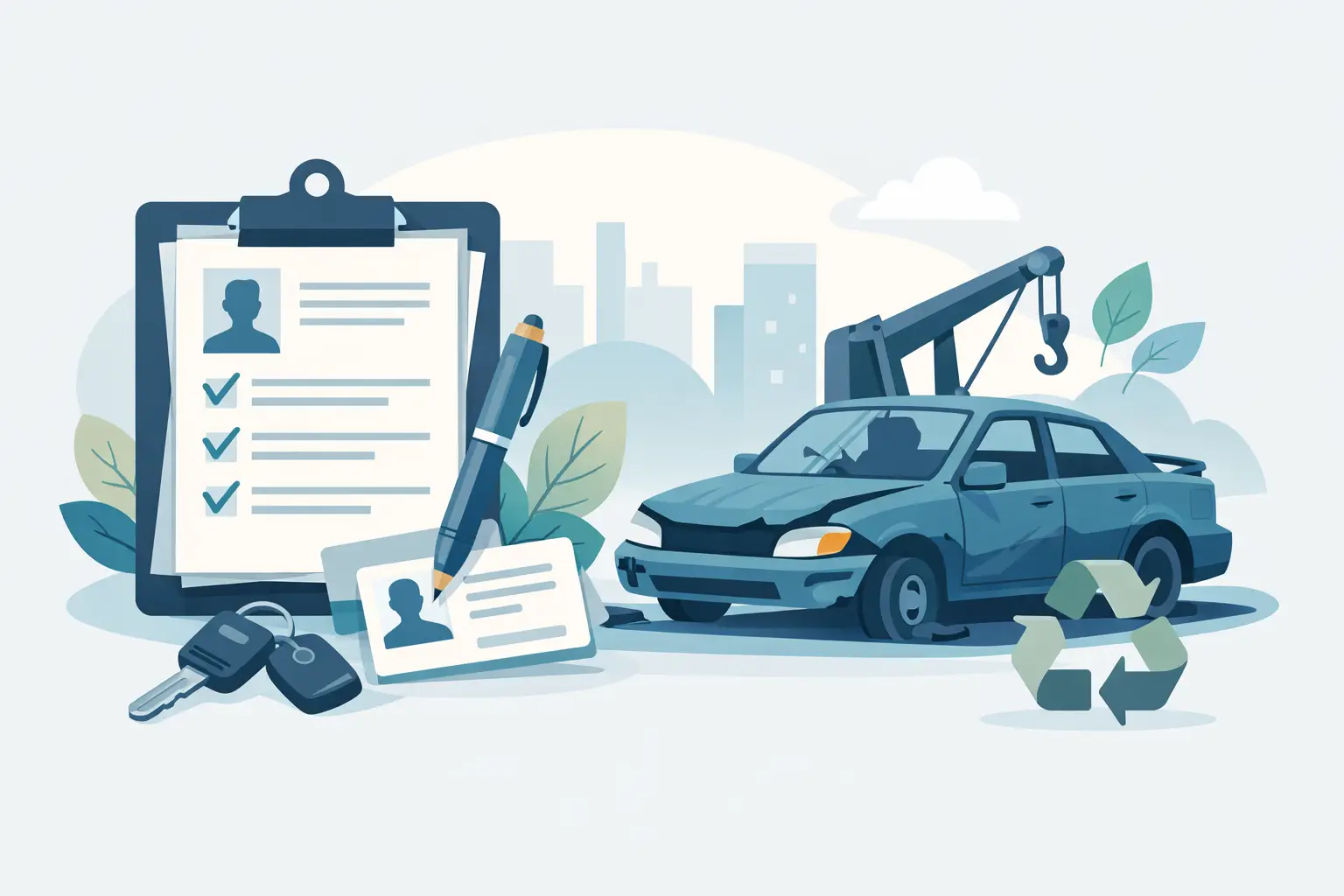
If you have a car sitting on the drive that will not start, has failed its MOT, or is simply not worth repairing, the question usually comes up fast – what paperwork do I need to scrap my car? The good news is that the process is usually straightforward, and in many cases you only need a few key details to get things moving.
The exact paperwork can vary slightly depending on whether your car is going to an Authorised Treatment Facility, whether it still has its logbook, and whether a collection company is handling the process for you. But for most private sellers in the UK, the main document is the V5C logbook, along with proof of identity and your bank details for payment.
What paperwork do I need to scrap my car in the UK?
In simple terms, you will normally need the V5C registration document, your vehicle registration number, a valid form of ID, and your address details. If the car is being collected, you may also be asked to confirm the collection location and availability.
The V5C is the most important document because it shows you are the registered keeper. It is not proof of legal ownership in the strictest sense, but it is the document used to notify the DVLA that the vehicle has been sold, transferred, or scrapped. If you have it, keep it ready.
A reputable scrap car service may also ask for photo ID, such as a driving licence or passport, plus a recent utility bill or similar proof of address. This is not there to slow things down. It helps confirm the vehicle is being disposed of properly and protects against fraud.
Payment for scrap cars in the UK is normally made by bank transfer rather than cash. That means you should also have your account details ready so payment can be made quickly once the vehicle has been collected and checked.
The V5C logbook – what matters most
If you have the V5C, scrapping your car is generally easier. When the vehicle is passed to a scrap dealer or authorised recycler, the DVLA needs to be notified that you are no longer responsible for it.
On newer V5C documents, there is a section used when you sell or transfer the vehicle to the motor trade. In some cases, this is completed by the buyer or collection agent with you. In others, the transfer can be updated online. The process depends on the type of facility taking the vehicle and how they handle paperwork.
What matters is that the DVLA is informed promptly and correctly. Do not assume that handing over the keys is enough. Until the DVLA records the change, the vehicle can still appear to be your responsibility.
If the car is being scrapped properly through an Authorised Treatment Facility, you should also receive a Certificate of Destruction where applicable. This is the official confirmation that the vehicle has been destroyed and taken off the road permanently.
If you have lost the logbook
Losing the V5C does not always stop you from scrapping the vehicle. If you are wondering what paperwork do I need to scrap my car without a logbook, the answer is that many services can still help, but you may need extra ID checks and supporting details.
You will usually be asked for the registration number, make and model, your full name and address, and proof that you are the registered keeper. Some buyers may accept the vehicle without a V5C if they can verify everything another way. Others may ask you to apply for a replacement logbook first.
That is where it becomes a question of speed versus simplicity. Applying for a replacement V5C can make the process cleaner, but it also adds time. If you need the car gone quickly, it is often worth speaking to the collection company first to see whether they can proceed without it.
ID and proof of address
Because scrap vehicle transactions need to be compliant, identity checks are standard. You may be asked for a driving licence or passport, and sometimes a utility bill, council tax letter, or bank statement showing your current address.
This is especially common if the car is missing documents, has been off the road for some time, or is being collected from a different address than the one registered with the DVLA. None of this is unusual. It is simply part of making sure the vehicle is handled legally and that the payment goes to the right person.
If your details have recently changed, mention that early. A mismatch between the V5C address and your current address does not always cause a problem, but it is better dealt with upfront than on collection day.
Other details you may be asked for
Alongside the main paperwork, a scrap car service will often ask practical questions about the vehicle. That might include whether the car starts, whether it has keys, whether tyres are inflated, and whether it is complete.
These are not paperwork requirements in the strict sense, but they do affect the collection plan and the final offer. A non-runner with no keys may need specialist recovery equipment. A stripped vehicle may have a different scrap value than a complete one.
You may also be asked whether the car is on finance. If it is, you should not scrap it until the finance is fully settled. Outstanding finance can prevent a legitimate sale and create bigger problems later.
What happens with the DVLA?
One of the biggest mistakes people make is focusing only on collection and payment, while forgetting the DVLA side of things. Scrapping the car is only half the job. Updating the vehicle record is what protects you from future hassle.
Once the vehicle has been handed over, the DVLA should be notified that it has been sold to the motor trade or scrapped, depending on the route taken. If your vehicle is destroyed by an Authorised Treatment Facility, that should lead to the proper end-of-life record being created.
You should also keep any confirmation emails, reference numbers, or written receipts. If there is ever a dispute about tax, penalties, or ownership after the collection date, those records matter.
If the vehicle is taxed, you may be entitled to an automatic refund for any full remaining months once the DVLA updates the record. If it is insured, remember to contact your insurer separately. That part does not happen automatically.
What paperwork do I need to scrap my car with a collection service?
If you are using a service that offers home or roadside collection, the process is often quicker than people expect. In many cases, you can get a quote with just your registration and postcode, then confirm the rest before collection.
On the day, you will normally need to show the V5C if you have it, provide ID, hand over the keys if available, and sign or confirm any transfer paperwork. Some operators will also take photos of the vehicle and documents for compliance records.
This is where choosing an experienced service makes a real difference. A good operator will explain exactly what is needed before arrival, so you are not left searching through drawers for documents while the recovery driver waits outside. If you want a straightforward process with paperwork support and free collection, Scrap Cars Peterborough can help through https://www.scrapcarspeterborough.co.uk.
A few situations where it depends
Most scrap car paperwork is simple, but there are a few cases where the rules can feel less clear. If the vehicle belonged to someone who has died, you may need documents showing you have the authority to deal with the estate. If the car has no keys and no logbook, expect more verification. If it is badly damaged after an accident, the insurer may also be involved.
Imported vehicles, trade vehicles, and cars with registration issues can also require extra checks. That does not mean they cannot be scrapped. It just means the buyer may need more information before making a compliant purchase.
The easiest way to avoid delays is to be honest about the vehicle from the start. Tell the buyer what paperwork you have, what is missing, and what condition the car is in. That usually leads to a faster quote, a smoother collection, and fewer last-minute changes.
Scrapping a car should not feel like a paperwork battle. Have your V5C ready if you have it, keep your ID to hand, make sure the DVLA is updated properly, and ask questions before collection if anything is unclear. A decent service will keep it simple, move quickly, and make sure the car leaves your hands the right way.

Leave a Reply