
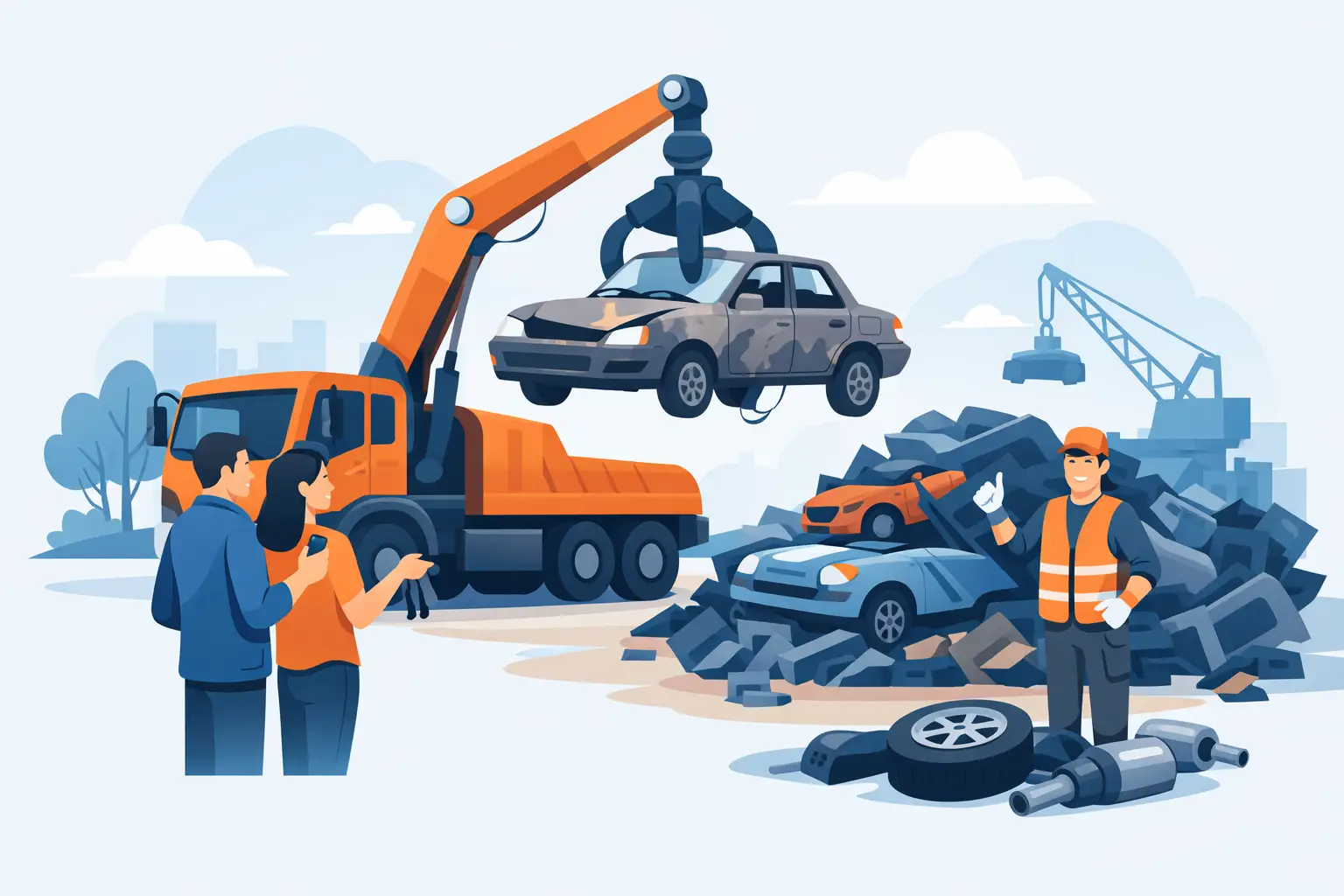
That dead car on the drive is rarely just a car. It is a blocked parking space, a failed MOT, a growing repair bill and one more job you keep putting off. If you want to scrap your car today, the real priority is not theory. It is getting a fair price, arranging collection quickly and making sure the paperwork is handled properly.
For most people, speed matters because the vehicle has already become a problem. It may not start, it may have been written off, or it may simply cost more to keep than it is worth. In those cases, waiting around for private buyers or trying to sort transport yourself usually creates more hassle than value.
Why scrap your car today can be the right call
There is a point where keeping a vehicle stops making financial sense. A car with major engine trouble, electrical faults, accident damage or repeated MOT failures can quickly turn into a money drain. Even if it still runs, the cost of making it roadworthy again may be far higher than the amount you would get back from selling it privately.
Scrapping the vehicle straight away can also remove a lot of uncertainty. Instead of paying for temporary insurance, arranging recovery or dealing with no-shows from online marketplaces, you move the car on in one clear process. That matters when you need the space back, want quick payment or simply want the issue sorted.
There is also the compliance side. An authorised process means your vehicle is disposed of correctly and the official steps are not left half done. That peace of mind is often worth more than squeezing out a little extra from a slow, unreliable sale.
What affects the price when you scrap your car today
Not every scrap vehicle is worth the same, and the difference is not always obvious at first glance. The make, model, age and overall condition all matter, but so does current market demand. The value of metal changes, and some vehicles attract stronger offers than others because recyclers can recover more value from them.
A complete car will often achieve a better price than one that is missing key components. Damage matters too, but it does not always make a vehicle worthless. A non-runner can still hold solid scrap value, especially if collection is included and the process is straightforward.
Location can play a part as well. A strong collection network makes it easier to secure competitive prices because the vehicle can be matched with the right buyer without forcing you to transport it yourself. That is one reason many owners now choose a quote-and-collection service rather than trying to sort everything separately.
The fastest way to scrap your car today
If the goal is speed, the best process is simple. Start with the registration and postcode, get a quote, accept it if you are happy, then arrange collection. That approach removes the usual delays because there is no need to list the vehicle, answer messages for days or negotiate with people who may never turn up.
Collection is where a lot of the stress disappears. If the car is not roadworthy, getting it to a yard yourself can be awkward and expensive. Free collection changes the equation. It turns a difficult job into a booking.
Payment speed matters just as much. Most sellers are not just looking to clear space. They want the money in their bank quickly and they do not want uncertainty on the day. A professional service should make that part clear from the start, so you know what happens, when it happens and what you need to have ready.
What you will usually need before collection
The process is easier when a few details are ready in advance. The registration number is essential, and your postcode is normally needed for the quote and collection plan. You should also have proof that you are the registered keeper or are authorised to sell the vehicle.
If you have the V5C logbook, keep it to hand. If you do not, that does not always stop the sale, but it is best to say so early rather than leave it until collection day. Honest details help avoid delays and reduce the chance of the quote changing later.
It also helps to remove personal belongings from the car beforehand. People often forget what gets left in a glove box, boot or door pocket when a vehicle has been sitting unused for months. A quick check saves a lot of bother afterwards.
When scrapping beats selling privately
Private sale sounds attractive in theory because people assume it always brings in more money. Sometimes it does. But that only holds if the car is in decent condition, has buyer appeal and can be viewed without a lot of back-and-forth.
If the vehicle is damaged, unreliable, non-running or near the end of its life, private selling becomes a much weaker option. Buyers expect heavy discounts, ask endless questions and often vanish once they realise the car needs work. If towing or recovery is required, that usually falls back on you to solve.
Scrapping is often the better decision when convenience matters more than chasing a small and uncertain gain. For a lot of sellers, the strongest result is not the theoretical highest number. It is a fair offer, free collection, prompt payment and the problem dealt with in one go.
Common worries people have before they scrap a car
One of the biggest worries is whether the quote is genuine. That is fair. Car owners want to know the price offered will stand if the information given is accurate. The best way to avoid problems is to describe the vehicle honestly from the start, including major damage, missing parts or the fact that it does not run.
Another concern is paperwork. Many people are unsure what they need to do after the vehicle is collected. A proper scrappage service should guide you through the official process clearly so you are not left wondering whether the vehicle is still in your name.
Then there is the question of timing. People often assume collection will take days, especially if the car is stranded at home, at a garage or after a breakdown. In practice, a responsive service can often move much faster than expected, including weekends and bank holidays. That is particularly useful when you need the vehicle gone quickly and cannot afford to wait around for weekday appointments.
Why a managed service saves time
A managed service works because it removes the friction points that make scrapping a car feel like a chore. You do not need to ring around yards, compare recovery costs or guess whether you are getting a decent offer. The quote, collection and payment are treated as one process rather than three separate problems.
For UK car owners, that joined-up approach is often the difference between acting now and putting the job off again. It is easy to ignore a dead vehicle for another week when sorting it feels complicated. It is much easier to act when the steps are clear and the effort on your side is minimal.
That is where a specialist service comes into its own. A business such as Scrap Cars Peterborough is built around speed, fair pricing and collection convenience, which is exactly what most sellers need when the car is already more burden than asset.
Getting the timing right
There is rarely a perfect moment to dispose of an unwanted vehicle. Usually, once you have decided the car is no longer worth keeping, delaying only adds inconvenience. Insurance, space, repair quotes and general hassle all continue while the car sits there doing nothing.
If you already know the vehicle is finished for you, acting sooner is usually the practical choice. Get the quote, check the collection options and move it on before another problem appears. That way, you turn a stalled situation into something settled.
A car that no longer serves you should not keep taking up your time. The right service makes the process quick, clear and worth doing now.
Leave a Reply