
July 4, 2026
Future Car Recycling Process Explained
Learn how the future car recycling process will handle EVs, batteries, plastics and data, and what it means…
Read article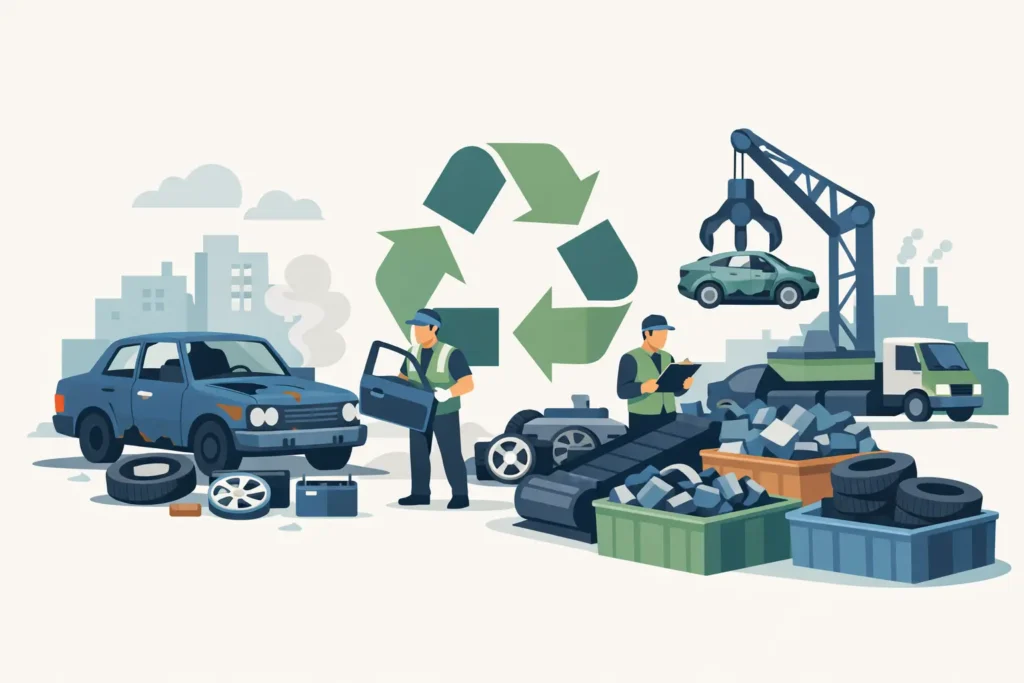
That old car on the drive is not just taking up space. It is costing you time, attention and, in some cases, money if you are still insuring or taxing something you no longer use. If you are wondering how to recycle an old car responsibly in the UK, the good news is the process is usually much simpler than people expect.
The key is to treat it as more than just getting rid of a vehicle. You want a fair price, proper collection if the car will not move, and the confidence that it will be disposed of legally. That matters whether the vehicle is an ageing runabout, an accident-damaged car, or something that has simply reached the end of the road.
For most owners, recycling an old car starts with a basic question – is the vehicle worth repairing, selling privately, or scrapping? If repair costs are close to or above the car’s real market value, recycling is often the practical choice. The same applies if it has failed its MOT badly, has major engine or gearbox trouble, or has been sitting unused for months.
Private selling can look appealing on paper, but it comes with delays, viewings, negotiation and the risk of no-shows. If the car does not start or is not roadworthy, that route becomes even more awkward. Recycling through a professional service is usually the faster option because the value is based on the vehicle’s scrap and salvage potential rather than its appeal to a retail buyer.
The easiest way to start is by getting a quote using the registration and postcode. That gives a quick indication of value without needing to advertise the car or arrange transport yourself. If the offer works for you, collection can then be booked and the paperwork handled properly.
A lot of owners imagine scrapping means the whole vehicle is crushed straight away. In reality, proper car recycling is more structured than that. Once the vehicle is collected, it is processed through an authorised recycling route. Fluids and hazardous materials are removed safely, reusable materials are separated, and the shell is then prepared for recycling.
This matters because old vehicles contain far more than metal. There are oils, batteries, tyres, plastics and glass to deal with. A compliant recycling process makes sure these are handled correctly rather than dumped or processed carelessly. For the owner, the main benefit is peace of mind that the vehicle is not simply disappearing into the wrong hands.
There is also a financial side to it. Some old cars are worth more than owners expect, especially if they have salvageable components or strong metal value. Others may be worth less if they are incomplete, heavily stripped, fire damaged or missing key parts. That is why instant quotes are useful, but final values can still depend on condition.
If you want to get the strongest price, honesty helps. Give accurate details about the car’s condition from the start. Mention whether it starts, whether it has accident damage, whether key parts are missing and if there is valid MOT left. A realistic quote is better than a high figure that changes later.
It also helps to clear out the vehicle before collection. Owners often leave behind paperwork, charging leads, sunglasses, child seats or tools in the boot. Once the car has been collected and entered into the recycling process, retrieving personal items becomes much harder.
If you have the V5C logbook, keep it ready. If you do not, the car can often still be collected and recycled, but the process may require a few extra checks. Lack of paperwork does not always stop a sale, but it is better to mention it upfront.
Timing can affect value too. Scrap prices move, and so does demand for certain makes and models. You do not need to obsess over the market, but if your car has reached the point where it is unusable or uneconomical, waiting usually does not improve things. A vehicle sitting on the drive tends to lose value, not gain it.
One reason people delay scrapping an old car is the paperwork. They assume it is awkward or full of legal traps. In practice, it is straightforward when handled properly.
You need to let the DVLA know that the vehicle has been sold for scrap or transferred to an authorised recycler. This updates the record and helps protect you from future issues such as fines, tax queries or ownership disputes. If you have the V5C, the relevant section can be completed as part of the handover process.
You should also make sure any tax and insurance position is sorted. Depending on the circumstances, you may be entitled to a refund on unused vehicle tax. Insurance should be cancelled once the vehicle has gone, but only after you are sure collection has taken place and ownership details have been updated correctly.
Payment is another point worth being clear on. In the UK, scrap car payments should be made by bank transfer rather than cash. That gives a cleaner, traceable transaction and keeps the process compliant.
If the car is non-runner, damaged or has no MOT, getting it to a recycling site yourself can be the hardest part. That is where free collection is not just a nice extra – it is often what makes the whole process workable.
A proper collection service means you do not need to arrange towing, ask favours or risk moving an unroadworthy vehicle. It also saves time. For busy households, that matters just as much as the sale price. The best process is the one that gets the car gone quickly, pays fairly and does not leave you chasing people for updates.
This is especially useful for owners in and around Peterborough, Stamford, Bourne, Spalding, Wisbech, March, Huntingdon and Corby, where a local collection option can remove days of hassle. If a vehicle is stranded at home, at a garage or even on a family member’s drive, a booked collection usually solves the main practical problem in one go.
The biggest mistake is accepting vague promises without confirming who is collecting the car and how the paperwork will be handled. If the process feels unclear, it usually is. You should know what you are being paid, when the vehicle is being collected and what happens with the DVLA notification.
Another common mistake is assuming every old car should be repaired before sale. Sometimes a small repair improves the value, but often it just adds more cost to a vehicle already heading for end of life. If the car has major faults, failed emissions, structural rust or severe mechanical wear, spending more money can be false economy.
Owners also sometimes wait because they think the car might be useful again one day. That does happen, but not often. More commonly, the vehicle sits unused, takes up space and becomes harder to move later. If you already know you do not want to repair or keep it, acting sooner is usually the better decision.
A good recycling service should make the process feel clear from the first quote. You should not need to chase basic information or guess what happens next. Look for a straightforward quote process, collection that suits your schedule, prompt bank payment and support with the official steps.
That no-nonsense approach is why many local owners use a specialist service rather than trying to juggle adverts, towing and paperwork alone. Scrap Cars Peterborough is built around that idea – fast quotes, free collection, quick payment and proper handling of the disposal process from start to finish.
Not every vehicle follows exactly the same path. A complete but old car may attract one type of offer, while a badly damaged non-runner may be valued differently. That is normal. What matters is that the quote is fair, the collection is reliable and the transaction is handled properly.
If your old car is no longer worth the stress, recycling it is often the cleanest way forward. A simple quote, a booked collection and the right paperwork can turn something that feels like a nuisance into one less thing on your list.
Ready to get a fair price for your scrap car?
Get a Free Quote
Learn how the future car recycling process will handle EVs, batteries, plastics and data, and what it means…
Read article
A guide to instant scrap valuations - learn what affects your quote, how online prices work, and how…
Read article
Learn how to arrange car collection quickly, what details you need, how payment works, and how to avoid…
Read article