
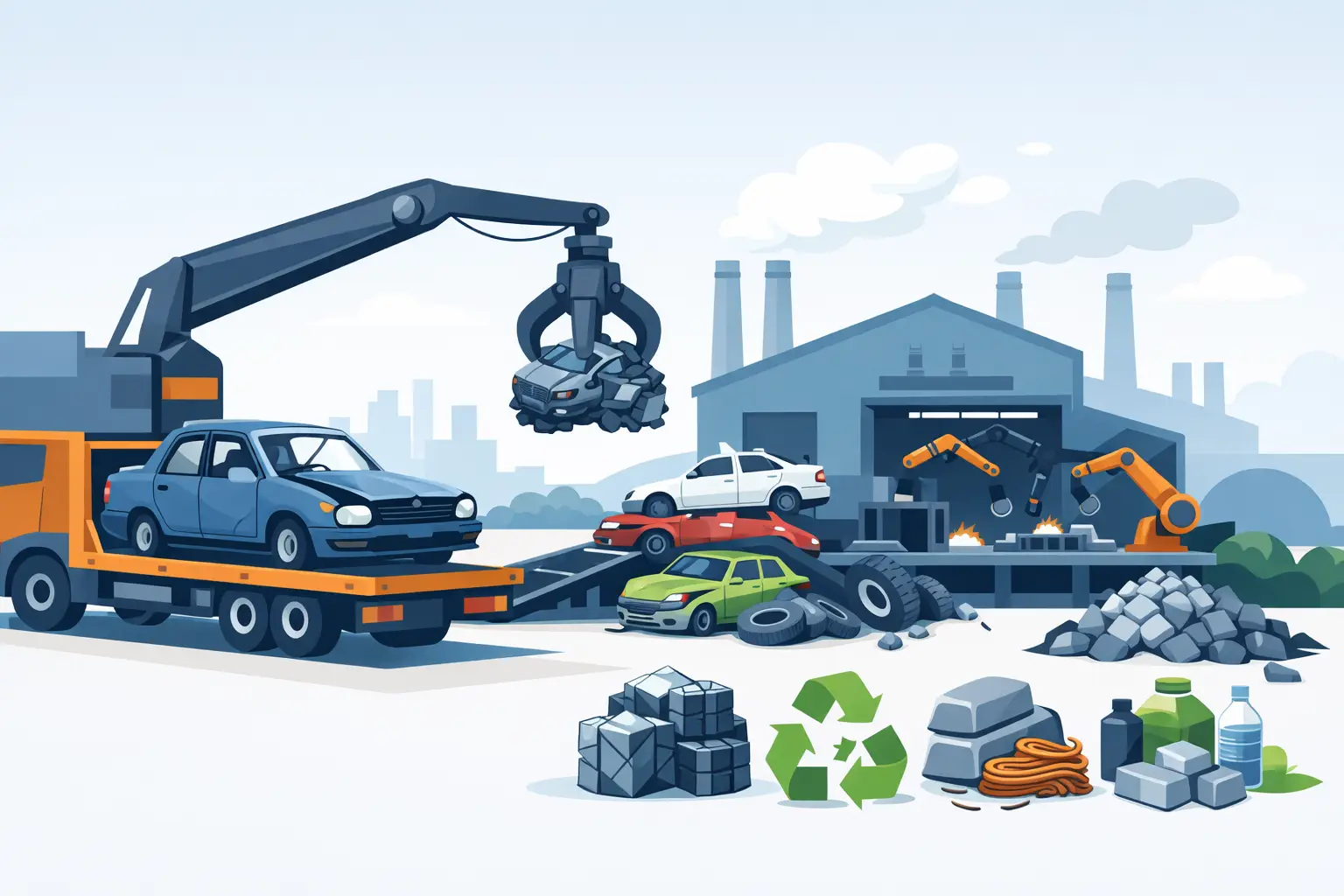
If you have never scrapped a vehicle before, it is perfectly normal to wonder what happens after car scrappage. Most owners know the car gets collected, the payment arrives, and that is about it. The unclear part is what actually happens next – both legally and physically – once the vehicle leaves your driveway, garage or roadside space.
For most people, the real concern is simple. You want the car gone quickly, you want the paperwork handled properly, and you do not want any problems later with the DVLA, unpaid tax, or questions about where the vehicle ended up. That is why it helps to understand the process from collection through to final recycling.
What happens after car scrappage is booked
Once you accept a quote and collection is arranged, the first step is vehicle handover. If the car is non-runner, accident damaged or simply too old to be worth repairing, it is usually collected from your home or another agreed location. A professional collection partner checks the vehicle details and takes it away for processing.
At this stage, your part of the job is usually quite small. You will normally need to make sure the correct vehicle is ready for collection, remove your personal belongings, and provide any details needed to complete the sale properly. If you still have the V5C logbook, that makes things more straightforward, but it is not always essential.
Payment is usually made by bank transfer rather than cash. That matters because scrap vehicle transactions in the UK must follow the rules on traceable payment. For sellers, it is one less thing to worry about. The process is cleaner, quicker and easier to evidence if needed.
The DVLA side after scrappage
One of the biggest questions around what happens after car scrappage is whether you still remain responsible for the vehicle. The short answer is no, but only once the transfer has been recorded properly.
You need to notify the DVLA that the vehicle has been sold or transferred to the motor trade or an authorised treatment facility, depending on the exact route. This can be done using the relevant section of the V5C or through the DVLA online service if applicable. When that is completed, the registered keeper’s responsibility ends from the date of transfer, not from the date you first asked for a quote.
This point is important. If the paperwork is delayed or done incorrectly, you could still appear on record as the keeper. That can create avoidable stress if any letters, penalties or queries arrive afterwards. A proper scrappage service should support this part of the process clearly, because it is not just admin – it protects you.
If there is vehicle tax left, you may also be due an automatic refund for any full months remaining once the DVLA updates its records. That refund does not come from the scrap buyer. It comes separately, so it is worth knowing not to confuse the two.
Where the car goes next
After collection, the vehicle is taken to an authorised facility for assessment and processing. This is where the practical side of scrappage starts. The car is checked, logged and prepared for depollution and dismantling.
Not every scrap vehicle is in exactly the same condition, so the route can vary slightly. A very old end-of-life car may go straight into depollution and material recovery. A newer but badly damaged vehicle might first be assessed in more detail to determine how it should be processed. Either way, the goal is compliant disposal and recycling, not simply crushing everything the moment it arrives.
For owners, this is one of the reasons using an established service matters. You are not just trying to get rid of a car. You are handing over a registered vehicle that must be dealt with properly.
Depollution comes first
Before the shell can be crushed or recycled, the vehicle has to be depolluted. This means all hazardous fluids and materials are removed and handled safely. Fuel, engine oil, brake fluid, coolant and battery components all need proper treatment.
This step is not optional. It is a core part of legal, environmentally responsible car recycling in the UK. Tyres, catalytic converters and other materials may also need to be removed or separated during processing.
That is one of the main answers to what happens after car scrappage: the car does not just vanish. It goes through a controlled chain designed to reduce waste, remove harmful substances and recover recyclable materials.
The Certificate of Destruction
In many cases, once the vehicle has been accepted and processed by an authorised treatment facility, a Certificate of Destruction may be issued. This is the formal confirmation that the vehicle is being destroyed through the proper channel.
Not every owner fully understands when this document is generated or whether they personally need a copy straight away, so this is where clear communication helps. The key point is that the certificate supports the official end-of-life record of the vehicle.
If you are ever unsure whether one should be issued in your case, ask before collection or at the point of handover. A straightforward service will explain exactly what paperwork applies and what to expect afterwards.
How much of the car is actually recycled?
A large proportion of a scrap car is recyclable. Metal is the biggest part of that. Steel and other metals are recovered, sorted and sent on for reprocessing so they can be used again in manufacturing.
That said, not every material is equal. Some elements are easier and more valuable to recycle than others. The make, model, age and condition of the vehicle can all affect the recovery process. A badly corroded car and a relatively modern damaged car may both be scrapped, but the material value and processing route can differ.
This is also why quotes vary. Scrap value is not based on one flat rate for every vehicle. Weight, current metal prices, vehicle type and demand in the recycling network all play a part.
What if the car still had life left in it?
Sometimes owners ask about scrappage when the car is technically repairable but no longer worth the cost, hassle or risk. In those cases, the decision is often financial rather than mechanical. If the next MOT is likely to bring another long list of faults, scrapping can be the simpler route.
The trade-off is that you might get more money through a private sale if the vehicle is still roadworthy and attractive to buyers. But private selling takes time, often involves negotiation, and can be difficult if the car has faults, warning lights or body damage. For many people, a fast collection and quick bank payment are worth more than chasing an uncertain better price.
Why paperwork and compliance matter so much
The biggest problems after scrappage usually come from poor record-keeping, not from the recycling itself. If ownership has not been updated, if the collection was arranged through the wrong channel, or if the seller has no clear proof of the transaction, sorting it out later can be frustrating.
That is why the best scrappage services keep things simple from the start. You get a clear quote, a booked collection, traceable payment, and support with the official process. For drivers in Peterborough and nearby areas, that practical support often matters just as much as the final price.
Speed is useful, but speed without proper handling is not enough. You want both.
What happens after car scrappage for you as the owner
From your point of view, the process should feel finished quite quickly. The car is collected, the payment is made, the DVLA record is updated, and any tax refund is dealt with separately. After that, there should be no ongoing burden attached to the vehicle.
If the service is run properly, you should not be left chasing answers or wondering where the car has gone. That is the standard people want when they have a dead car on the drive or a non-runner taking up space.
At Scrap Cars Peterborough, that is exactly why the process is built around quick quotes, free collection and help with the official side as well as the pickup itself. It saves time, removes uncertainty and gets the vehicle dealt with properly.
If you are thinking about scrapping your car, the useful thing to remember is this: once the right service takes over, the hard part is mostly done. Your job is not to figure out the recycling system in detail. It is to make sure the vehicle goes through the right hands so you can move on without the extra hassle.
Leave a Reply