
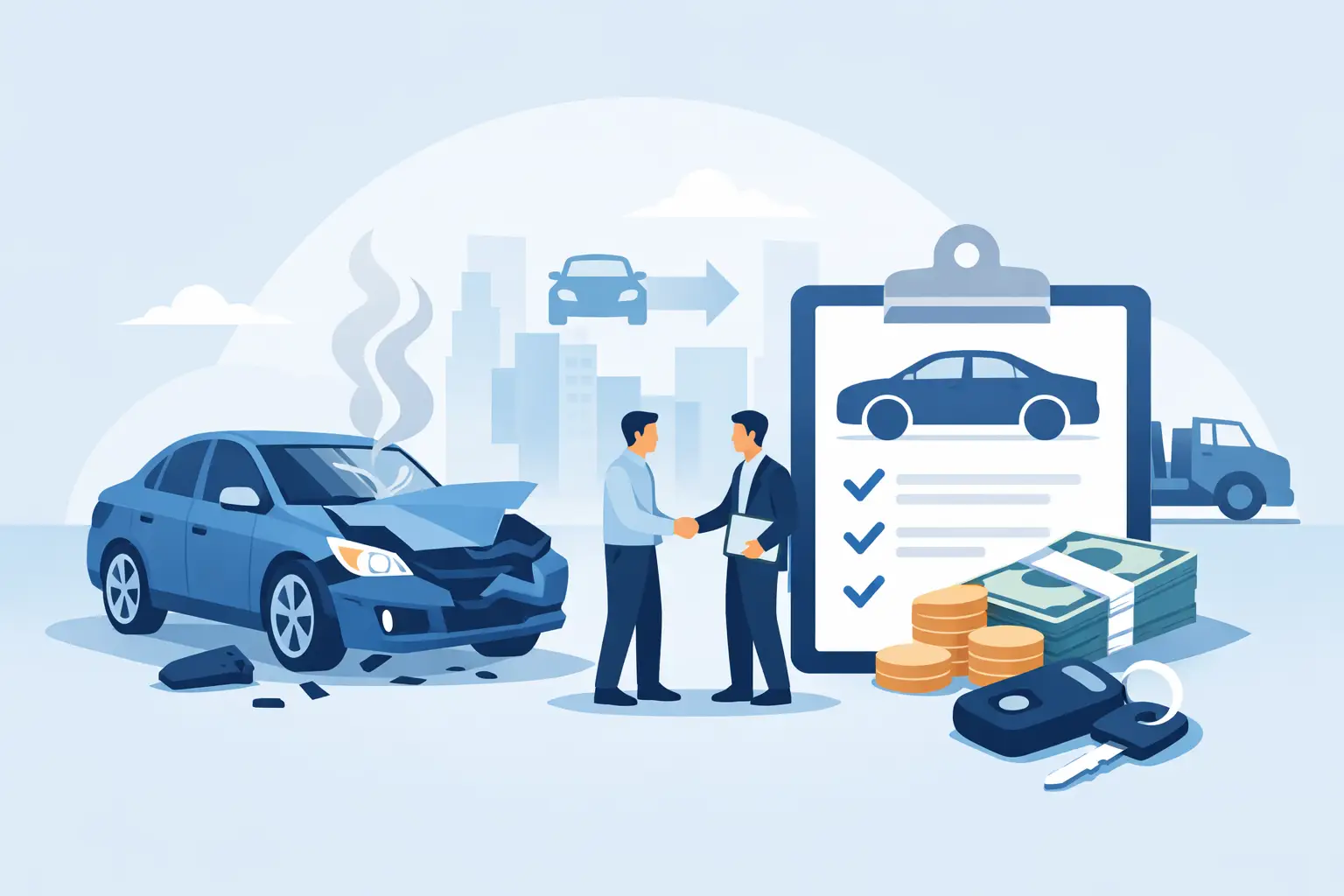
That moment after a crash is rarely just about the damage. It is also about the hassle that follows – insurance calls, recovery, storage, repairs that may not be worth it, and one practical question that comes up fast: can I sell crashed car and still get a fair price?
Yes, you can. In many cases, selling a crashed car is the simplest route, especially if the vehicle is unsafe to drive, expensive to repair, or already sitting on the drive doing nothing. The key is knowing who will buy it, what the car is actually worth in its current condition, and how to avoid wasting time with buyers who disappear the moment they hear the words accident damaged.
Can I sell a crashed car in the UK?
Yes – whether the car has light body damage, major accident damage, mechanical issues after a collision, or will not start at all. A crashed car can still have value as a damaged vehicle, a non-runner, or an end-of-life car destined for authorised recycling.
What matters most is the extent of the damage. A car with a dented wing and broken headlamp is a very different sale from one with deployed airbags, suspension damage, or a bent chassis. The more serious the damage, the less likely a private buyer will want the car, and the more likely it makes sense to sell it to a professional vehicle buyer or recycling service.
That is usually where people save time. Instead of arranging transport, answering endless messages, and negotiating with someone who expects the car to be perfect, you can sell the vehicle as it stands and have it collected.
What affects the value of a crashed car?
A crashed car is not valued the same way as a used car in working order. Buyers look at what can realistically be done with it. Sometimes that means repair. Sometimes it means recycling. The offer depends on several practical factors.
The first is the severity of the damage. Cosmetic damage will usually leave more value in the vehicle than structural damage. If the engine, gearbox, wheels, catalytic converter, and major systems are intact, that generally supports a better price than if the vehicle has heavy front-end impact or fire damage.
The make, model, age, and weight also matter. Some vehicles simply hold more salvage value than others. Larger vehicles can carry more recycling value, while newer models with less severe damage may attract stronger offers because they are more viable overall.
Your location and collection needs can also play a part. If the car is immobile and needs lifting from a driveway, garage, roadside location, or repairer, a professional service with free collection becomes far more useful than trying to sort transport yourself.
Paperwork helps too. If you have the V5C logbook, photo ID, and clear ownership details, the process is usually quicker. You can still sell a crashed car without every document in place, but missing paperwork can slow things down and may affect how smoothly the sale goes.
Is it better to repair it or sell it crashed?
This depends on the maths, not the emotion.
After an accident, many owners think about repairing the car because it feels wasteful to let it go. But once you look at bodywork costs, labour, paint, replacement components, MOT issues, and the risk of hidden damage, the repair bill can rise quickly. Even if the car is repaired, it may be worth less afterwards because of its damage history.
Selling it crashed often makes more sense if the repair cost is close to or above the car’s market value, if the vehicle is not roadworthy, or if you simply want it gone without more expense. If the car is older, high mileage, already unreliable, or failed its MOT before the crash, putting more money into it is often hard to justify.
On the other hand, if the damage is genuinely minor and the car is otherwise in excellent condition, repair may still be worthwhile. The right option comes down to total cost, expected resale value, and how much time and hassle you are willing to take on.
Who buys crashed cars?
There are a few possible routes, but they are not equal in terms of speed or convenience.
A private sale is possible, but it tends to be the slowest option. You will need to describe the damage clearly, deal with viewings, answer questions about roadworthiness, and probably accept a lower offer after negotiation. If the car does not drive, the buyer also needs to arrange transport, which puts many people off.
Some garages may offer to buy a damaged vehicle, but that is usually only in limited cases. More commonly, owners use a specialist scrap or damaged car buying service. That route is designed for vehicles that are written off, non-running, uneconomical to repair, or simply not worth advertising privately.
For many sellers, that is the practical choice. A specialist service can usually quote from your registration and postcode, collect the car from your address, and make payment by bank transfer without you needing to move the vehicle yourself.
Can I sell a crashed car without an MOT?
Yes. A crashed car does not need a valid MOT to be sold, especially if it is being collected rather than driven on the road.
This is one of the main reasons owners choose a collection service. If the car is not roadworthy, has failed its MOT, or has been standing since the accident, you should not be trying to drive it anywhere. A buyer that arranges collection removes that problem completely.
The same applies if the car has no tax or insurance. As long as the collection is properly arranged and the vehicle is not being driven illegally, the sale can still go ahead.
What paperwork do I need?
The V5C logbook is the main document people ask about, but it is not the only thing that matters. If you have it, great. If not, you may still be able to sell the vehicle as long as you can prove ownership and provide valid identification.
You should also be ready with your registration number, postcode, and a clear description of the damage. Photos help if the buyer requests them. Being honest about the condition from the start usually leads to a firmer quote and avoids awkward changes later.
Once the vehicle is sold, make sure the ownership transfer is handled properly. If the car is being scrapped or recycled, official paperwork should be completed correctly so you are not left responsible for a vehicle you no longer own.
How to sell a crashed car without wasting time
The fastest sales are usually the simplest ones. Start by getting a quote based on the registration, postcode, and condition. Be accurate about whether the car starts, whether it rolls, and what visible accident damage it has. A realistic quote is far more useful than an inflated one that gets reduced on collection day.
Next, check what is included. Collection matters. If the vehicle is badly damaged or parked somewhere awkward, free collection can save you a significant amount of hassle and expense. You should also check that payment is made promptly by bank transfer and that the paperwork is handled properly.
If you are in or around Peterborough, Stamford, Bourne, Spalding, Wisbech, March, Huntingdon or Corby, using a local service with a professional collection network can make the process much quicker. Scrap Cars Peterborough, for example, helps owners sell damaged and non-running vehicles without needing to arrange towing or chase buyers.
When scrapping is the right answer
Not every crashed car should be repaired or resold. Sometimes the damage is too severe, the repair costs are too high, or the car was near the end of its life anyway. In those cases, scrapping is not a last resort – it is the sensible option.
A proper scrappage and recycling service gives you a legal, straightforward exit. You get a price for the vehicle in its current state, collection is arranged, payment is made quickly, and the disposal is dealt with correctly. For owners who just want the damaged car gone with minimum effort, that is usually the cleanest route.
If you are asking can I sell crashed car, the short answer is yes. The better question is how quickly you want it gone, how much hassle you are willing to accept, and whether repairing it makes financial sense at all. For many damaged vehicles, the easiest sale is the one that gets the car collected, the payment sorted, and the paperwork done properly so you can move on.
Leave a Reply