
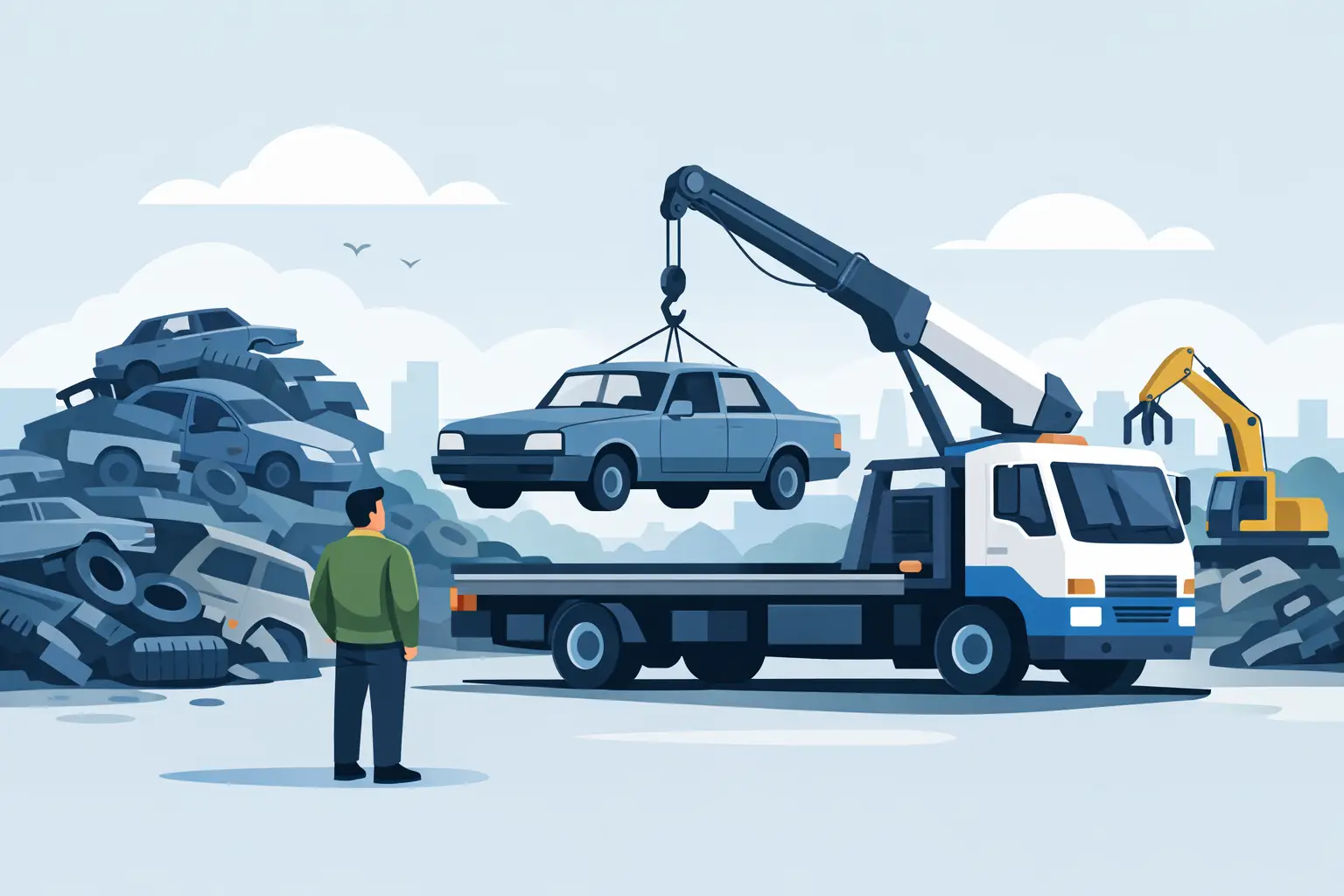
If your car will not start, has failed its MOT, or is simply taking up space on the drive, one question usually comes first: can scrapyards collect my car? In many cases, yes. A reputable scrapyard or scrap car collection service can arrange collection from your home, workplace, garage or roadside location, which saves you the trouble and cost of moving an unroadworthy vehicle yourself.
That said, not every service works in exactly the same way. Some collect for free, some charge depending on distance or condition, and some only cover certain postcodes. If you are trying to get rid of a damaged, non-running or end-of-life vehicle quickly, it helps to know what collection really includes, what paperwork you will need, and what can affect the final price.
Can scrapyards collect my car if it does not run?
Yes, scrapyards can often collect cars that do not run, have flat batteries, accident damage, missing keys or mechanical faults. In fact, that is one of the main reasons people use a scrap collection service rather than trying to sell privately. If the car is not roadworthy, driving it anywhere may not be legal or practical, and arranging your own recovery can wipe out a good part of the car’s value.
Most professional operators use recovery vehicles designed to move non-runners safely. The key point is honesty at the quote stage. If the car has seized brakes, missing wheels, serious collision damage or is stuck in a difficult location, say so upfront. That allows the collection team to bring the right vehicle and avoid delays on the day.
If your car is parked in a tight space, on a busy road or inside a car park with height restrictions, mention that too. A straightforward collection is usually quick. A difficult access job may still be possible, but it needs planning.
How the collection process usually works
The process is normally simpler than most people expect. You provide the registration and postcode, answer a few questions about the car’s condition, and receive a quote. If you accept, a collection slot is arranged. On the day, the vehicle is checked, loaded and payment is made by bank transfer.
A good service keeps this moving without unnecessary back and forth. That matters when you are dealing with a broken-down vehicle because the longer it sits there, the more inconvenient it becomes. For many owners, the value is not just in the price offered. It is in avoiding towing charges, time off work and the hassle of chasing buyers who never turn up.
In practical terms, you should expect three things from a proper collection service: a clear quote, a confirmed collection time and support with the official paperwork. If any of those are vague, it is worth asking more questions before agreeing.
What you need before a scrapyard collects your car
When asking, can scrapyards collect my car, what you usually mean is, can they collect it without creating more work for me? Usually yes, but you still need a few basics in place.
First, you need to prove you are entitled to dispose of the vehicle. That usually means having the V5C logbook, although collection may still be possible if you have misplaced it. If you do not have the logbook, be upfront about that from the start so the service can explain what is needed.
Second, remove all personal belongings before collection. Check the glovebox, boot, door pockets and under the seats. People often forget charging cables, sunglasses, paperwork and parking permits. Once the car has gone into processing, getting anything back can be difficult or impossible.
Third, have photo ID and your bank details ready if required. Payment for scrap vehicles is typically made by bank transfer, not cash. That is standard practice and helps keep the transaction compliant and traceable.
If possible, keep the car accessible for loading. If another vehicle is blocking it in, or if it is in a locked compound, that can slow things down.
Is collection always free?
Not always, but free collection is common, especially when the vehicle has enough scrap value to cover transport and handling. A complete car in an easy-to-reach location is more likely to qualify for free collection than one that is stripped, badly damaged or far outside a normal service area.
This is where the cheapest-looking quote is not always the best quote. Some firms advertise a strong price, then reduce it with collection charges or condition-related deductions later. Others offer a realistic price from the start and include collection at no extra cost. The better option is the one that is clear and consistent.
If you are comparing offers, ask one direct question: is the amount quoted the amount I will receive after collection? That tends to cut through the sales talk quite quickly.
What affects how much you get?
The collection itself is only part of the picture. The amount you receive depends on the car’s make, model, age, weight, condition and current scrap metal market. Some vehicles are worth more because they are heavier or because demand is stronger within the recycling network.
Damage does not automatically mean a poor price, but it can affect value. A car with fire damage, major accident damage or missing components may be worth less than a complete vehicle that simply no longer runs. Location can also play a part. If the collection is local and straightforward, that supports a better return than a long-distance or difficult pickup.
This is why an instant quote based on your registration and postcode is useful. It gives you a realistic starting point quickly, without the delay of listing the car for private sale and negotiating with people who may not understand what a non-runner is actually worth.
Paperwork and legal points to get right
Selling a scrap car is not just about having it picked up. It also needs to be handled properly. You should make sure the vehicle is going to an authorised treatment facility or being processed through a compliant recycling route. That protects you and ensures the car is disposed of legally.
You will also need to notify the DVLA that you have sold or transferred the vehicle. If you have the V5C, the relevant section can be completed as part of the handover process. If you are unsure, ask the collection service to explain exactly what happens and what confirmation you will receive.
A proper service should make this straightforward rather than leaving you to work it out afterwards. If a company is vague about paperwork, that is a warning sign. You do not want a vehicle still appearing in your name weeks later.
When collection makes more sense than delivering it yourself
There are cases where driving a car to a scrapyard might seem cheaper or faster. If the vehicle is taxed, insured, roadworthy and nearby, that can work. But many scrap cars are none of those things. Once you factor in recovery costs, time, fuel and the risk of a breakdown on the way, collection usually becomes the simpler option.
It is also easier for families, elderly owners or anyone juggling work and childcare. If the car is stuck on the drive and you need it gone without turning it into a weekend project, collection is the practical answer.
That is especially true for local owners who want a fast, managed service. Scrap Cars Peterborough handles this kind of collection every day, with quotes, collection and paperwork support designed to keep the process simple from start to finish.
A few common reasons collections get delayed
Most delays are avoidable. The main issues are incorrect vehicle descriptions, missing access arrangements and documents not being ready. If the car was quoted as a non-runner but turns out to be badly accident-damaged with no wheels, the collection team may need different equipment. If it is in a multi-storey car park, a standard recovery lorry may not fit.
Clear information matters. A good quote depends on the details being accurate, and a smooth collection depends on the vehicle being where you said it would be.
If your circumstances change before the booking, let the company know. It is better to update the collection details than to have a failed pickup and start again.
The simplest way to look at it is this: yes, scrapyards can collect your car, and for many owners that is the easiest, quickest and most sensible route. The right service will quote clearly, collect promptly, pay by bank transfer and help you deal with the paperwork properly. If your car is unwanted, damaged or no longer worth repairing, getting it collected can turn a problem on your drive into one less thing to think about.
Leave a Reply