
May 23, 2026
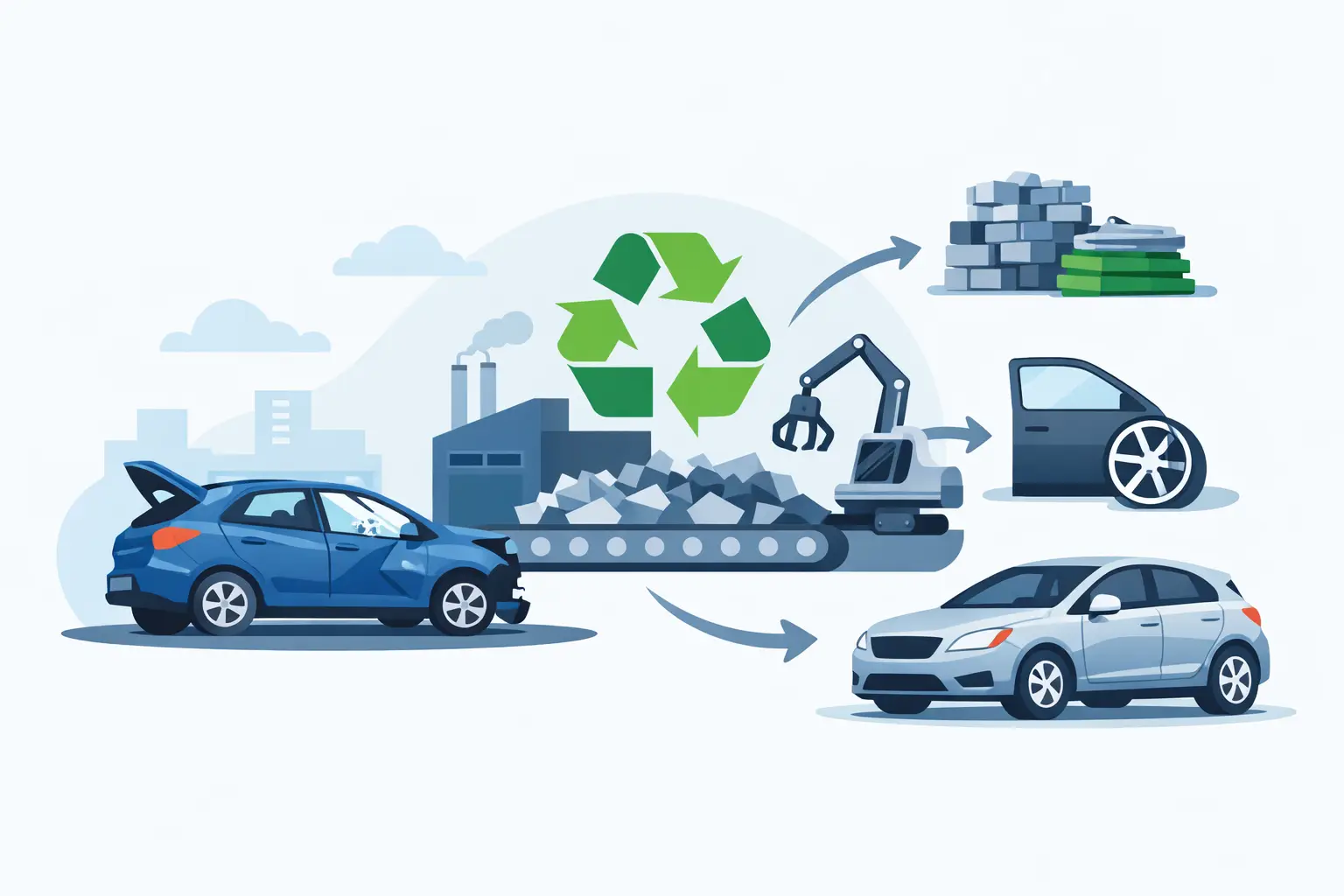
Damaged Hatchback Recycling Example Explained
A damaged hatchback recycling example showing how quotes, collection, paperwork and recycling work when your car is beyond…
Read article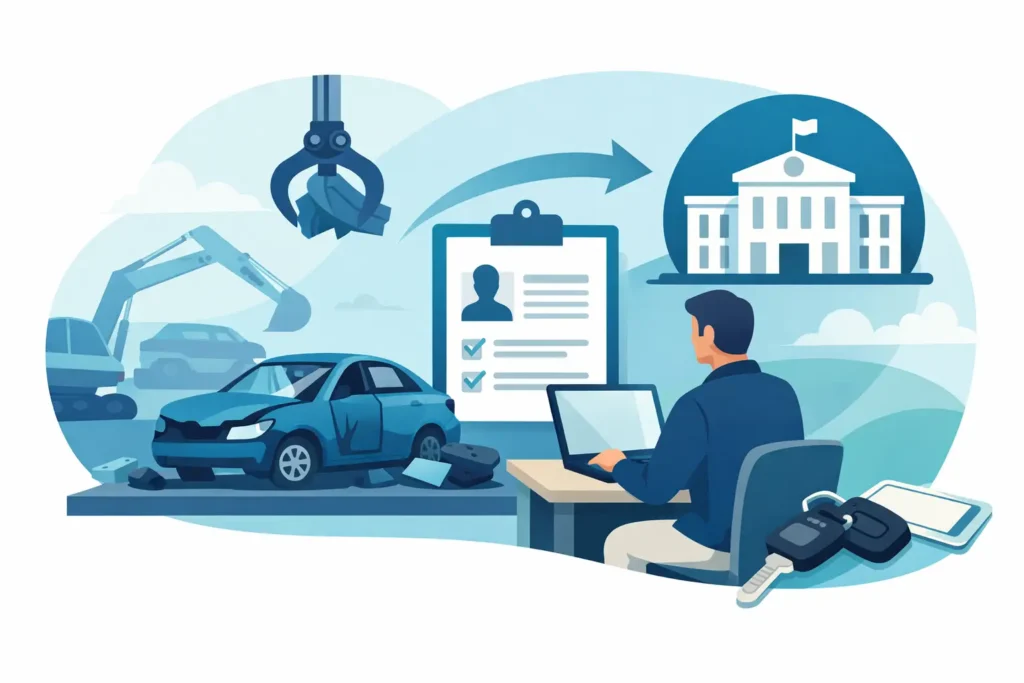
A car is gone, the collection has happened, and the payment has landed – then the question hits: who notifies DVLA after scrapping? It matters more than most people realise, because if the DVLA record is not updated properly, you could still be tied to a vehicle you no longer own.
The short answer is this: the registered keeper is responsible for telling DVLA that the vehicle has been sold or transferred to a motor trader, insurer or dismantler. The Authorised Treatment Facility, or ATF, also has its own legal responsibilities once the vehicle is scrapped. In practice, both sides have a part to play, but the job of making sure DVLA knows you no longer have the car starts with you.
If you are the registered keeper, you should not assume the scrapyard will handle everything from your side. A compliant recycler will deal with the treatment and issue the correct paperwork, but the keeper should still notify DVLA that the vehicle has gone to an authorised dismantler or scrap facility.
That is the safest way to protect yourself. Once DVLA updates its record, you are no longer the keeper, which means you should not remain liable for vehicle tax issues, penalties linked to the car, or follow-up letters about a vehicle that has already been destroyed.
This is where some people get caught out. They hand over the car, receive payment, and think the process is finished. Then weeks later they are checking whether the logbook side was actually completed. If it was not, the stress starts after the vehicle has already left.
DVLA records are tied to the registered keeper, not simply to whoever collected the car. That is why the keeper must make sure the ownership status is updated. Even if the recycler says they will assist with the paperwork, it is sensible to treat the DVLA notification as your responsibility until you have confirmation.
This is not about mistrusting the collection company. It is about protecting your own position. A professional scrap service should make the process clear, explain what paperwork is needed, and help you get it right. But from a legal and practical point of view, you should still make sure the DVLA notification is done.
If your car is being scrapped through an Authorised Treatment Facility, the ATF should then issue a Certificate of Destruction once the vehicle is officially destroyed. That certificate is an important part of the process, but it does not replace your duty to notify DVLA that the vehicle has left your possession.
A proper ATF is authorised to depollute and dismantle end-of-life vehicles in line with regulations. Once the car reaches that stage, they handle the disposal process correctly and create the official record of destruction.
That matters because not every business that buys damaged or unwanted vehicles is the same. Some collect cars for salvage, some pass them into trade channels, and some send them directly for destruction. The exact DVLA category can vary depending on what is happening to the vehicle.
If the vehicle is genuinely at the end of its life and being scrapped, the ATF should issue a Certificate of Destruction. If a business buys your car but does not scrap it straight away, the process may be recorded differently. That is why clear communication matters. Ask exactly what will happen to the vehicle and what paperwork you will receive.
The usual route is through the V5C logbook. If you have the V5C, you use the relevant section to tell DVLA that the vehicle has been transferred to a motor trader, insurer or dismantler. The current process can be completed online or by post, depending on your paperwork and circumstances.
Online is normally quicker and gives more immediate confirmation. If you are posting documents, make sure the details are correct and keep a record of what you sent.
If you do not have the logbook, the situation is still fixable, but it can take a little more effort. You may need to write to DVLA with the vehicle details, the date it was handed over, and the name and address of the authorised business that took it. This is another reason why working with a straightforward, professional service helps – you want collection details that are easy to confirm if needed.
When a car is scrapped, paperwork is not just admin. It is your proof that the vehicle has left your possession and been dealt with properly.
Keep any confirmation from DVLA that you are no longer the registered keeper. Keep the collection receipt or invoice showing the date the vehicle was taken. If the car has been destroyed by an ATF, keep the Certificate of Destruction as well. If there is ever a question later, those documents make life much easier.
It is also worth checking that the name and address on your V5C are up to date before the car is collected. Small errors can slow down the process or create confusion if a refund or confirmation letter is issued.
Yes, in many cases you will automatically receive a refund for any full months of remaining vehicle tax once DVLA has been notified that you are no longer the keeper. That refund is handled by DVLA, not by the scrap company.
This is another reason the notification matters. If DVLA does not know the vehicle has been scrapped or transferred out of your name, the tax record may not be updated promptly. A delay does not always mean something has gone wrong, but it usually means your paperwork should be checked.
The refund will normally be sent to the person named on the vehicle tax record, using the address DVLA holds. If your details are outdated, that can create unnecessary chasing.
The biggest mistake is assuming somebody else has told DVLA when no confirmation has been received. The second is handing over a car without checking that the buyer is an authorised operator where scrapping is involved.
Another common issue is forgetting that the vehicle must not be sold for cash to a scrap dealer. Payment rules are strict, and professional operators will pay by bank transfer or another compliant method. If a business is vague about paperwork or payment, that is usually a sign to slow down.
People also sometimes throw away documents too soon. Keep your records for peace of mind. It costs nothing, and it avoids headaches later.
Collection from your driveway, workplace or roadside does not change the responsibility. Whether the car was drivable or had to be lifted away, the registered keeper still needs to make sure DVLA is informed.
For many owners, especially with non-runners or accident-damaged vehicles, collection is the easiest option. It saves arranging transport and gets the vehicle moved quickly. But convenience should not mean skipping the final admin. The easiest process is one where the car is collected, paid for, and the paperwork is completed properly on the same day.
That is why a lot of local drivers prefer a service that supports the paperwork rather than leaving them to work it out afterwards. If you are scrapping a car in Peterborough or nearby, a good service should make the handover clear from the start, explain what you need to sign, and tell you exactly what to expect from DVLA afterwards.
If the vehicle has already gone and you are now wondering whether DVLA was updated, act quickly. Check your emails or post for confirmation first. If you have nothing, contact DVLA and gather any evidence you have from the collection, including the date, registration number and business details.
Do not leave it sitting in the hope that it sorts itself out. Most paperwork issues are straightforward when handled early. They become harder when months have passed and you are trying to reconstruct what happened.
A reliable scrap service should help if you need to confirm the collection details, but the sooner you chase it, the better.
When people ask who notifies DVLA after scrapping, the safest answer is: you do, and the authorised recycler does their part afterwards. That keeps the process clean from both ends.
If you treat the DVLA update as something to tick off before you mentally move on from the car, you avoid most of the common problems. The vehicle is gone, the records are correct, and you can get on with your day without wondering whether a fine or tax letter is still heading your way.
If there is one useful habit here, it is this – never let your car leave without knowing exactly how the paperwork is being handled.
Ready to get a fair price for your scrap car?
Get a Free Quote
A damaged hatchback recycling example showing how quotes, collection, paperwork and recycling work when your car is beyond…
Read article
Looking for the best options for non runners? See how to sell, scrap or remove a broken car…
Read article
Repairing versus scrapping cars depends on cost, age and damage. Learn when a repair makes sense and when…
Read article