
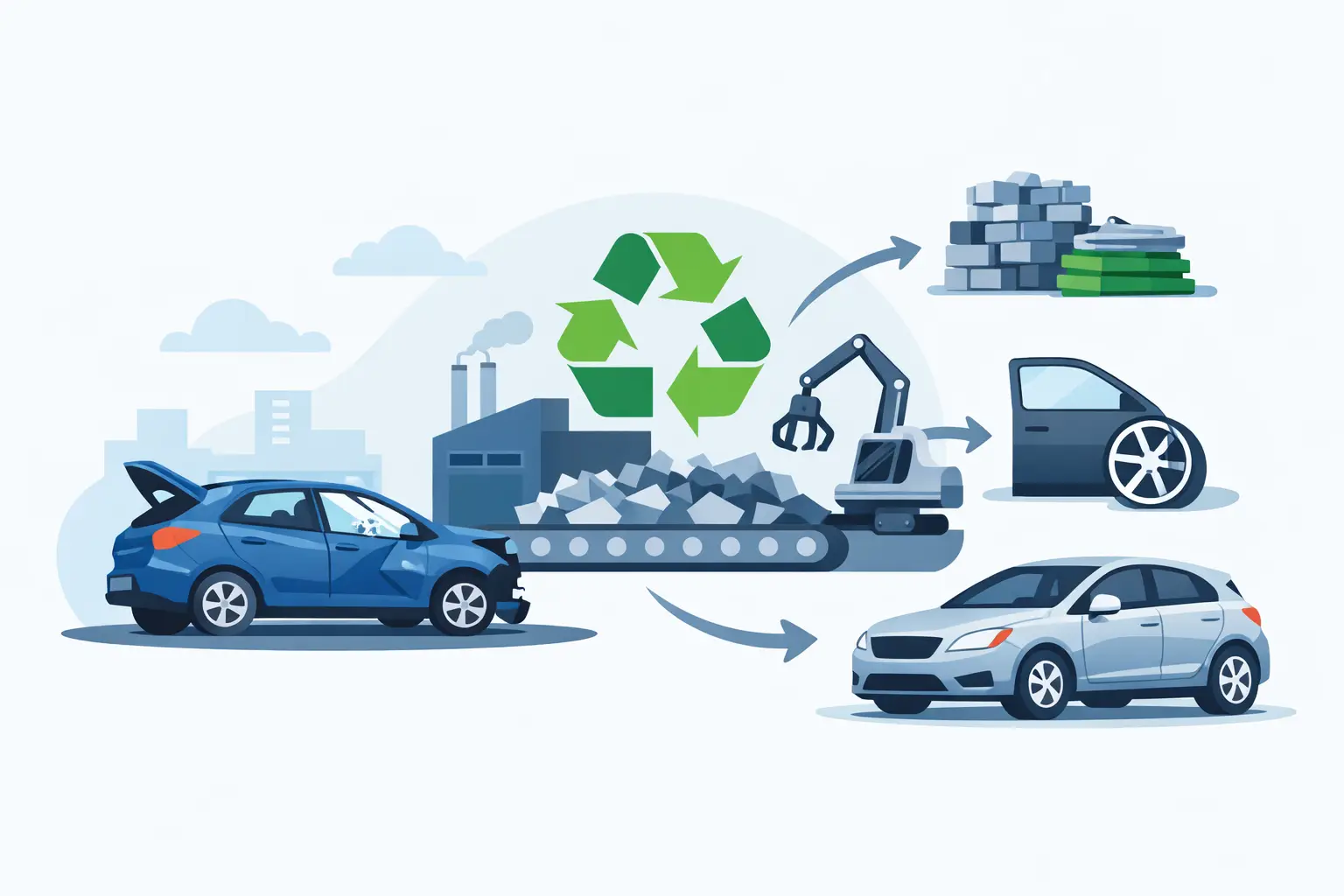
A rear-end shunt, a failed MOT, and a repair bill that makes no sense – that is usually how a hatchback ends up being scrapped. A damaged hatchback recycling example helps make the process clearer, especially if your car no longer starts, is uneconomical to fix, or has been sitting on the drive for weeks while you decide what to do next.
For many owners, the biggest question is not whether the car is finished. It is what happens next. How is the value worked out, who collects it, what paperwork matters, and which parts of the vehicle are actually recycled? If you have never scrapped a car before, those are sensible questions.
A damaged hatchback recycling example from start to finish
Take a common scenario. A ten-year-old hatchback has been involved in a low-speed accident. The rear quarter is crushed, the boot will not close properly, and the suspension has taken a knock. The insurer does not repair it, or the owner chooses not to because the cost is too high compared with the vehicle’s market value.
At this stage, the car may still have some worth, but not as a car someone would want to buy privately. Its value now sits in a mix of scrap metal weight, reusable materials, and the condition of major components. That is why scrap and recycling quotes can vary. A small hatchback with severe structural damage may still return a fair price if the engine, gearbox, catalytic converter, wheels, and battery are present.
The first practical step is usually a quote. In most cases, that starts with the registration and postcode. From there, the recycler or collection network checks the vehicle details, age, fuel type, and likely weight. If the hatchback is non-runner, badly damaged, or missing parts, that affects the offer. If it is complete and easy to collect, that can help.
After the quote is accepted, collection is booked. This is where the process becomes much easier for owners. A damaged hatchback often cannot be driven legally or safely, so collection from home, work, or a garage removes a major headache. Once collected, the vehicle goes into an authorised recycling process rather than being left to deteriorate or being passed around through uncertain private sales.
What actually happens to the car at the recycling stage
People often imagine scrapping as a single event – car arrives, car gets crushed. In reality, the process has stages. First, the hatchback is checked in and identified. Then it is depolluted. That means hazardous fluids and materials are removed and handled correctly, including fuel, oil, coolant, brake fluid, and the battery.
This part matters more than many people realise. A damaged vehicle can leak fluids or hold contaminated components, especially after a collision. Proper depollution protects the site, the surrounding environment, and the recycling chain that comes after.
Once the dangerous materials are removed, the car is stripped down as needed for material recovery. Metals have obvious recycling value, but they are not the only part of the story. Glass, tyres, plastics, and certain interior materials may also be separated for processing, depending on the condition of the vehicle and the facility handling it.
The bodyshell is then processed for metal recovery. Steel and other metals are valuable because they can be recycled back into manufacturing use. For a hatchback, that usually forms the bulk of the final scrap value, although some components can influence the price more than owners expect.
Why hatchbacks are a common scrappage case
A hatchback is one of the most frequently scrapped vehicle types in the UK because it is so common in the first place. They are popular with families, commuters, first-time drivers, and anyone who wants a practical small car. That also means many reach the point where age, accident damage, corrosion, or mechanical failure outweigh the value of repairs.
There is also a simple economic issue. Hatchbacks often sit in a lower resale bracket than larger vehicles, so a major gearbox problem, engine fault, or accident repair can write them off financially long before the car is completely unusable. A damaged hatchback recycling example is useful because it reflects a very normal situation, not a rare one.
The trade-off is straightforward. Repairing the vehicle might make sense if the damage is light and the rest of the car is in excellent condition. It might not if the repair bill is close to, or above, the car’s actual resale value. That is where scrappage becomes the more practical route.
What affects the price in a damaged hatchback recycling example
Owners often expect a single flat scrap rate, but pricing depends on several details. Weight matters because metal recovery is a key part of the value. A larger hatchback may bring more than a very small city car for that reason alone.
Condition matters too, even with a damaged vehicle. If the catalytic converter is still fitted, the alloy wheels are present, and the car is broadly complete, the quote may be stronger. If key items are missing, stripped out, or badly fire-damaged, the value will usually drop.
Location can affect collection efficiency. In and around Peterborough and nearby areas, a fast local collection service can make disposal much simpler for owners dealing with a non-runner on a driveway, in a car park, or at a repair garage. Speed and convenience do matter when the car is already causing disruption.
Current scrap metal market conditions also play a part. Prices move. That means the same hatchback might be worth a different amount this month than it was a few months ago. Anyone offering fixed assumptions without seeing the vehicle details is often oversimplifying the process.
Paperwork and legal points that matter
A lot of stress comes from uncertainty around paperwork, not the car itself. Most private owners simply want to know they have done it properly. They do not want a damaged hatchback collected and then worry about fines, tax issues, or whether the vehicle is still somehow in their name.
That is why official handling matters. When a vehicle is scrapped through the proper channel, the transfer and end-of-life process should be recorded correctly. The owner should know what information is needed, what happens on collection day, and what confirmation they can expect afterwards.
The practical benefit is peace of mind. You are not trying to negotiate with random buyers, arrange your own towing, or guess whether the disposal is compliant. A straightforward quote, collection, payment, and paperwork process is usually what people want most when the car has become a problem.
When scrapping is better than selling privately
Private sale sounds attractive until the reality starts. With a damaged hatchback, you may be dealing with buyers who want to haggle, fail to turn up, or expect the car to be driven away despite obvious faults. If the car is not roadworthy, that limits your options even further.
Scrapping is often the cleaner choice when the hatchback is accident-damaged, failed beyond sensible repair, or simply not worth preparing for sale. You avoid advertising costs, repeated messages, and the risk of wasting time on a car that needs to go quickly.
For owners with a busy schedule, a family car off the road, or a vehicle blocking space at home, convenience is not a small extra. It is the deciding factor. Fast collection and quick payment can be worth more than chasing a slightly higher figure that may never actually materialise.
A practical damaged hatchback recycling example for owners
Imagine your hatchback has failed its MOT on corrosion, suspension wear, and emissions. A week later, the clutch goes. You could repair it, but the total cost is more than the car is worth. You request a quote, give the registration and postcode, accept the offer, and arrange collection for the next day. The vehicle is collected from your address, payment is made promptly, and the paperwork is handled correctly.
That is not a dramatic case. It is an everyday one. And that is the point. A damaged hatchback recycling example is useful because it shows that scrapping a car is not complicated when the process is set up properly. It should feel clear, fast, and professionally managed from the first quote to the final collection.
If your hatchback is no longer worth repairing, do not leave it sitting there costing you time, space, and unnecessary worry. The sensible next step is the one that gets it collected, paid for, and dealt with properly so you can move on.
Leave a Reply