
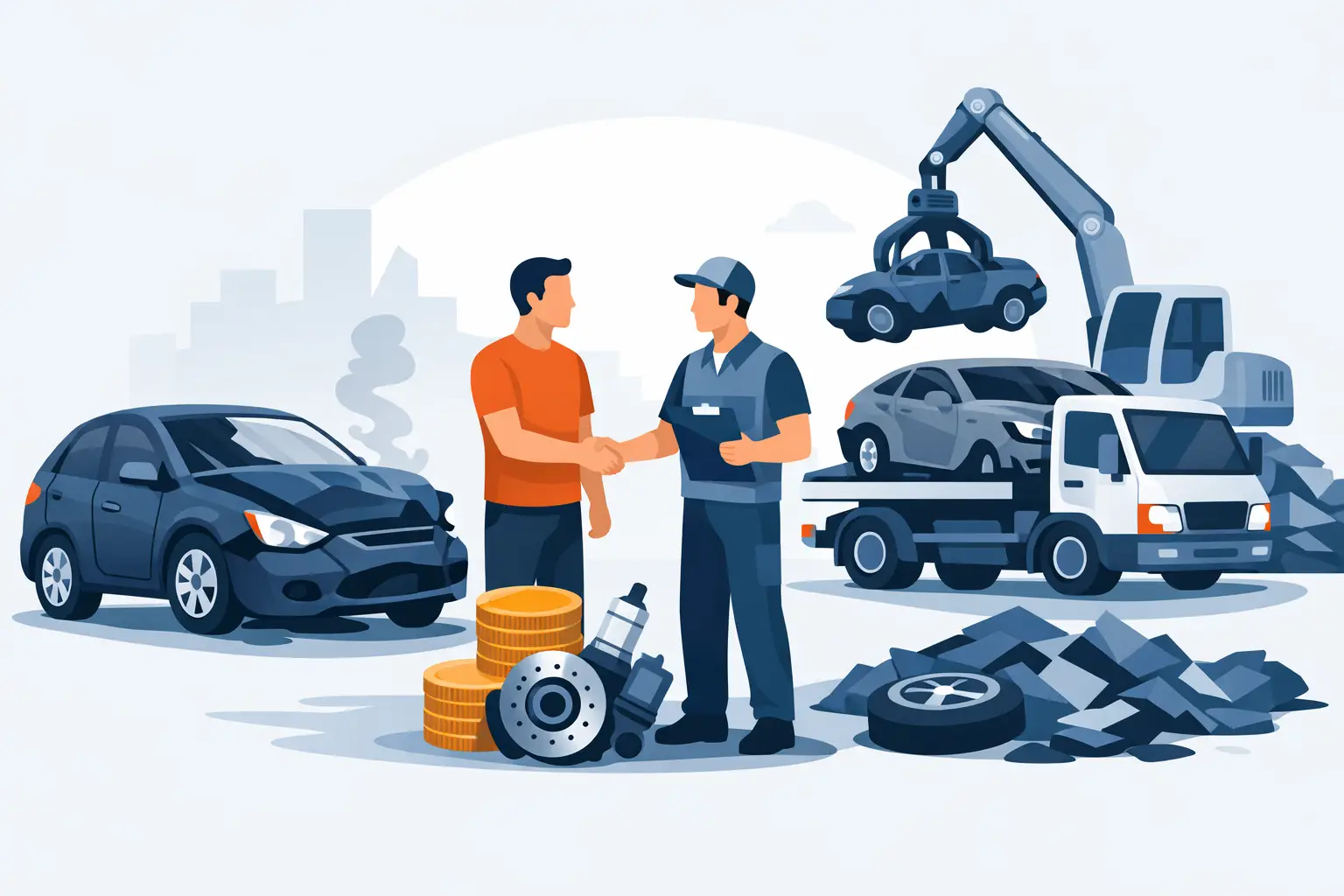
A damaged car can sit on a drive for months while you keep meaning to sort it. Then the tax runs out, the MOT is long gone, and the cost of repairing it starts to look completely out of proportion to its value. If you need to sell damaged car for scrap, the good news is that the process is usually much quicker and simpler than trying to sell it privately.
For most owners, the real question is not whether the car is worth fixing. It is whether it is worth your time, money and effort to keep dealing with it. An accident-damaged car, a non-runner, or a vehicle with major mechanical faults often becomes more of a headache than an asset. Scrapping it gives you a clean exit, and if you use a professional service, you can usually get a quote, arrange collection and receive payment without having to move the car yourself.
When it makes sense to sell damaged car for scrap
Not every damaged vehicle should be scrapped immediately. If the damage is minor and the car is still in demand, a private sale might bring in more money. That can work if you are happy dealing with viewings, negotiation and buyers who may change their mind the moment they see a warning light on the dashboard.
But there is a tipping point where scrapping becomes the sensible option. If the vehicle has heavy body damage, failed structurally, suffered engine or gearbox failure, or no longer starts, the repair bill can quickly overtake any realistic resale value. The same applies if the car has been written off by an insurer, or if it has been left unused for so long that getting it roadworthy again would mean spending money on tyres, brakes, battery, recovery and MOT work before you can even market it.
In those cases, speed and certainty matter more than chasing a slightly higher figure. A straightforward scrap sale removes the vehicle from your hands without more cost piling up.
What affects the scrap value of a damaged car
Scrap prices are not random, but they do vary. The most obvious factor is the vehicle itself. Larger cars tend to weigh more, and weight can influence value because of the recyclable material involved. Age, make, model and overall condition also matter.
Damage affects the price, but not always in the way people expect. A car with front-end accident damage may still attract a decent offer if it is a heavier model or a newer vehicle. On the other hand, a small older hatchback with severe corrosion and missing components may be worth less even if the crash damage is limited.
Location can also influence the final figure, especially if collection needs to be arranged from a difficult site or the vehicle is hard to access. Market conditions play a part too. Scrap metal values move, and so do demand levels across recycling networks, which is why one fixed price approach rarely gives sellers the best return.
That is one reason many owners prefer a service that compares prices through a wider network rather than relying on a single local buyer. It gives you a better chance of getting a fair market-backed offer without spending your day ringing around.
The easiest way to sell damaged car for scrap
The simplest route is to use a service that gives you a quote from your registration and postcode, then arranges collection and payment for you. That matters most when the car is not drivable. If the vehicle has suspension damage, electrical faults, steering issues or accident damage, the last thing you need is to organise towing separately.
A proper scrap collection service removes that friction. You enter the vehicle details, receive a price, accept it, and book collection. If the offer is right, the job can move quickly. Many sellers are not looking for a long process. They want the vehicle gone, the paperwork handled properly, and the money paid promptly.
At that point, convenience becomes part of the value. A slightly higher offer is not always the better deal if it depends on you delivering a damaged car yourself or chasing payment afterwards.
What documents do you need?
The process is easier if you have the V5C logbook, but not having it does not always stop you from scrapping the car. A professional buyer will explain what is needed based on your situation. You will also normally need proof of identity, and the vehicle details must match what is being collected.
If the car is registered in your name, that usually keeps things straightforward. If it belonged to a relative or there is an ownership issue to resolve, mention it early. It is much better to sort that out before collection is booked than on the day.
You should also remove your personal belongings from the car and take out anything you want to keep, such as documents or accessories that are clearly yours. Once the vehicle is collected, you want a clean handover with no loose ends.
What happens on collection day
Collection is usually the point where people expect complications, but with an organised service it should be simple. The driver arrives, checks the vehicle, confirms the details and loads it for removal. If the car does not start, that is not unusual. If it has flat tyres or body damage, that can often still be managed as long as the condition has been described accurately when the quote was requested.
Honesty matters here. If you say the car rolls freely and it turns out to be blocked in, missing wheels or badly damaged underneath, that can affect collection arrangements and sometimes the final price. A quick accurate description at the start avoids delays later.
Payment is normally made by bank transfer, which gives both speed and a clear record. Legitimate scrap transactions should be handled properly, and professional operators will guide you through the official process rather than leaving you guessing.
Common mistakes that reduce your payout
The biggest mistake is waiting too long. A damaged vehicle rarely improves with age. It may lose value as storage issues, weather exposure and extra faults build up. What begins as accident damage can turn into a flat battery, seized brakes and water ingress if the car sits for months.
Another mistake is assuming every offer is the same. Some buyers make the process sound simple until they start adding conditions. Collection fees, changed prices on arrival, or vague payment terms are all signs that the original quote may not be the real figure. A fair offer should be clear from the outset.
It is also worth avoiding guesswork when entering your vehicle details. If the registration, damage level or location is wrong, the quote may not reflect the actual car being collected. Taking an extra minute to get it right can save an awkward phone call later.
Why a managed service suits most private sellers
Most people selling a damaged car are not doing it every week. They are dealing with one unwanted vehicle and want the job done properly. That is why a managed service tends to work better than trying to piece everything together yourself.
You get a quicker route from quote to collection, support with the paperwork, and a collection slot that fits around normal life. That matters if the car is stuck at home, at a garage, or parked somewhere you need to clear quickly. Weekend and bank holiday collections can make a real difference when time is tight.
For sellers in and around Peterborough, Scrap Cars Peterborough offers that kind of practical, no-fuss service. The process is built around speed, fair pricing and free collection, which is exactly what most owners need when a damaged car has become more trouble than it is worth.
If your car is no longer worth repairing, there is no prize for letting it sit there getting in the way. Get a proper quote, choose a service that handles collection and paperwork, and turn the problem into a finished job by the end of the day.
Leave a Reply