
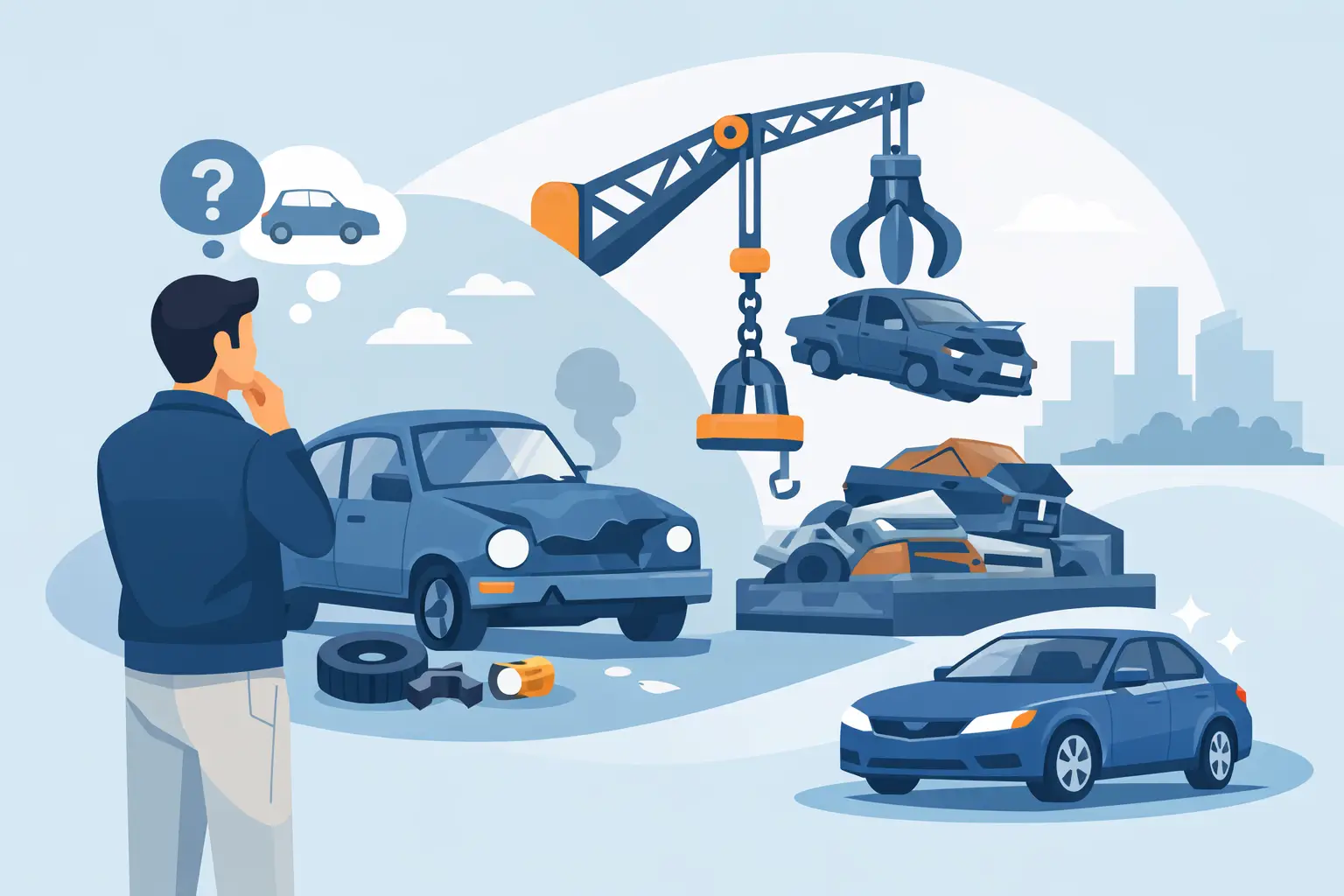
That moment usually comes after the same problem appears twice. The car fails again, the garage bill climbs again, and you find yourself asking, when should I scrap car problems instead of paying for one more repair? If that question is on your mind, you are probably already close to the point where scrapping makes more sense than holding on.
For most drivers, the decision is not really about sentiment. It is about cost, reliability and hassle. A car that no longer starts, keeps failing its MOT, or sits unused on the drive can quickly become more expensive than it looks. The right time to scrap it is usually when the cost and stress of keeping it outweigh its real value.
When should I scrap my car instead of repairing it?
The clearest sign is simple – the repair bill is too high compared with what the car is worth. If your vehicle is valued at a few hundred pounds and the next repair is going to cost £800 or £1,200, that is usually a poor spend. You are putting money into a car that still may not be dependable a month later.
This is especially true with older vehicles that have several problems at once. One major repair often uncovers another. A clutch leads to suspension work, tyres, brakes or electrical faults. On paper, each fix looks manageable. Added together, they can become a drain.
There is no perfect cut-off, but many owners start to scrap the car seriously when the repair cost is close to or above the car’s market value. If the vehicle is non-runner, has engine failure, gearbox issues or structural corrosion, scrapping is often the more sensible option.
The signs your car has reached the end
Some cars are obviously ready for scrap. Others get there gradually. If your car matches more than one of these signs, it may be time to stop spending and move on.
It keeps failing the MOT
One failed MOT is not the end of the road. Plenty of cars need routine work and go on for years. The problem is repeated failure, especially when advisories from the last test turn into major defects at the next one.
Rust underneath, worn suspension, emissions issues and braking faults can all be repairable, but not always cheaply. If every MOT turns into a negotiation with your budget, the car may no longer be worth keeping.
It is unreliable and you cannot trust it
A car does not have to be completely dead to be ready for scrap. If it starts only sometimes, cuts out, overheats or leaves you stranded, it stops being useful. Reliability matters just as much as roadworthiness.
That is particularly important if you need your car for commuting, school runs or caring responsibilities. Constant uncertainty has a cost of its own. Missed appointments, recovery charges and time off work can all make an old vehicle more expensive than its repair invoice suggests.
The repair list keeps growing
A single fault can be reasonable. A growing list is different. If the garage is now talking about tyres, exhaust, battery, suspension, warning lights and body corrosion on top of the original issue, the car is telling you where it is heading.
At that point, even if you can afford the next repair, the better question is whether you should.
The car has been written off or badly damaged
Accident damage changes the calculation fast. Even when a car can technically be repaired, the cost may not stack up. If the insurer has written it off, or the body and mechanical damage are both significant, scrapping is often the quickest and cleanest way to draw a line under it.
It has been sitting unused for months
A car left on the drive tends to deteriorate, not preserve itself. Batteries go flat, brakes seize, tyres lose pressure and damp can creep in. If you have not used the vehicle for months and do not realistically plan to put it back on the road, scrapping it can free up space and remove a problem before it gets worse.
When should I scrap car ownership because the costs no longer make sense?
This is where many people hesitate. The car still moves, so they keep it. But running costs can tell a different story.
Look beyond the next garage quote. Add up tax, insurance, fuel economy, MOT repairs and the chance of another breakdown. An older car with poor fuel efficiency and frequent faults can cost far more over a year than expected. If you are throwing money at it just to keep it usable, that is usually the tipping point.
It also depends on the value of your time. Selling privately can mean adverts, messages, viewings and awkward price haggling. If the vehicle is damaged or non-running, that process becomes harder. Scrapping often becomes the practical option because it removes the delays, transport issues and uncertainty.
Cases where keeping the car might still be worth it
Not every old car should be scrapped. Sometimes a repair is the right choice.
If the vehicle has low mileage, has been well maintained and only needs one straightforward fix, repairing it may save you money overall. The same applies if replacement cars are expensive and your current one has otherwise been reliable.
There is also a difference between cosmetic damage and end-of-life damage. Scratches, dents or a worn interior can make a car look tired without making it uneconomical to run. The key is to focus on structural condition, mechanical reliability and total running cost, not just appearance.
So the answer to when should I scrap my car is not always immediately. It depends on whether the next spend buys you useful life or just postpones the same decision.
How to decide without overthinking it
A practical way to decide is to compare three numbers. The first is the cost to make the car roadworthy now. The second is what the car would realistically be worth once repaired. The third is what it will likely cost you over the next 6 to 12 months if you keep it.
If the first number is high, the second is low and the third looks uncertain, scrapping is usually the better move.
It helps to ask yourself a few plain questions. Would you buy this car today in its current condition? Would you trust it on a long journey? If the next repair appears, would you pay again? Honest answers make the decision clearer.
For many drivers, the real trigger is not just money. It is the moment they no longer want the burden. Once a car becomes a recurring problem, convenience starts to matter as much as value.
What happens if you choose to scrap it?
This is where people often expect hassle, but it should be straightforward. A proper scrappage service will normally give you a quote based on your registration and postcode, arrange collection, and handle the official disposal process properly.
That matters most when the vehicle is not drivable. You should not have to organise towing or guess your way through paperwork. A managed service saves time and helps make sure the car is disposed of compliantly.
If you are in Peterborough and want to avoid the usual back-and-forth, Scrap Cars Peterborough offers the kind of process most people need at this stage – quick quotes, free collection and fast payment without dragging the whole thing out.
The best time to scrap is usually earlier than you think
A lot of owners wait one repair too long. They hope the next fix will settle things down, but by then they have spent more money and the car is worth less. Scrapping earlier can protect value, avoid wasted repair costs and stop an inconvenient car becoming a bigger headache.
If your vehicle has become unreliable, uneconomical or simply more trouble than it is worth, you probably already have your answer. The best time to act is when the numbers stop working and the hassle starts taking over. Once you reach that point, clearing it properly and getting paid for it is often the simplest move you can make.
Leave a Reply