
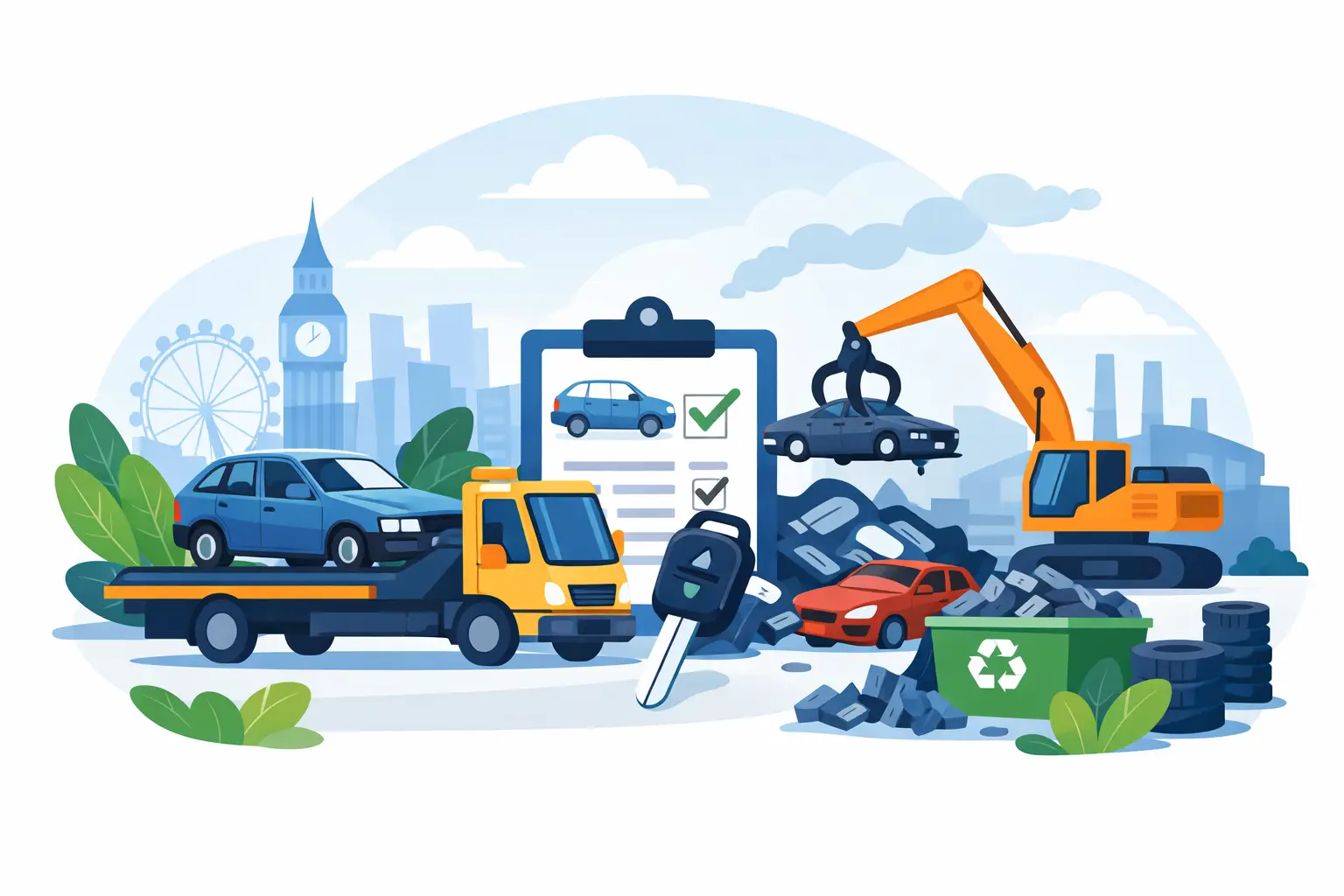
If your car is sitting on the drive with a failed MOT, accident damage or an engine that gave up weeks ago, you usually want one thing – a simple way to get rid of it without losing time or money. This vehicle scrappage process guide explains what actually happens, what you need to prepare, and how to avoid the delays that make scrapping a car feel harder than it should be.
For most owners, the process is far more straightforward than they expect. The key is using a service that can quote quickly, collect the vehicle from your address and handle the official paperwork properly. When that happens, a car that is doing nothing but taking up space can be gone in a day.
How the vehicle scrappage process guide works in practice
The basic process starts with a quote. In most cases, you only need your registration and postcode to get a price. That gives the buyer enough information to identify the vehicle and assess current scrap market value, which can change depending on the make, model, age, condition and demand for recyclable materials.
After that, the collection is arranged. This matters more than many people realise. If the car does not start, has no MOT, or is not safe to drive, taking it anywhere yourself can become the biggest headache in the whole sale. A collection service removes that problem and turns the job into a simple handover instead of a day spent sorting transport.
Once collection is booked, you will usually confirm a few details about the car. That may include whether it starts, whether all major parts are still present, where it is parked and whether access is easy for the recovery vehicle. Being honest here helps protect your quote. If a vehicle has serious damage or missing components that were not mentioned at the start, the final price can change.
Payment is then made by bank transfer, and the vehicle is taken away for authorised recycling. The paperwork is updated so there is a clear record that the car has left your possession. That is the point where most people stop worrying, because the practical and legal loose ends are tied up.
Getting a quote for a scrap vehicle
Price is usually the first question, and fairly so. No owner wants to accept less than the car is worth, even if it is no longer roadworthy. Scrap prices are influenced by metal values, vehicle weight, location, ease of collection and whether the vehicle has reusable value within the recycling chain. So there is no single flat rate that suits every car.
That is why instant quotes are useful. They remove the back-and-forth and give you a realistic figure based on the vehicle details you provide. It is also why comparing buyers matters. A wider network can often secure a stronger offer than a single local yard working alone.
There is a trade-off, though. The highest advertised price is not always the best overall deal if collection is extra, payment is delayed or the paperwork support is poor. A slightly better quote can quickly lose its appeal if you are left chasing updates or paying to move a non-runner. Convenience has real value when the car is already a problem.
What you need before collection day
You do not usually need a stack of documents to scrap a car, but having the right details ready keeps things moving. The V5C logbook is helpful because it proves the registered keeper details and makes the transfer process easier. If you have it, keep it ready for collection.
If you do not have the logbook, that does not always stop the sale. Many vehicles can still be scrapped if you can prove ownership or keeper details in another way. The important point is to mention it early rather than leave it until the recovery driver arrives.
You should also remove all personal belongings from the vehicle. That sounds obvious, but old cars often become storage space for sunglasses, tools, paperwork, child seats, chargers and bits you forgot were there. Check the glovebox, boot, door pockets and under the seats properly.
Take off anything you want to keep, as long as this has been agreed in advance and does not affect the quoted value. If you are unsure, ask before collection is booked. Last-minute changes create confusion and can delay payment.
Paperwork in the vehicle scrappage process guide
Paperwork is where many owners feel uncertain, mostly because they do not do this often. The main issue is making sure the vehicle is correctly recorded as having left your possession. Once the car has been collected, the relevant DVLA notification should be completed so you are no longer responsible for it.
If the car is being scrapped through a professional service, support with this step should be part of the process. That matters because it protects you from future problems such as tax, fines or correspondence linked to a vehicle you no longer own.
You may also be eligible for a refund on any remaining full months of vehicle tax, depending on your circumstances and when the DVLA record is updated. That is another reason not to leave the paperwork hanging around after collection.
A proper scrappage process should feel clear, not vague. If a buyer is unclear about documentation, collection records or how the vehicle will be processed, that is usually a sign to be cautious.
What happens if the car does not run?
A non-running car is one of the most common reasons people look for a scrappage service in the first place. The good news is that it usually is not a barrier. Vehicles with mechanical failure, electrical faults, accident damage or flat batteries are collected every day.
What matters is access. If the vehicle is boxed in, parked in a tight space or has no wheels, say so in advance. Recovery teams can usually handle awkward collections, but they need the right information and equipment. A five-minute conversation before booking can prevent wasted time on the day.
This is where a service built around collection makes a real difference. If you are already dealing with a car that will not move, the last thing you need is to arrange towing separately. A managed collection process saves money, cuts stress and gets the vehicle off your hands faster.
Common delays and how to avoid them
Most scrappage sales go through quickly when the details are accurate. Delays tend to come from a short list of avoidable issues: incorrect registration details, poor access for collection, missing keys not mentioned in advance, or confusion about who is authorised to hand over the vehicle.
If the registered keeper cannot be present, mention that before the appointment is confirmed. If the car is at a garage, a family member’s house or parked at work, make sure the person on site knows what is happening. Small communication gaps are what slow down simple jobs.
It also helps to set realistic expectations on condition. A vehicle described as complete and accessible will be priced differently from one with major damage and difficult access. Clear information protects both sides and leads to a smoother handover.
Choosing the right scrappage service
A good scrappage service should be quick to quote, easy to deal with and clear about how collection, payment and paperwork work. You should not have to chase for basic answers. If the process feels complicated before you have even booked, it rarely gets better later.
Look for practical signs of reliability: free collection, fast bank payment, seven-day availability and straightforward support with the DVLA side of things. Those are the features that reduce effort for the seller. For owners in and around Peterborough, Scrap Cars Peterborough is built around exactly that kind of no-fuss service.
There is also value in scale. A business with a wider network can often place vehicles more efficiently and offer stronger prices across different makes and conditions. That matters whether you are scrapping a small hatchback that failed its MOT or a damaged van that is no longer worth repairing.
When scrapping is the right choice
Sometimes selling privately will bring in more money, but only if the car is in decent condition and somebody actually wants to buy it. If it is old, damaged, non-running or likely to need expensive repairs, a private sale can drag on for weeks and still go nowhere.
That is when scrappage becomes the practical option. You skip the viewings, the haggling, the no-shows and the cost of getting the car into sellable shape. For many people, the right outcome is not squeezing every last pound out of the vehicle. It is getting a fair price, quick collection and a clean finish to the whole job.
If your car has reached that point, the best next step is usually the simplest one – get a quote, confirm the details, and let the collection do the heavy lifting. A scrappage service should take a problem off your drive, not add another one.
Leave a Reply