
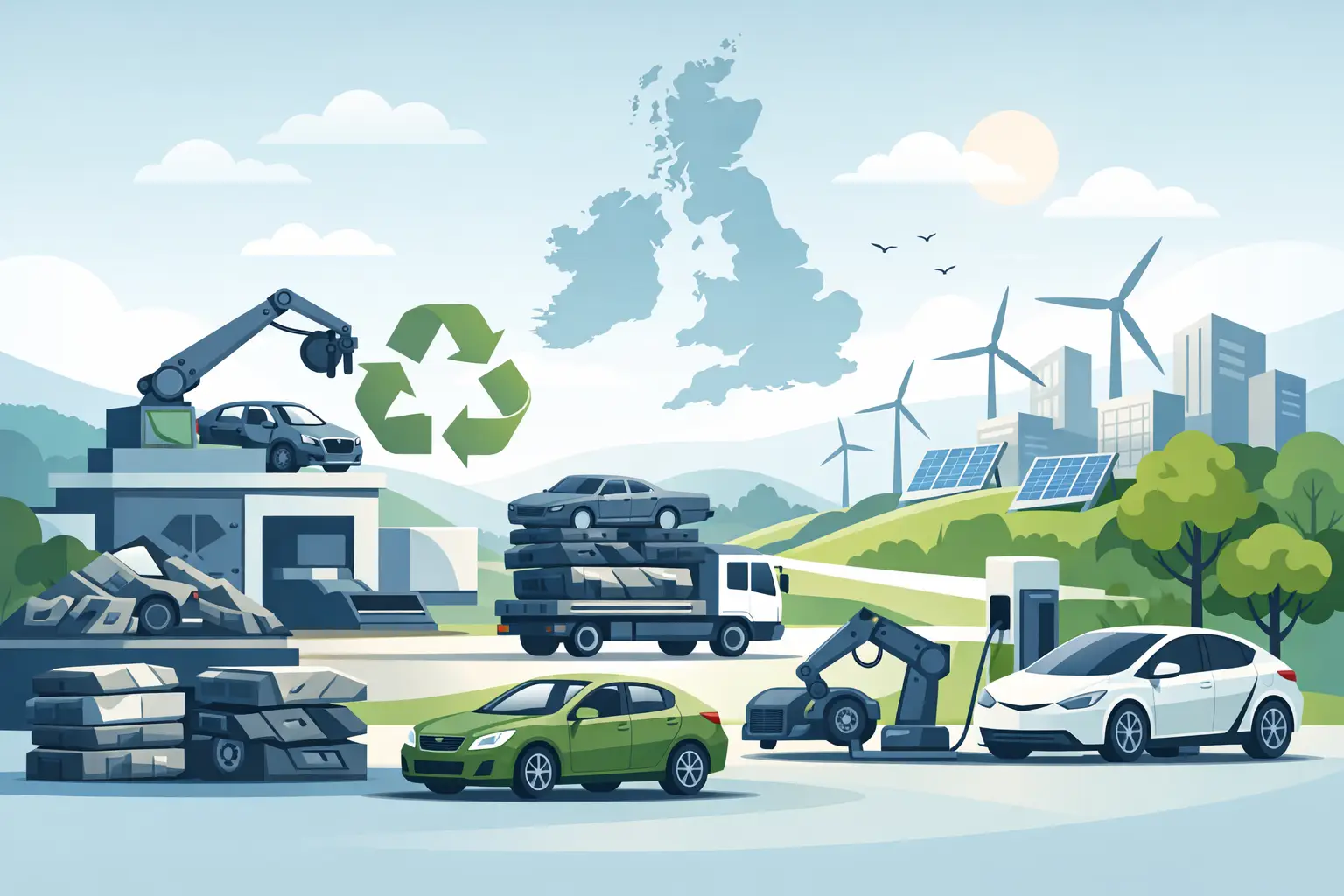
A scrap car used to be seen as little more than a shell with a few recoverable metals. That view is changing quickly. The future of vehicle recycling is about far more than crushing old cars and weighing them in. It now involves better material recovery, stricter environmental standards, electric vehicle battery handling and faster, more traceable disposal for owners who want the job done properly.
For car owners, that matters in a very practical way. The more efficient and advanced the recycling process becomes, the more value can often be recovered from an end-of-life vehicle. It also means safer disposal, clearer paperwork and less chance of a vehicle slipping into the wrong hands. If your car is old, damaged, non-running or simply not worth repairing, these changes affect what happens next.
What the future of vehicle recycling looks like
In simple terms, the industry is moving towards more recovery and less waste. Modern vehicles contain steel, aluminium, copper, plastics, glass, fluids, electronics and, increasingly, high-voltage battery systems. Older recycling methods focused heavily on metal because that was the easiest value to extract. Newer systems are designed to recover much more of the vehicle in a compliant and commercially viable way.
That shift is being pushed by two things at once. Environmental regulation is tightening, and vehicle design is becoming more complex. Recyclers have to deal with more mixed materials, more electronic components and more safety considerations than they did a decade ago. The result is a more technical process, but also a more useful one for both the market and the environment.
For the seller, the ideal outcome is still straightforward. You want a fair quote, quick collection, prompt payment and confidence that your vehicle will be handled properly. The behind-the-scenes systems are getting more advanced, but the customer experience should be getting simpler.
Why modern cars are harder to recycle
A newer car is not just an old car with a better dashboard. It contains more composite materials, more sensors and more integrated electronic systems. That makes dismantling and recovery more specialised. In some cases, one part may contain several bonded materials that are harder to separate cleanly.
This is where the future of vehicle recycling becomes less about brute force and more about process. Better depollution methods, improved sorting technology and stronger specialist networks all help recyclers recover value from vehicles that would previously have delivered less. It is not the same for every make or model, though. A common hatchback and a premium hybrid may follow very different recycling paths and generate very different returns.
Condition also matters. A non-runner with major engine failure can still hold strong material value. An accident-damaged vehicle may contain recoverable metals and systems, but the extent of damage affects how efficiently those materials can be handled. That is one reason accurate quoting and professional collection remain so important.
Electric vehicles are changing the industry
The biggest talking point in the future of vehicle recycling is the rise of electric vehicles. EVs bring obvious environmental advantages in use, but they create new challenges at end of life. The main issue is the battery pack. It is valuable, heavy, complex and potentially hazardous if damaged or mishandled.
Battery recycling is improving, but the sector is still developing. Lithium-ion batteries contain materials such as lithium, cobalt, nickel and manganese, and recovering those materials efficiently is a major focus for the industry. As more EVs reach end of life, battery processing capacity will need to scale up across the UK and beyond.
There is also a safety angle. High-voltage systems need trained handling, proper storage and the right transport procedures. This is not something a private seller should have to worry about. A professional scrap and recycling service should know how to route the vehicle correctly and ensure it goes through the right channels.
That said, not every electric vehicle at the end of its road life goes straight into full battery recycling. In some cases, battery packs or modules may be assessed for second-life uses, depending on condition and regulations. It depends on age, damage, state of health and whether reuse is commercially sensible. The direction of travel is clear, though. EV disposal will become a standard part of mainstream vehicle recycling, not a niche specialist job.
Better technology means better recovery
One of the quieter changes in the industry is the use of better sorting and processing technology. Shredding still plays a role, but downstream separation has become more sophisticated. Magnets, eddy current systems and sensor-based sorting can help recover ferrous and non-ferrous metals more accurately. That improves recycling rates and reduces waste.
Digital systems are also making a difference. Vehicle identification, material tracking and compliance records are becoming easier to manage across recycling networks. For the customer, that should translate into a process that feels more organised and dependable. Less delay, less confusion and fewer paperwork worries.
This matters because trust is a big part of scrapping a car. Most owners are not thinking about metal separation equipment. They are thinking, will my car be collected on time, will I be paid quickly and will the paperwork be handled properly? The future of the industry has to answer those questions just as well as the technical ones.
Regulation will keep raising the bar
UK vehicle recycling is already shaped by strict rules around depollution, treatment and authorised processing. That is unlikely to relax. If anything, standards are likely to become tighter as the environmental impact of vehicles is examined across the full lifecycle.
For car owners, stronger regulation is generally a good thing. It helps protect against illegal operators, poor disposal practices and vehicles being mishandled after collection. It also pushes the market towards proper documentation and more transparent processes.
There is a trade-off, of course. More regulation can add cost and complexity for operators. Some vehicles will be more expensive to process safely than others, especially those with newer technologies or severe damage. That can affect the economics of scrappage. But over time, more efficient systems and larger recycling networks should help balance this out.
What this means for scrap car prices
Many owners want to know whether the future of vehicle recycling will push scrap prices up. The honest answer is that it depends. Prices are influenced by global metal markets, demand for recovered materials, transport costs, vehicle weight, make, model and condition. No article can promise a fixed trend.
What is likely is that better recovery methods will help recyclers extract value more accurately from each vehicle. In a mature, competitive market, that can support stronger offers for some cars, especially where logistics and processing are efficient. Vehicles with valuable recoverable materials may benefit more than those with limited usable content or expensive handling requirements.
This is why speed and network coverage matter. A service that can compare options across professional recyclers is often in a better position to secure a fair market-based price than a one-size-fits-all approach. Convenience should not mean accepting less than your vehicle is worth.
Collection and convenience will matter even more
The technical side of recycling is advancing, but customer expectations are advancing too. People want fast quotes, free collection and prompt bank payment, especially when the vehicle no longer runs. They do not want to arrange towing, chase paperwork or spend days negotiating.
That is where the practical future of scrappage is heading. Smarter systems in the background, simpler service in the foreground. If a car owner can enter their registration and postcode, get a quote, choose a collection slot and have the official process handled correctly, that is what good modern recycling should look like.
For local sellers, especially those dealing with a car that is stuck on a drive or has failed beyond economic repair, speed is not a luxury. It is the difference between a problem hanging around for another week and it being dealt with properly. Scrap Cars Peterborough operates in that reality every day.
What car owners should do now
If you have an unwanted vehicle, waiting for the market to become perfect rarely helps. The future of vehicle recycling is improving, but the right move is still to use a compliant service that offers fair pricing, collection and proper paperwork today.
Ask simple questions. Is collection included? Is payment prompt? Will the vehicle be handled through the proper channels? Can the service deal with non-runners, accident damage and end-of-life cars without extra hassle? Those points matter more than flashy promises.
As vehicles become more advanced, disposal needs to become more professional. That is good news for owners who want a straightforward process with less stress. A scrap car may be at the end of its life on the road, but it still has value – and the right recycling route makes sure that value is not wasted.
The industry will keep changing, especially with EVs, battery recovery and tighter standards. For sellers, the best approach is refreshingly simple: choose a service that keeps up with those changes so you do not have to.
Leave a Reply