
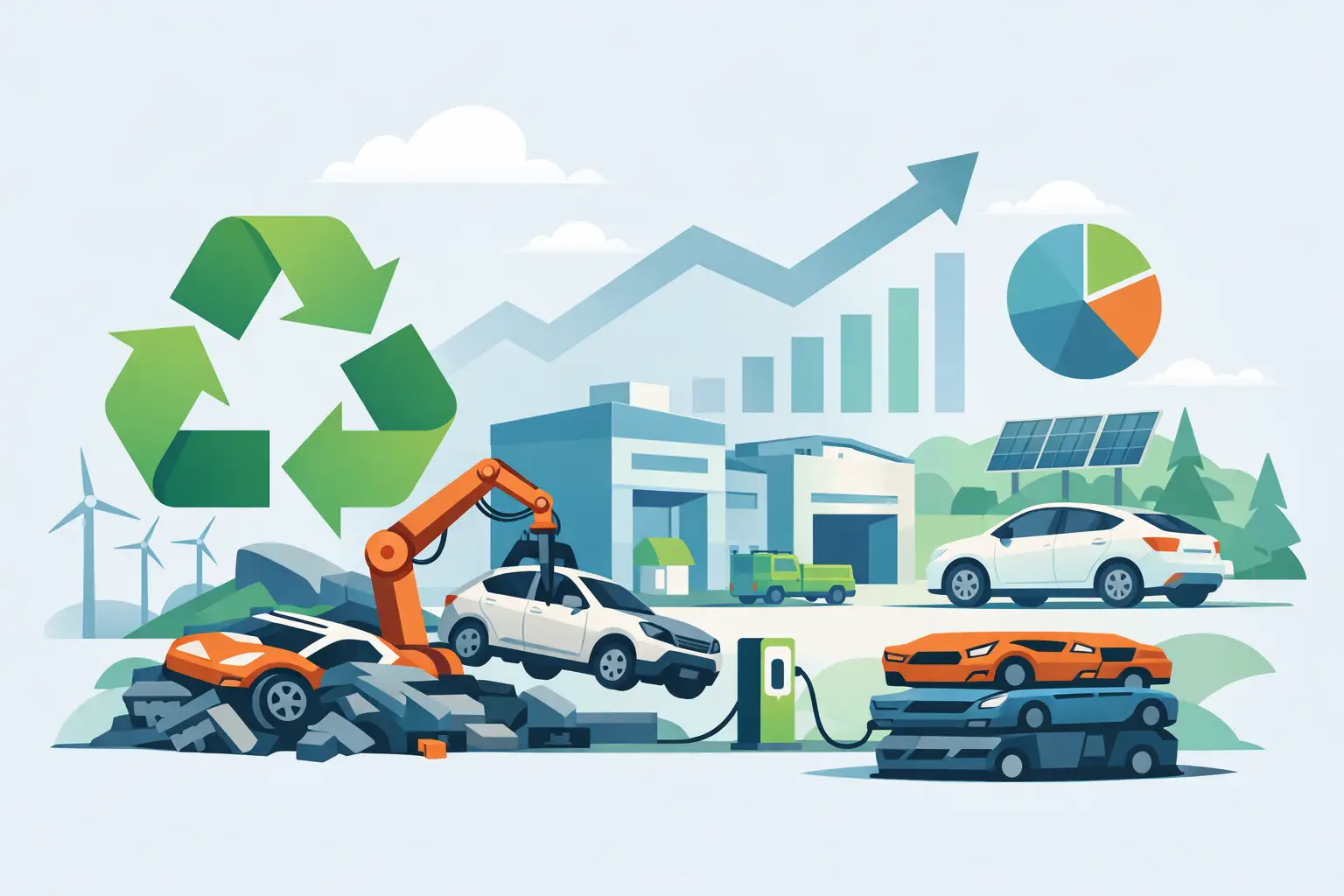
A scrap car used to be viewed as little more than dead weight on a drive. That is changing fast. Vehicle recycling industry trends now affect how end-of-life cars are priced, how quickly they are collected, what paperwork is required, and how much value can still be recovered from a vehicle that no longer runs.
For car owners, this matters in a very practical way. If you have an unwanted, damaged or non-running vehicle, the recycling market behind the quote is not static. Prices shift with metal demand, compliance standards keep tightening, and recyclers are under more pressure to process vehicles properly from start to finish. The result is a market that can offer better efficiency, but also one where the gap between a professional service and a poor one is getting wider.
Why vehicle recycling industry trends matter to sellers
Most private sellers are not tracking steel values, battery recovery rules or dismantling processes. Fair enough. You simply want a decent price, free collection, prompt payment and confidence that the vehicle is being handled correctly.
That said, the wider market has a direct effect on your experience. When demand for recovered metals is strong, scrap values often improve. When compliance checks increase, professional operators become more valuable because they know how to manage the legal side properly. When collection networks become more efficient, it is easier to move even non-runners quickly without asking owners to arrange transport themselves.
This is one reason local convenience has become more important, not less. In areas like Peterborough and the surrounding towns, sellers are increasingly choosing services that can quote quickly, collect from home or roadside, and deal with the paperwork without fuss.
Higher recovery rates are driving better processing
One of the clearest vehicle recycling industry trends is the push to recover more materials from every car. Older scrappage models focused heavily on basic metal recovery. That still matters, but modern recycling is broader than that.
Vehicles contain steel, aluminium, copper, plastics, glass, fluids and increasingly complex electronic components. Recyclers are working harder to separate and process those materials more effectively because there is both regulatory pressure and financial value in doing so. A vehicle that reaches the right authorised treatment route can yield far more recoverable material than many owners realise.
For sellers, this does not always mean a dramatic jump in price on every car. Condition, weight, make, model and local demand still matter. But it does mean the market is becoming more sophisticated, and that usually favours businesses with proper systems rather than casual operators.
Electric and hybrid vehicles are changing the market
The rise of electric and hybrid vehicles is reshaping the industry, even though petrol and diesel cars still make up the bulk of end-of-life collections. Battery handling is now one of the biggest long-term shifts in vehicle recycling.
High-voltage batteries require specialist storage, transport and processing. They cannot be treated like a standard end-of-life component. As more electric vehicles reach the recycling stage over the next few years, operators will need better training, safer facilities and stronger downstream partnerships.
This trend has two sides. On one hand, EV recycling creates new challenges and can add costs to the handling process. On the other, batteries and associated materials represent significant recoverable value once the systems around them mature. Right now, the market is still adjusting. That means EV owners may see more variation between buyers than owners of conventional scrap cars.
Hybrid vehicles sit somewhere in the middle. They are familiar enough to be processed routinely, but they still require the right handling standards. If you own one, using a professional service is not just a box-ticking exercise. It is the safest and simplest route.
Compliance is becoming a bigger selling point
A few years ago, many car owners focused almost entirely on price. Price still matters, of course, but another of the major vehicle recycling industry trends is the growing importance of compliant disposal.
People are more aware that scrapping a vehicle is not simply a cash transaction. There are legal steps, official records and environmental obligations involved. If the process is mishandled, the seller can end up frustrated at best and exposed at worst.
That is why reputable recycling services now put more emphasis on paperwork support, licensed handling and clear process communication. This is not marketing filler. It reflects how the market is developing. As regulation and enforcement become stricter, a professional service saves time and reduces risk.
For the average owner, the practical takeaway is simple. A slightly higher headline offer means very little if the collection is unreliable, the paperwork is unclear, or you are left chasing payment. Speed and compliance together are worth something.
Faster collection is no longer a bonus
Convenience has moved from a nice extra to a core expectation. Many sellers are dealing with cars that are parked on a drive, stuck in a garage, or abandoned at a repair stage because the cost of fixing them no longer makes sense. They do not want to organise towing or wait around for vague collection windows.
That is why logistics are now central to the industry. Better quote systems, wider collection coverage and more coordinated vehicle transport have changed what customers expect. Same-day or next-day collection is no longer unusual in many cases, especially where operators have strong local reach.
This trend also affects valuations. A buyer with an efficient collection network can often make stronger, more practical offers because the cost and time of moving the vehicle are under better control. It is not only about the scrap value of the car itself. It is also about the operational cost of getting it from your property into the recycling chain.
Data-led pricing is making quotes more accurate
Another change in the market is the move towards faster, more informed pricing. Instant quotes based on registration and postcode reflect a broader trend towards data-led valuations. Buyers can assess vehicle type, age, weight class and likely recovery value much more quickly than before.
That makes the process easier for sellers, but it also means quotes are less likely to be based on guesswork. Of course, final prices can still depend on condition and whether the vehicle is complete, but the initial pricing process is becoming more efficient and more consistent.
This is good news for owners who want speed without endless negotiation. It also reduces the chance of wasting time with buyers who cannot actually collect promptly or complete the transaction properly.
Sustainability is no longer a side issue
Environmental performance is becoming part of the core business model in vehicle recycling. Fluids must be depolluted safely. Hazardous materials need careful handling. More materials are expected to be recovered rather than discarded. This is not only about meeting standards. It is also about public trust.
Many private sellers now want reassurance that their old car will be dealt with responsibly. They may not ask technical questions, but they do want to know the process is legitimate. That shift in customer mindset is shaping the market as much as regulation is.
The practical impact is clear. Businesses that can combine fair pricing with a straightforward, compliant process are better placed than those that rely on vague promises. For a seller, the easiest route is often to choose a service that has already built those checks into the process.
What these trends mean if you are scrapping a car now
If your vehicle is old, damaged, written off, non-running or simply not worth repairing, the market is moving in your favour in one key respect: the process is becoming easier to complete properly. Getting a quote, arranging collection and securing payment can now be handled far more quickly than many people expect.
The trade-off is that professionalism matters more. As the industry becomes more regulated and more specialised, especially with newer vehicle types, the difference between a smooth transaction and a frustrating one often comes down to who is handling the job.
For car owners in and around Peterborough, that usually means looking for a service that can do the basics properly every time – fast quote, free collection, clear paperwork support and prompt bank payment. That is not flashy. It is simply what the market increasingly rewards.
The direction of travel is clear. Vehicle recycling is becoming more efficient, more regulated and more specialised, while sellers are expecting less hassle and quicker results. If you have a car that needs to go, the best time to act is usually before it loses more value sitting still.
Leave a Reply