
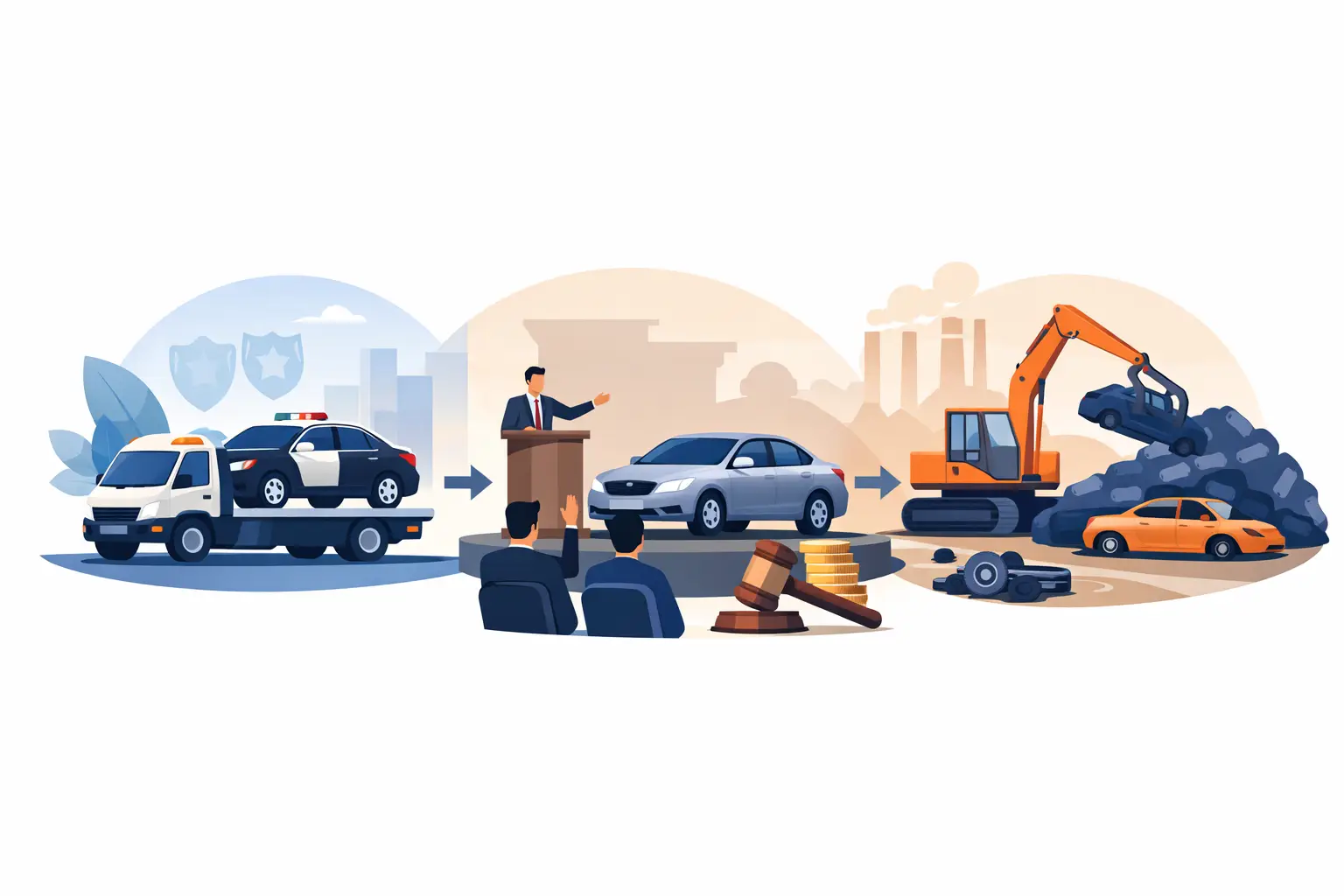
A seized vehicle can turn into a costly headache very quickly. If it is sitting on your drive, held in a pound, or no longer worth repairing after being released, knowing how to dispose seized vehicle issues properly matters for both cost and legal compliance.
In most cases, the right route depends on why the vehicle was seized, whether you have reclaimed it, and if it is still roadworthy. Some cars can be sold on, but many end up being scrapped because storage fees, damage, missing paperwork, or mechanical faults make repairs poor value. The key is to deal with it promptly and make sure the vehicle goes through the correct process.
How to dispose of a seized vehicle in the UK
The first thing to establish is whether the vehicle is still in official custody or already back in your possession. If it is still in a police or authority pound, you usually cannot just arrange for somebody to collect it for scrap on your behalf without clearing the release requirements first. That often means proving ownership, showing identification, and dealing with any fees or documentation linked to the seizure.
If you have already recovered the car and decided it is not worth keeping, disposal becomes much simpler. At that point, you are dealing with it as the registered keeper of an unwanted, damaged, or end-of-life vehicle. That means your main job is to choose a compliant disposal route and complete the paperwork properly.
A seized car is often scrapped for practical reasons rather than dramatic ones. It may have been taken because it was uninsured, untaxed, abandoned, involved in an offence, or left in a condition that made it unsuitable for the road. Sometimes the seizure itself is only part of the problem. Once release charges, repairs, MOT work and transport are added up, the economics stop making sense.
Start with the seizure reason
Before you do anything else, check why the vehicle was seized. This affects what you can do next. A car seized for no insurance may be releasable, while a vehicle seized as evidence in an ongoing investigation may not be available for disposal until the authority dealing with it says otherwise.
That is why there is no single answer that fits every case. If the car is tied to legal proceedings, you may need written confirmation before it can be sold or scrapped. If it has simply been impounded and released back to you, the decision usually comes down to value, condition and convenience.
For many private owners, the turning point is straightforward. If the vehicle is non-running, accident-damaged, has failed its MOT badly, or would cost more to put right than it is worth, scrapping it is often the cleanest option.
Check whether the vehicle is worth keeping
A seized car is not automatically scrap. Some are perfectly usable once the underlying issue is resolved. But this is where people often spend money emotionally instead of sensibly.
Ask yourself a few plain questions. Does it start and drive? Is it insured and legal to use? Would it pass an MOT without major work? Are there storage, recovery or transport costs still to deal with? If the answer to several of those is no, disposal is usually the better financial decision.
There is also the time factor. Selling a problem vehicle privately can be slow, especially if it has faults, warning lights, body damage or a seizure history that puts buyers off. A proper scrap or recycling service is usually faster and far less effort, especially if the car needs collecting.
The paperwork matters as much as the vehicle
If you want to avoid future problems, do not treat paperwork as an afterthought. When disposing of a seized vehicle, the most important point is that the transfer must be recorded correctly so you are no longer responsible for it.
In the UK, that normally means updating the DVLA when the vehicle is sold to an authorised treatment facility or collected for scrappage. If you still have the V5C logbook, the transfer is easier. If you do not, you can still dispose of the vehicle, but you should be upfront about that from the start.
You should also remove personal belongings before collection and make sure you know who is taking the vehicle. A professional service will explain what documents are needed, confirm the collection details, and help make sure the handover is clear. That matters if the car is non-running or if you are already trying to sort out enough after a stressful seizure.
How to dispose seized vehicle without adding more hassle
For most owners, the simplest route is to arrange collection through a vehicle scrappage service that can handle non-runners, damaged cars and official disposal paperwork. That removes the need to arrange towing yourself or try to find a buyer willing to take a car with issues.
The process is usually straightforward. You provide the registration and postcode, receive a quote based on the vehicle, book a collection date, and get paid once the vehicle is collected and checked. If the car is beyond economical repair, this is often the quickest way to draw a line under it.
The advantage is not only speed. It is also compliance. A seized vehicle can already feel like an admin problem, so you want the disposal handled properly from the first call. That means clear pricing, collection from your address, and support with the DVLA side so you are not left guessing what happens next.
If you are in Peterborough or nearby areas and the vehicle cannot be driven, local collection is often the deciding factor. Getting an unroadworthy car moved privately can cost more than people expect, which can wipe out any value left in it.
When scrapping makes more sense than selling
Some owners hesitate because they think selling privately might return a bit more. Sometimes that is true, but only on paper. In reality, a seized or formerly impounded vehicle can be harder to sell than a standard used car.
Buyers tend to be cautious if the vehicle has damage, no MOT, mechanical faults, or missing documents. You may also spend days answering messages, arranging viewings, and negotiating over a car you already want gone. If it does not start, your pool of buyers shrinks even more.
Scrapping is often the better choice when the car has serious faults, has been standing for a while, has release-related costs hanging over it, or simply is not worth the effort. It is not always about getting the highest theoretical number. It is about getting a fair return without more inconvenience.
Common issues that slow the process down
The most common delay is uncertainty over ownership documents. If your logbook is missing, say so early. A decent service can tell you what is needed instead of letting it become a last-minute problem.
Another issue is assuming a seized car can be disposed of before it has been properly released. If the vehicle is still under official hold, disposal has to wait until the relevant authority allows it. Trying to skip that step usually creates more problems, not fewer.
Condition can also affect the quote. A complete car with its major components intact is different from a stripped or heavily damaged vehicle. Being accurate about whether it rolls, steers, starts, or has crash damage helps avoid confusion on collection day.
What to expect from a proper disposal service
A good service should keep things simple. You should be able to get a quote quickly, book a collection without chasing, and know what happens with payment and paperwork. If the vehicle is on a driveway, at a garage, or stuck where it broke down, collection should be arranged around that.
This is where a no-nonsense local specialist earns their keep. Scrap Cars Peterborough, for example, works with a wider recycling network so owners can get a strong price and fast collection without dragging the process out. For a seized vehicle that is no longer worth keeping, that kind of straightforward handling is exactly what most people need.
The best approach is not to leave it sitting while costs and stress build up. If the car has been released, is not worth repairing, and you want it gone legally, get a quote, arrange collection, and make sure the DVLA record is updated correctly. That way the vehicle is dealt with properly and you can get on with your day.
Leave a Reply