
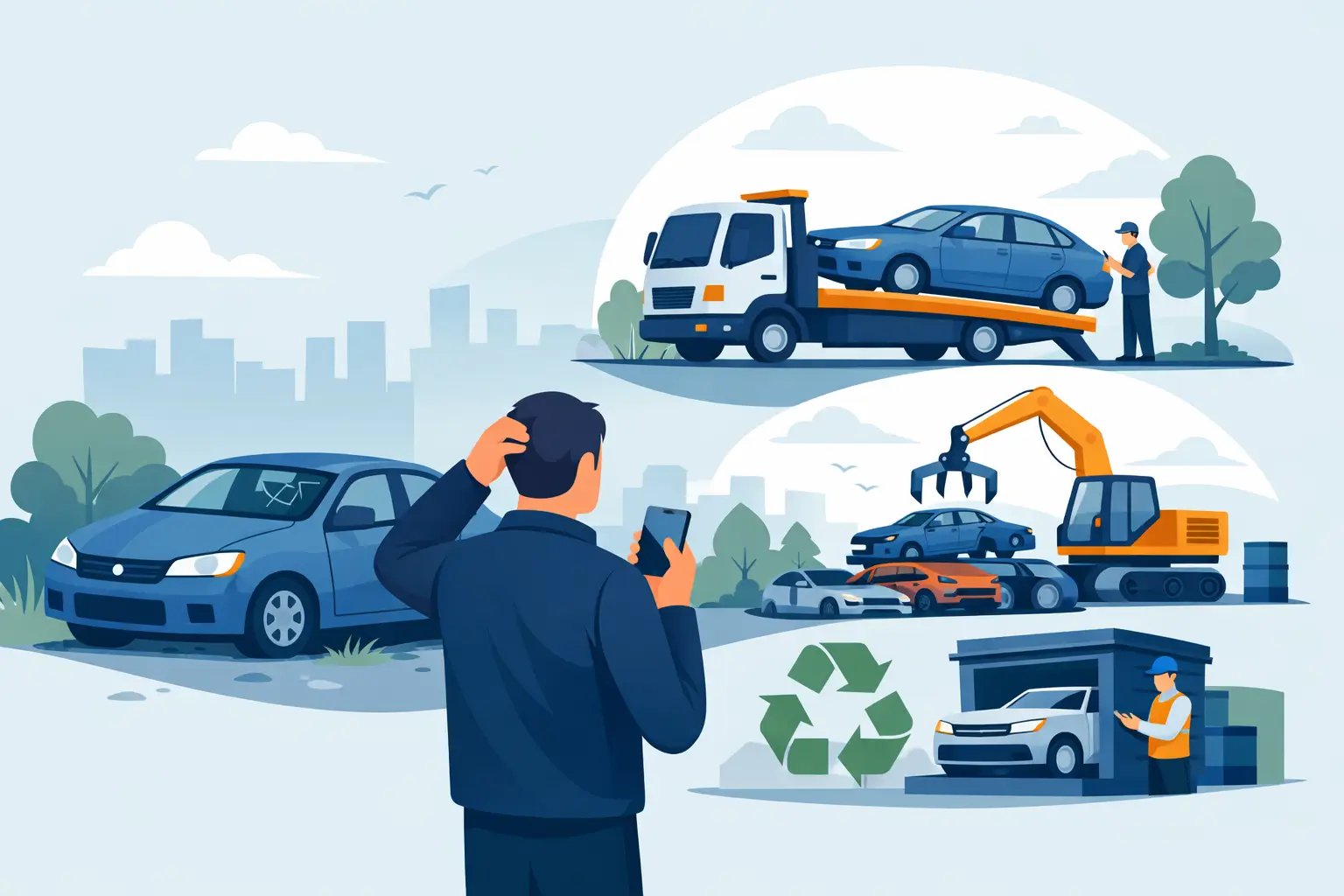
If your car is uninsured, off the road and going nowhere, the usual selling options shrink fast. That is why so many owners start searching for how to dispose uninsured car in the first place – they need a legal, simple way to get rid of a vehicle without taxing it, insuring it or trying to move it themselves.
The good news is that an uninsured car can still be sold or scrapped. What matters is how the vehicle is stored, whether it is declared off road if needed, and whether the buyer or collection company can remove it legally. If the car does not run, has failed its MOT, has accident damage or has simply become too expensive to keep, disposal is often much easier than people expect.
How to dispose of an uninsured car legally
In the UK, you cannot keep an uninsured vehicle on a public road unless it is taxed and meets legal requirements. If the car is uninsured and not in use, it should normally be kept on private land and covered by a Statutory Off Road Notification, often called SORN. That is the first thing to check before arranging disposal.
If the car is already on a drive, in a garage or on other private property, you are in a much better position. You can arrange collection directly from there. If it is sitting on the road uninsured, you need to act quickly because that can lead to enforcement action, penalties or the vehicle being clamped or removed.
Disposing of the car legally usually comes down to three points. The vehicle must be stored correctly before collection, it must be handed over to a legitimate vehicle buyer or authorised treatment facility, and the DVLA paperwork must be updated properly once it has gone.
Your main options for disposing of an uninsured car
For most private owners, there are two realistic routes. You can sell it privately, or you can sell it to a scrap or vehicle collection service. Private sale can work if the car still has value as a repairable vehicle, but it often brings delays. Buyers ask questions, arrange viewings, then disappear. If the car does not start, transport becomes another problem.
A specialist scrap or end-of-life vehicle service is usually the faster option, especially when the car is old, damaged, non-running or not worth repairing. In that case, you can get a quote, book a collection and have the vehicle removed from your property without arranging insurance or recovery yourself.
There is a trade-off, though. If the car is relatively modern and has light damage, a private sale might achieve more than scrappage. If it is worn out, uneconomical to fix or has been standing for months, speed and convenience usually matter more than chasing an extra amount that may never materialise.
Can you drive an uninsured car to be scrapped?
No. If a car is uninsured, you should not drive it to a scrapyard or buyer. Even if the journey is short, it still needs to meet legal requirements for road use. That means valid insurance, tax where required, and roadworthy condition.
If you are disposing of a non-runner or an uninsured vehicle, collection is the practical answer. A proper collection service removes the need for you to arrange towing, borrow trade plates or take unnecessary risks.
Can someone else drive it for you?
Usually not, unless they are properly insured to drive that specific vehicle and the car itself is legal for road use. Many owners assume a family member with comprehensive insurance can just move it. Sometimes that is not covered, and even where driving other cars is included, it often comes with restrictions. It is not worth guessing.
What to do before collection
Once you know the car is being removed by a professional buyer or scrap service, a bit of preparation helps everything go smoothly. Start with the basics. Remove personal belongings, check the glovebox, door pockets and boot, and take out anything you want to keep.
Then gather the documents you have. The V5C logbook is helpful, although not always essential for disposal. If you have service history, MOT records or receipts, keep them together. For scrap vehicles, these do not usually change the process much, but they can help confirm the vehicle’s details.
It also makes sense to make a note of the mileage and take a few photos before collection. That protects you if there is ever a dispute about condition or identity. A straightforward service will not make this difficult, but having your own record is still sensible.
If the car has a private number plate assigned to it and you want to keep it, sort that out before disposal. Once the vehicle is scrapped, it is usually too late to recover the registration.
Paperwork when you dispose of an uninsured car
Paperwork is where many owners hesitate, but it is simpler than it sounds. If you sell or scrap the car, you need to tell the DVLA that you are no longer the registered keeper. This can be done using the V5C if you have it, or through the appropriate process if you do not.
If the vehicle is being scrapped, make sure it is going through an authorised treatment facility. Once it is processed as an end-of-life vehicle, a Certificate of Destruction may be issued where applicable. That gives formal confirmation the car has been destroyed through the proper channel.
You should also check what happens to any remaining vehicle tax. In many cases, once DVLA is notified, any full remaining months are refunded automatically to the registered keeper. Insurance is a separate matter, of course, but if the car was uninsured already, there may be nothing further to cancel.
If the car is on SORN
If your vehicle has been declared SORN, you can still sell or scrap it. SORN does not stop disposal. It simply means the car must stay off public roads until it is collected or otherwise made road legal.
That makes collection from private land especially useful. The car stays compliant where it is, and once it is removed and the keeper details are updated, the issue is closed without extra steps.
Common problems that slow the process down
The biggest delay is usually choosing the wrong route. Owners spend days listing a car privately, answering messages and waiting for buyers who never arrive. That might be worth it for a desirable used car. It rarely is for an uninsured non-runner.
Another common issue is unclear access for collection. If the car is blocked in, has flat tyres, missing keys or steering lock problems, mention that upfront. A good collection team can often still remove it, but they need to bring the right equipment.
Missing paperwork can worry people too. In reality, not having the logbook does not always stop disposal, but you should say so from the start. The process may just need extra ID checks or a slightly different handover.
Payment is another area where people want certainty, rightly so. Ask when payment is made and how. For most owners, bank transfer on collection is the cleanest option because it is fast and traceable.
How to get the best result from an uninsured car
If your priority is speed, focus on services that offer quote, collection and paperwork support in one process. That removes most of the friction. You are not trying to restore the car, advertise it, negotiate with strangers and find a tow vehicle at the same time.
If your priority is value, be realistic about the vehicle’s condition. A car with engine failure, serious body damage or long-term mechanical faults may not justify the effort of a private sale. A fair scrap price with free collection can be the better overall deal once you factor in time, transport and hassle.
It also helps to be accurate when requesting a quote. Give the correct registration, postcode, make, model and honest condition details. If the car does not start or has major damage, say so. Accurate information leads to a smoother collection and avoids last-minute renegotiation.
For drivers in and around Peterborough, using a service that can arrange fast collection from home, work or a garage can make a real difference when the vehicle is uninsured and stuck where it is. Convenience matters more when the car cannot legally be driven away.
Is scrapping usually the best option?
For many uninsured cars, yes. Not because every uninsured vehicle is worthless, but because most owners in this situation want the problem solved quickly. They want the car gone, the paperwork handled properly and the payment made without a long wait.
That is especially true if the car has failed its MOT, been written off, sat unused for months or reached the point where repairs no longer make financial sense. In those cases, scrapping is often the most practical route rather than the last resort.
If you have been putting it off because the car is uninsured, the key thing to remember is this: you do not need to insure it just to get rid of it. You need to keep it off the road, arrange legal collection, and hand it over through the proper process. Once that is done, the stress tends to disappear a lot faster than expected.
An uninsured car can feel like a problem that keeps hanging around on the drive. Usually, it is just waiting for the right collection to make it someone else’s job.
Leave a Reply