
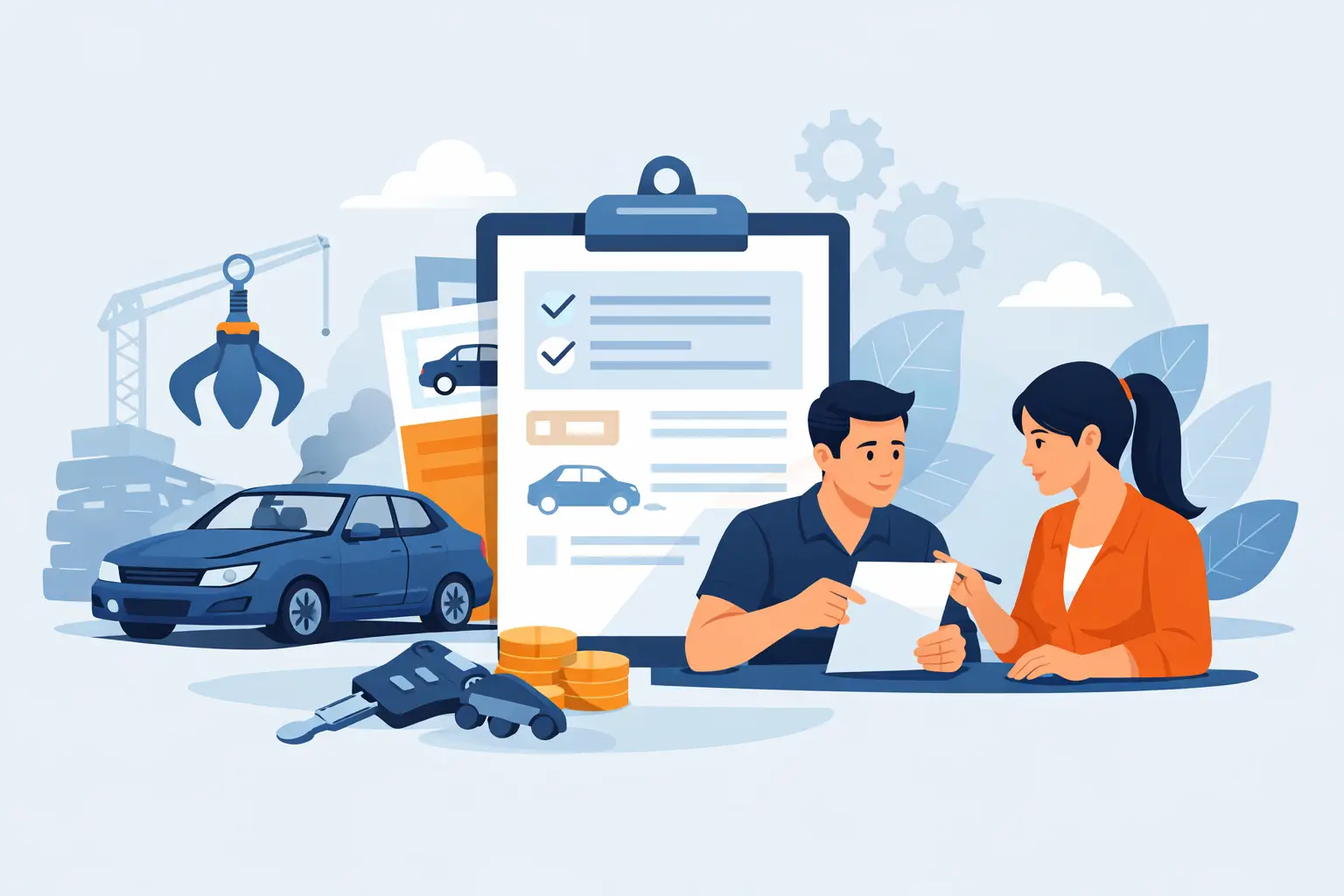
That final bit of paperwork is where many scrap car sales slow down. People are often happy once they have a price and a collection booked, then start wondering what needs signing, what DVLA needs to know, and whether they can still scrap the car if the logbook is missing. If you need car scrappage paperwork help, the good news is that the process is usually far simpler than people expect.
For most private owners, the paperwork side comes down to proving the vehicle is yours, making sure the right details are passed on when it is collected, and confirming DVLA has been notified correctly. Get that right and you avoid the two things nobody wants – delays in payment and letters arriving later for a car you thought had gone.
What paperwork do you need to scrap a car?
In straightforward cases, you need the V5C logbook and some proof of identity. The V5C is the main document because it shows the registered keeper details and the vehicle registration. If you have it, keep it ready for collection day rather than searching through kitchen drawers while the driver is outside.
Proof of identity is often requested to make sure the vehicle is being handed over by the correct person. A driving licence or passport is commonly used, and sometimes proof of address may also be helpful if the details need checking. This is especially useful where a car has been off the road for some time, moved house with the owner, or is being collected from somewhere other than the registered address.
If the car is at a garage, workplace, or family member’s property, that is not usually a problem. What matters is that the collection can be authorised properly and the vehicle details match up. A reliable service will tell you exactly what is needed before the collection is booked in, so there are no surprises on the day.
Car scrappage paperwork help if you have lost the V5C
A missing logbook does not always stop the sale. This is one of the most common worries people have, especially with older non-runners that have been sitting on a drive for months or years.
If you do not have the V5C, you should say so at the start rather than leaving it until collection day. In many cases, the vehicle can still be collected, but extra checks may be needed to confirm ownership and identity. That may mean supplying photo ID, proof of address, and full vehicle details such as registration and make and model.
The important thing is honesty. If a car owner explains that the V5C has been lost, the process can usually be planned around that. If nobody mentions it until the vehicle is being loaded, it can slow things down. Some cars can still be removed without issue, while others may need additional confirmation first. It depends on the recycler handling the vehicle and the exact circumstances.
Telling DVLA the vehicle has been scrapped
This is the part that matters most after collection. Scrapping the car is not just about handing over the keys. DVLA needs to be told that you are no longer responsible for the vehicle.
If you have the V5C, the relevant section should be completed according to current DVLA guidance when the vehicle is passed to an authorised treatment facility or appropriate buyer for scrappage. The exact section number has changed on different versions of the logbook over time, which is one reason people get confused. The safest approach is to follow the wording on your current V5C rather than relying on old advice from a neighbour or forum post.
You can usually notify DVLA online or by post, depending on the document and your situation. Online is often quicker, but what matters is making sure it is actually done. Until DVLA updates its records, the vehicle can still sit against your name.
That can create problems if there are parking issues, tax reminders, or other correspondence after the car has left you. It is a simple step, but not one to skip.
Why the right paperwork protects you
People sometimes treat scrappage paperwork as an admin extra. It is not. It is your proof that the vehicle has left your ownership and entered the disposal process properly.
If the paperwork is incomplete, you can end up chasing answers later. You may have to prove when the car was collected, who took it, or whether DVLA was notified. None of that is difficult when the process is managed properly, but it becomes awkward if details were rushed through or never confirmed.
Good paperwork also protects the buyer and recycler. It confirms the right vehicle has been collected from the right person and that the transfer has been handled correctly. That makes the whole process cleaner for everyone.
What happens on collection day
Collection day should be straightforward. The vehicle details are checked, the paperwork is confirmed, and the car is loaded for removal if it is non-running or not roadworthy. If you have the V5C, have it ready. If you were asked for ID, keep that ready too.
It also helps to remove your personal belongings beforehand. That sounds obvious, but many people only remember after the car is on the lorry. Check the glovebox, door pockets, boot, under-seat storage and any paperwork wallet you keep in the vehicle.
If the car has no keys, flat tyres, accident damage or is blocked in, mention that before collection. It is not strictly a paperwork issue, but it affects how smoothly the handover goes. A professional service would rather know in advance than arrive to find the car needs different equipment.
Can you scrap a car for someone else?
Sometimes yes, but this is where paperwork becomes more specific. If you are handling the sale for a parent, partner or relative, you should make that clear early on.
The key issue is authority. If the vehicle is registered to someone else, the buyer needs to know who the legal keeper is and who is authorising the transaction. If the registered keeper is present or able to confirm matters directly, it is usually easier. If not, you may need extra identification or written authority.
This often comes up with elderly relatives, bereavements and cars left unused after a family move. These situations are common, but they are not all handled in exactly the same way. A decent operator will explain what is needed instead of giving vague answers.
Common paperwork mistakes that cause delays
The biggest mistake is giving the wrong address or contact details. If the keeper details do not line up, checks take longer. The second is not mentioning a missing V5C until the last minute. The third is assuming DVLA has been told automatically when nobody has actually completed that step.
Another common issue is confusion over payment name and keeper name. If a car is registered to one person but payment is expected to go elsewhere, this can raise questions. There may be valid reasons for it, but they should be explained up front.
Small details matter. Registration number, postcode, collection address, contact number and ownership details should all be accurate from the start. That keeps the process quick and avoids back-and-forth on the day.
Getting car scrappage paperwork help from the start
The easiest way to avoid paperwork problems is to deal with them before you book the collection. Ask what documents are needed, say whether you have the V5C, and mention anything unusual about the vehicle’s ownership or location.
That is where proper car scrappage paperwork help saves time. Instead of leaving customers to guess what DVLA wants or whether a missing document will be a problem, a good service explains the process clearly and checks everything in advance. That is especially useful with non-runners, inherited vehicles, or cars that have been off the road for a long time.
For owners in and around Peterborough, that practical support matters just as much as the quote. Speed is useful, but only if the paperwork is handled correctly as well.
If you are ready to scrap your car, keep the process simple. Gather what you have, be upfront about what you do not, and make sure DVLA is notified properly once the vehicle has gone. A few minutes spent getting the paperwork right can save a lot of hassle afterwards.
Leave a Reply