
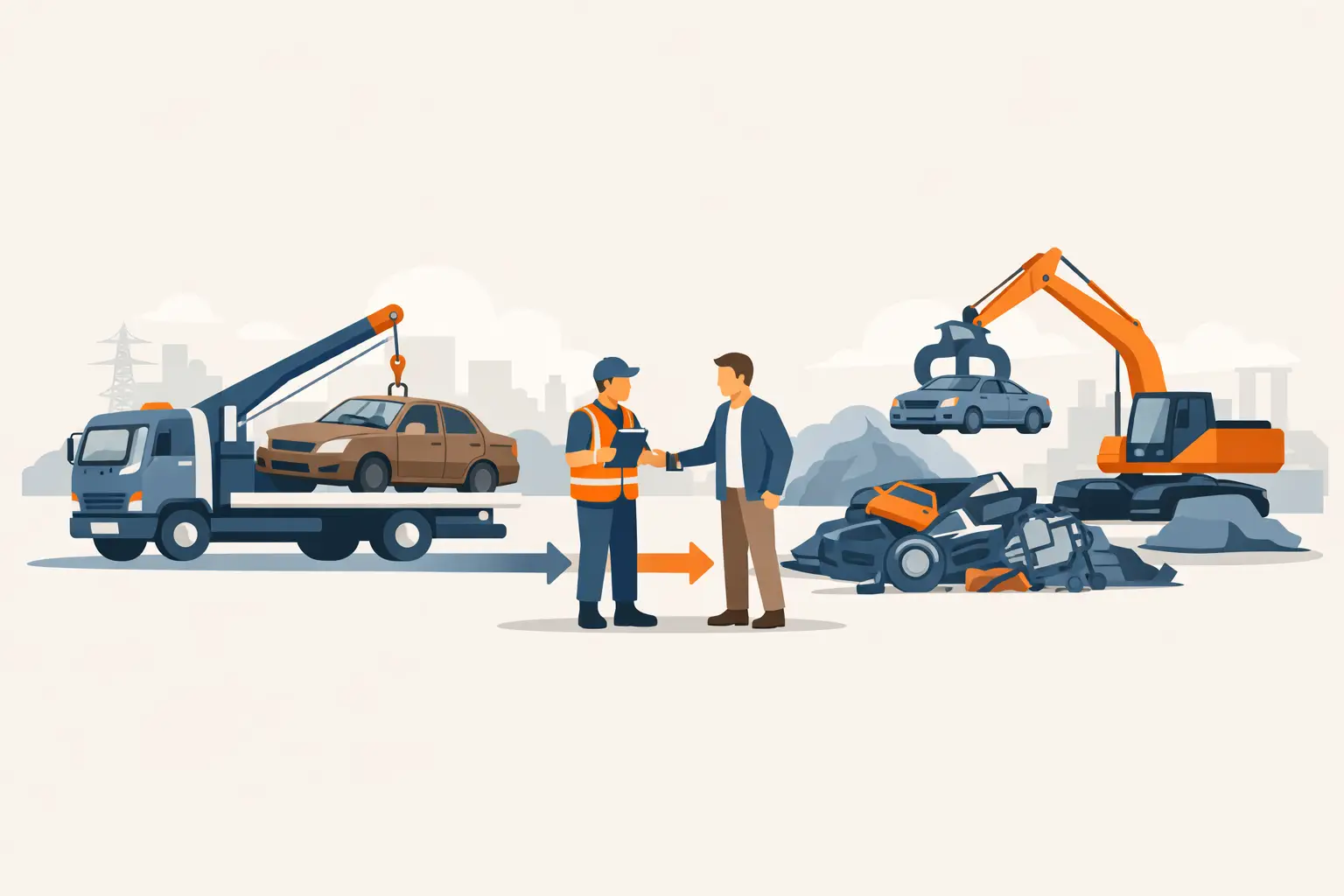
That old car on the drive is not just taking up space – it is usually costing you time, stress and sometimes money as well. If you are wondering how does scrap car collection work, the good news is that the process is usually far simpler than most people expect. You do not need to arrange transport, chase buyers or guess what paperwork matters. A proper scrap car collection service handles the practical side so you can get the vehicle removed and get paid without the usual hassle.
For most private car owners, the process starts when the vehicle is no longer worth keeping on the road. It may have failed its MOT, suffered accident damage, developed an expensive fault or simply reached the point where repairs no longer make financial sense. At that stage, collection becomes the key part of the service because many scrap vehicles are not safe, legal or convenient to drive anywhere.
How does scrap car collection work from start to finish?
In simple terms, you request a quote, accept an offer, book a collection slot, hand the vehicle over and receive payment. After that, the car is taken away for recycling or authorised dismantling, and the right paperwork is completed so the vehicle is officially dealt with.
What makes the service useful is not just the removal itself. It is the combination of valuation, collection, payment and compliance in one process. That matters when the car does not start, has no tax or insurance, or is parked somewhere awkward and you just want the problem sorted quickly.
Step 1: Getting a quote
Most scrap car collections begin with a registration number and postcode. That is usually enough to identify the vehicle and work out an initial value based on make, model, age and current scrap market conditions. Some services may also ask whether the car is complete, whether it starts, and if it has serious damage.
This part is faster than many people expect. You are not preparing a sales advert or answering messages from private buyers. You are simply giving the basic details needed to value the vehicle and arrange the next step.
The price can vary for sensible reasons. A complete car with all major components present may be worth more than one that has missing parts or severe fire damage. The location can matter too, especially if specialist recovery is needed. That does not mean the process becomes difficult – only that the final offer should reflect the real condition of the vehicle and the cost of collecting it.
Step 2: Accepting the offer
If you are happy with the quote, the next step is booking the collection. This is where a good service saves the most effort. Instead of trying to get the car to a yard yourself, the collection is arranged to your home, workplace, garage or another suitable location.
You will normally agree a day and a time window. Some services can offer same-day or next-day collection, while others work around your schedule over a few days. If your car is blocking a driveway or sitting at a garage where storage charges are building up, speed matters. If it is parked safely at home, you may be more focused on getting a convenient slot.
Step 3: Preparing the car for collection
You do not need to make the vehicle presentable, but you do need to make handover straightforward. In practice, that means removing your personal belongings, finding the keys if you have them, and having the logbook or relevant ownership details ready if available.
If the car does not start, that is usually not a problem. Scrap car collection is designed for non-runners as well as damaged and end-of-life vehicles. The collection partner may arrive with recovery equipment to load the car safely. If access is tight or the vehicle is stuck in a difficult position, it is worth mentioning that when you book. Clear information helps avoid delays on the day.
It also helps to check the car for small items people often forget – sunglasses, documents, parking permits, charging cables and loose change. Once the vehicle has been collected, you do not want to realise your house keys were in the glovebox.
What happens on collection day?
On the day itself, the driver or recovery operator will inspect the vehicle to confirm it matches the details given at quote stage. This is standard. It is not there to catch you out. It is simply to make sure the car is the right one, the condition has been described accurately and there are no major surprises that affect collection or value.
If everything matches up, the paperwork is confirmed and the vehicle is loaded. For cars that still move, this can be very straightforward. For non-runners or accident-damaged vehicles, winching or specialist lifting equipment may be used. Either way, the point of the service is that you are not expected to solve the transport problem yourself.
This is also when ownership details are checked. You may be asked for identification, and you should make sure you are dealing with a legitimate, professional service that can handle end-of-life vehicles properly. That gives you confidence that the disposal is compliant and that the administrative side will not be left unfinished.
Payment and paperwork
In the UK, payment is normally made by bank transfer rather than cash. That is standard practice and gives a clear payment record. In many cases, payment is arranged promptly once collection is confirmed, although exact timing can vary by provider.
The paperwork matters just as much as the money. If you have the V5C logbook, the relevant section can be completed to show that the vehicle has been transferred for scrapping or disposal. If you do not have the full logbook, a reputable service can usually still help you through the process, but it is always better to say so upfront.
You also need to inform the DVLA that you are no longer responsible for the vehicle. This is a key step because it protects you from future issues linked to ownership, tax or penalties. A proper service will explain what needs to be done and what confirmation you should expect.
Where does the car go after collection?
Once collected, the vehicle is taken to an authorised treatment facility or a connected recycling partner for proper processing. That means the car is handled in line with environmental and legal requirements, rather than simply abandoned or disposed of informally.
Fluids and hazardous materials need to be dealt with safely. The shell and other recyclable materials then go through the correct recovery route. From a customer point of view, the main thing is that the car is not just removed – it is disposed of properly. That is one of the biggest differences between a professional scrap collection service and an unregulated buyer offering a quick deal.
Why scrap car collection is easier than selling privately
Private sale sounds attractive until the car is old, damaged or not roadworthy. Then the reality kicks in. You may need to deal with tyre-kickers, low offers, missed appointments and buyers who expect you to sort recovery yourself.
Scrap car collection is different because it is built for vehicles that are no longer practical to sell in the usual way. You are not trying to persuade someone to take on a problem car. You are using a service designed to remove it quickly, pay fairly and deal with the legal side properly.
That does not mean every vehicle should be scrapped automatically. If a car is still in good running order with a solid resale value, selling it privately or part-exchanging it may bring more money. But when repairs are too expensive, the car has become unreliable, or moving it is a headache, collection is often the simpler and more sensible option.
Common concerns about how scrap car collection works
One common worry is whether a non-running car can still be collected. In most cases, yes. Another is whether the price will change on the day. It can, but usually only if the condition was described inaccurately or important details were missed when the quote was given.
People also worry about delays in payment or confusion over DVLA paperwork. That is why it pays to use a service that is clear from the start about what happens when, what documents are needed and how collection is arranged. A straightforward process should feel exactly that – straightforward.
For drivers in and around Peterborough, speed and convenience often matter just as much as price. If the car is stranded at home, at a garage or on private property, you want it gone without wasting another week chasing options. That is where a service like Scrap Cars Peterborough fits naturally: quick quotes, free collection, prompt payment and help with the official process, all handled with minimal fuss.
If your car is finished, you do not need to keep looking at it and hoping the situation somehow improves. Get a proper quote, ask the practical questions and choose a collection service that makes the handover easy. The best scrap car collection process feels less like selling a problem and more like getting one sorted.
Leave a Reply