
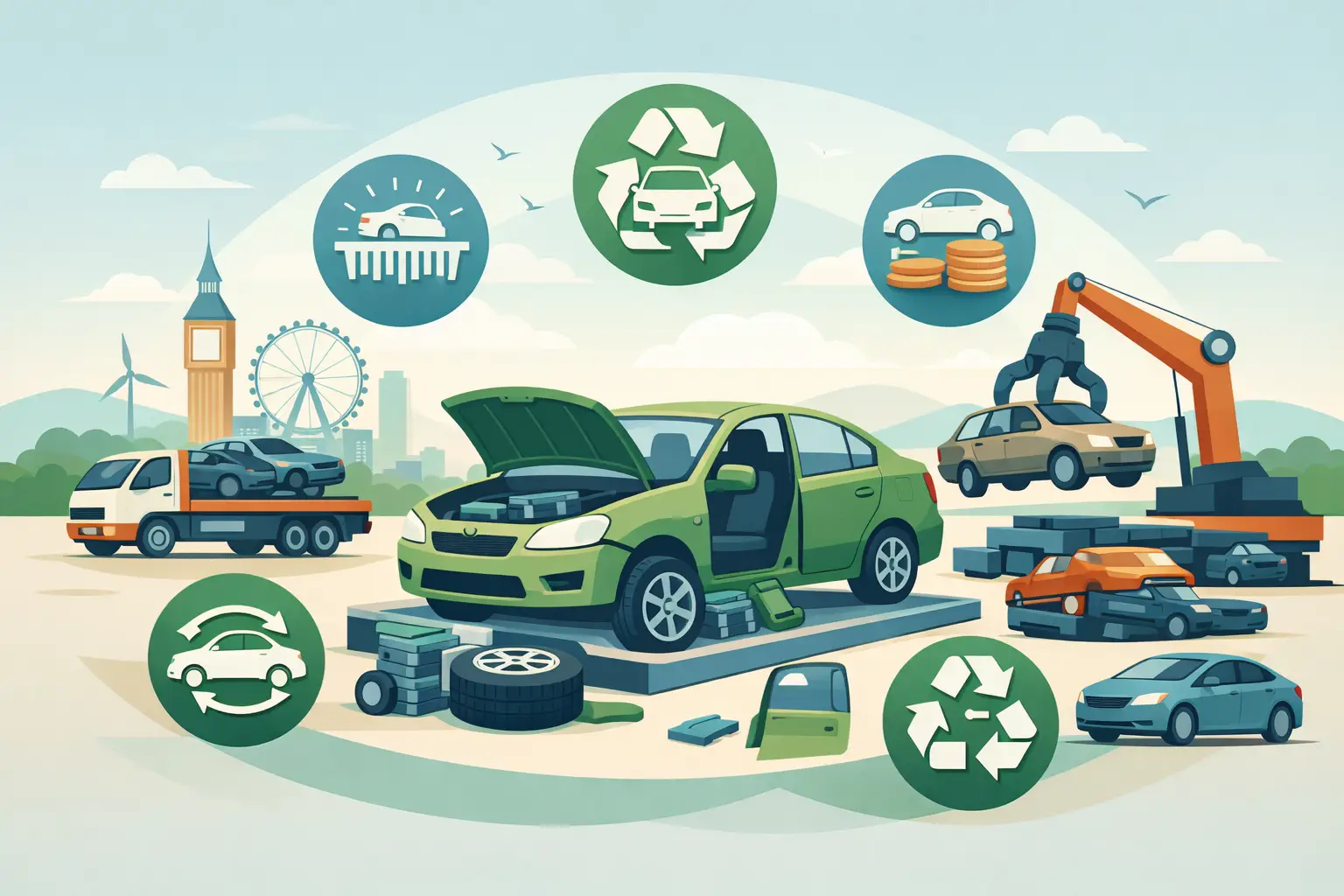
That old car on the drive usually costs more in stress than people expect. It might not start, it might have failed its MOT, or it may simply be no longer worth repairing. When you start looking at the best car recycling options, the right choice often comes down to three things – how quickly you need it gone, how much hassle you can tolerate, and whether the vehicle still has any resale value.
For most private owners, this is less about theory and more about getting a fair price, sorting the paperwork properly, and avoiding the headache of transport. A good recycling route should do all three without wasting your time.
Best car recycling options for different situations
Not every car should be handled the same way. A ten-year-old car with a gearbox fault is a different case from a non-runner that has been sitting for months, and both are different again from a damaged car after an accident. The best option depends on condition, location, and how much effort you want to put in.
1. Authorised scrap car collection services
For many owners, this is the most practical answer. If your car is damaged, uneconomical to repair, failed its MOT badly, or simply reached the end of the road, an authorised scrap car collection service is usually the quickest route.
The main advantage is convenience. You can usually get a price from your registration and postcode, book collection, and have the vehicle removed even if it is not roadworthy. That matters if the car is stuck at home, at a garage, or on a workplace car park and you do not want to pay separately for recovery.
It also tends to be the least stressful option when paperwork matters. A professional service should support the official scrappage process and make sure the vehicle goes to the correct recycling route. For most people, that combination of fair pricing, collection, and compliant disposal makes this one of the best car recycling options available.
2. Selling to a salvage buyer for accident-damaged cars
If the vehicle has been in a crash, the situation changes slightly. Some damaged cars still carry value even when they are not economical to put back on the road. In that case, selling to a salvage-focused buyer can make sense.
This option suits cars with body damage, suspension issues, or insurance write-off history where there is still value in the vehicle as a whole. The upside is that you may get more than a straightforward scrap price. The trade-off is that prices can vary more depending on damage level, make, model, and whether major components are intact.
If you go down this route, speed and collection still matter. A higher headline offer is not much use if you then have to arrange transport yourself or wait days for payment.
3. Manufacturer scrappage schemes
From time to time, manufacturers run scrappage deals against the purchase of a newer car. These schemes can work well if you were already planning to replace your current vehicle and the offer is genuinely competitive.
The key word there is genuinely. A scrappage allowance can look attractive, but it is worth comparing it against the discount you might get anyway on a replacement car. Sometimes the scheme gives real value. Sometimes it is simply a different way of presenting a standard dealer incentive.
This option is best for owners who want one transaction – old car out, newer car in. It is less useful if your main goal is simply to remove an unwanted vehicle quickly and receive payment without buying again.
4. Part exchange at a dealership
Part exchange sits somewhere between convenience and compromise. It is simple, especially if the car still runs and you are buying another vehicle at the same time. You hand over one car and leave with another.
The downside is that dealerships are not always the strongest option for older, non-running, or heavily damaged cars. Their focus is on the sale of the replacement vehicle, not on maximising the value of your old one. As a result, the offer can be lower than what a specialist recycling or scrappage service would pay.
If the car has limited market appeal and you want a clean handover, part exchange can still be worthwhile. Just do not assume it is automatically the best-value route.
5. Private sale before recycling
Sometimes a car is not quite scrap, but it is getting close. It may need work, have cosmetic damage, or be approaching the point where repairs outweigh the value. In those cases, some owners try a private sale first.
There is potential upside here. If the car still drives and someone is willing to take on the repairs, you may get more than scrap value. The problem is effort. You need to advertise it, answer messages, deal with viewings, and handle the usual haggling. If the car is immobile or has serious faults, interest can dry up quickly.
This route makes sense if you have time and the vehicle still has enough life left to attract genuine buyers. If you need it gone this week, it is often more trouble than it is worth.
How to choose the best car recycling option
The best car recycling options are the ones that fit the vehicle you actually have, not the one you wish you had. That sounds obvious, but many owners lose time chasing a private sale or dealer valuation when the car is already at true end-of-life stage.
Start with condition. If the car is non-running, unsafe, or facing expensive repairs, a specialist scrap car service is usually the strongest fit. If it is accident-damaged but still has broader salvage value, a salvage buyer may improve the return. If you are replacing it immediately, compare part exchange and manufacturer scrappage offers carefully rather than accepting the first figure put in front of you.
Then think about hidden costs. Transport is the big one. A slightly higher offer from a buyer who expects you to deliver the vehicle can quickly become a worse deal than a collection-based service. Time also has a cost. The longer a dead vehicle sits on your drive, the more it becomes a nuisance.
Finally, look at process. A smooth quote, prompt collection, fast bank payment, and support with the official paperwork matter just as much as the headline price. Convenience is not a bonus here. For many sellers, it is the deciding factor.
What makes a recycling service worth using
A good service should feel straightforward from the first quote. You should not need to chase people, explain the same details repeatedly, or guess what happens next. The strongest operators keep things clear: price, collection slot, payment method, and paperwork support.
Collection flexibility is particularly useful when the vehicle is stranded somewhere awkward or you cannot be available during a standard weekday window. Weekend and bank holiday availability can make a real difference if life is already busy.
It is also worth looking for a service built around a wider recycler network rather than a single local outlet. That wider reach can help produce stronger offers across different makes and conditions because the vehicle is being matched to the right recycling route, not forced into a one-size-fits-all model.
For owners in and around Peterborough, Scrap Cars Peterborough fits this practical model well – quick quotes, free collection, fast payment, and a process designed for cars that are no longer easy to sell through normal channels.
Common mistakes that cost sellers money
One of the biggest mistakes is waiting too long. If a car has clearly reached the point where repair does not stack up, holding off rarely improves the outcome. Values can fall further, storage becomes a nuisance, and you are still left with the same job to sort.
Another is focusing only on the top-line offer. If one buyer offers slightly more but adds delays, recovery costs, or uncertainty around payment, the deal may not be better in real terms. Speed and certainty have value.
The last mistake is using an informal route that does not properly deal with the vehicle’s end-of-life process. Most owners simply want peace of mind that the car has been handled correctly and that the paperwork side is not going to come back to them later.
If your car is old, damaged, non-running, or simply not worth the hassle any more, the best option is usually the one that removes the problem properly the first time. A fair quote, free collection, prompt payment, and a managed process can save more than money – it can save a lot of unnecessary time.
Leave a Reply