
May 30, 2026
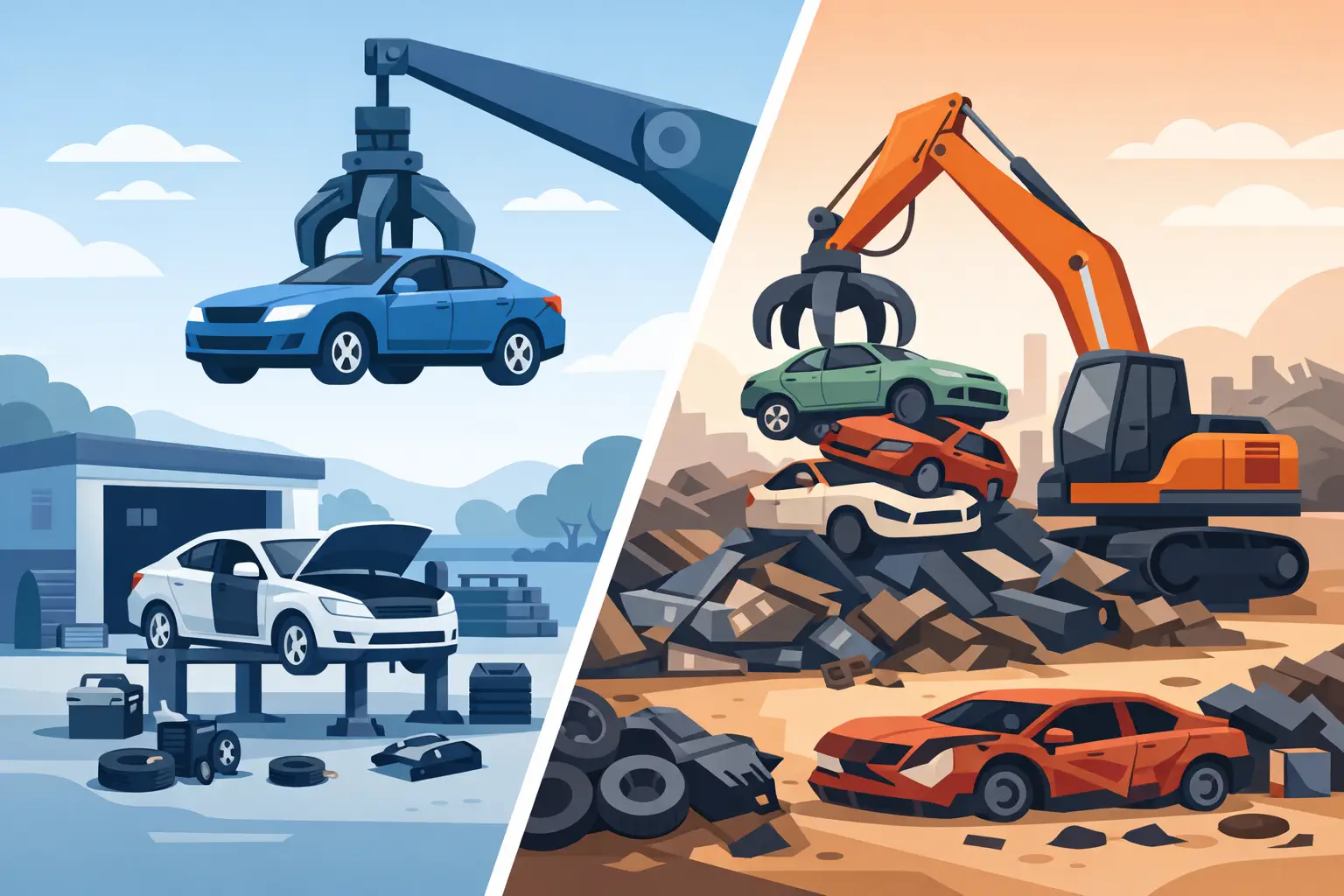
Car Breaker vs Scrapyard: What’s Better?
Car breaker vs scrapyard - what’s the difference, and which pays more? Learn what each does and the…
Read article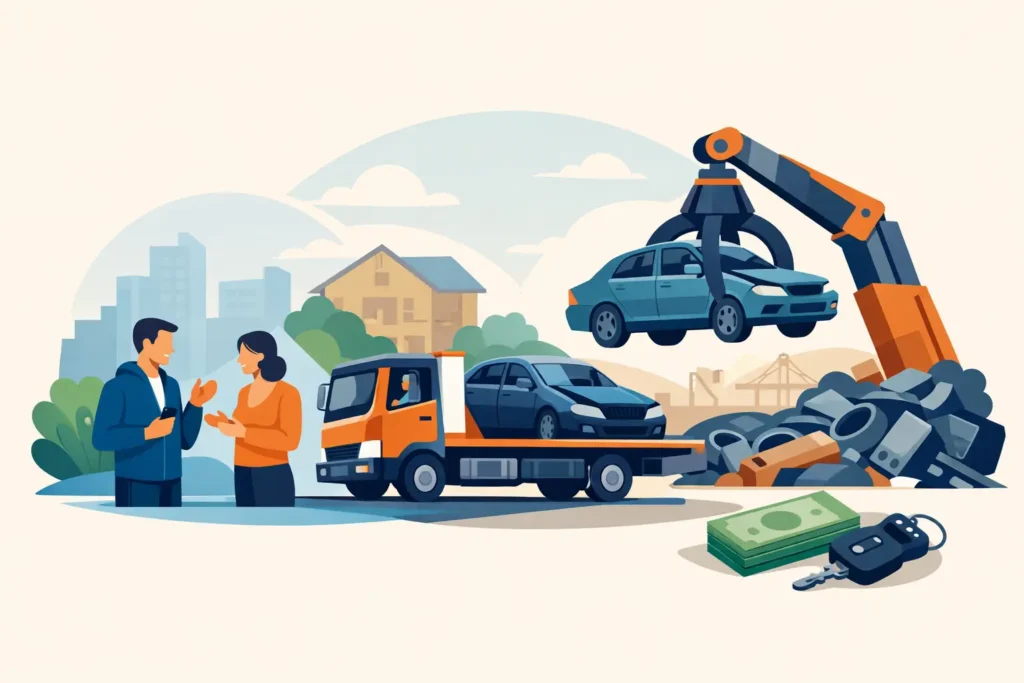
That moment usually comes without much warning. The MOT bill lands, the engine gives up, or the car has been sitting on the drive for months and you know it is not worth fixing. If you are thinking, “I need to scrap my car”, you probably want the same three things – a fair price, a quick collection, and no chasing around over paperwork.
That is exactly what matters. Most people are not looking for a complicated sale. They want the vehicle gone, they want the money paid promptly, and they want to know it has been dealt with properly. Whether the car is old, accident-damaged, non-running or simply not worth keeping, the process should be simple.
Scrapping is often the right choice when repair costs start overtaking the car’s value. A failed gearbox, serious body damage, electrical faults or repeated MOT failures can turn a usable vehicle into an expensive problem very quickly. Even if the car still starts, the economics may no longer stack up.
The same applies to vehicles that no longer move at all. A car that has been off the road for months can become a burden. It takes up space, may still need to be taxed or declared off road correctly, and often ends up being one more job nobody has time to sort out.
There is also the question of effort. Selling privately can work for some cars, but it is rarely attractive when the vehicle is damaged, unreliable or near the end of its life. You have to deal with viewings, messages, price haggling and buyers who disappear. For many owners, scrappage is simply the cleaner and faster option.
The process is usually much more straightforward than people expect. In most cases, it starts with your registration number and postcode. That is enough to get a quote based on the vehicle details and current market conditions.
If you are happy with the price, collection can then be arranged from your home, workplace, garage or roadside location, depending on the car’s condition. This is especially useful if the vehicle is not roadworthy. You should not have to organise transport yourself just to get rid of a car that no longer drives.
On collection day, the handover is normally quick. The vehicle is checked, the necessary details are confirmed, and payment is made by bank transfer. From there, the official disposal process is handled properly, so you are not left wondering what happens next.
That end-to-end approach is what most sellers want. A good service takes care of the practical bits without making you chase each stage.
The biggest factor is usually the weight of the vehicle, because scrap cars are often valued partly on the recoverable metal. Heavier vehicles can sometimes return more, but that is only part of the picture.
Make, model, age and condition also matter. Some vehicles have stronger demand within the recycling network than others, and prices can vary accordingly. A complete car may be valued differently from one with major missing components, and a vehicle with accident damage may be assessed differently from one with mechanical failure alone.
Location can also affect the quote. Collection logistics, fuel costs and transport distance all play a part, especially for non-runners that need specialist recovery. That is why two apparently similar cars do not always receive the same offer.
The key point is that price should reflect both the vehicle and the convenience of the service. A slightly higher headline figure is not always the better deal if you are expected to deliver the car yourself or deal with paperwork alone.
Free collection is not just a nice extra. For many owners, it is the reason scrappage becomes practical at all. If your car will not start, has no MOT, or has been declared off the road, moving it can be difficult and expensive.
That is where a proper collection service makes a real difference. It saves time, removes stress and avoids the cost of arranging a tow. It also means you can choose a collection slot that fits around work, family and the rest of your week rather than trying to force the job into a garage opening time.
For sellers in and around Peterborough, local coverage backed by a wider recycling network can help keep things moving quickly. It means there is a better chance of getting both a competitive price and a prompt collection without the process dragging on.
One of the main reasons people put this job off is uncertainty about the paperwork. They are not always sure what needs signing over, what happens with DVLA records, or how to prove the car has been disposed of correctly.
That concern is understandable, but it should not be a barrier. A professional scrappage service should guide you through what is needed and make sure the handover is compliant. You should know what details are being recorded, who is collecting the vehicle, and what happens after collection.
It is also worth having the vehicle logbook available if you have it, although losing paperwork does not always mean the process stops. What matters is being upfront about the situation from the start so everything can be handled properly.
A reliable service does not leave you to work this out on your own. It gives clear instructions and keeps the process simple.
A lot of owners wait because they think the vehicle might still be worth repairing. Sometimes that is true, especially if the fault is minor and the rest of the car is in good shape. But many delays come from optimism rather than numbers. If the repairs are likely to keep piling up, holding on can cost more than acting now.
Others delay because the car has sentimental value or because sorting it feels like a hassle. That is completely normal. Cars often stay on drives and in garages for months longer than planned because nobody wants the admin.
Then there is the fear of being underpaid. This is why comparison matters. A service connected to a broad network of recyclers can often produce a stronger quote than a one-option approach. More importantly, the offer should be clear, with collection and payment terms explained upfront.
If you are ready to scrap your car, speed matters, but trust matters just as much. You want a service that answers quickly, explains the process clearly and does what it says it will do.
Look for a provider that offers instant quotes, free collection, fast bank payment and help with the official side of the handover. Those are not extras. They are the basics of a service that respects your time.
It is also worth paying attention to availability. Being able to book seven days a week, including weekends and bank holidays, can make the difference between sorting the problem now and leaving it for another month.
The best experience is usually the one that feels easy from the first step. You enter a few details, receive a fair quote, book collection, and the vehicle is gone without any unnecessary back and forth.
It depends on the car. If the vehicle is clean, roadworthy and likely to attract genuine buyers, a private sale may achieve more money. That is the trade-off. You might make more, but you will almost certainly spend more time doing it.
If the car is damaged, non-running, expensive to repair or difficult to move, private selling becomes much less appealing. Buyers expect big discounts, negotiations can drag on, and there is no guarantee of a quick result.
Scrappage is often the better choice when certainty is more valuable than squeezing out every last pound. You get a clear offer, a confirmed collection, and a managed process. For many people, that is worth far more than the hassle of trying to sell a problem car on the open market.
If your car has become more trouble than transport, there is no benefit in letting it sit there any longer than it needs to. Getting it collected, paid for and properly processed can be one of the quickest ways to clear space and move on.
Ready to get a fair price for your scrap car?
Get a Free Quote
Car breaker vs scrapyard - what’s the difference, and which pays more? Learn what each does and the…
Read article
Can I scrap a van? Yes - but value, paperwork and collection all matter. Learn how van scrappage…
Read article
Find the best buyers for damaged cars in Peterborough. Learn who pays fairly, collects free, handles paperwork, and…
Read article