
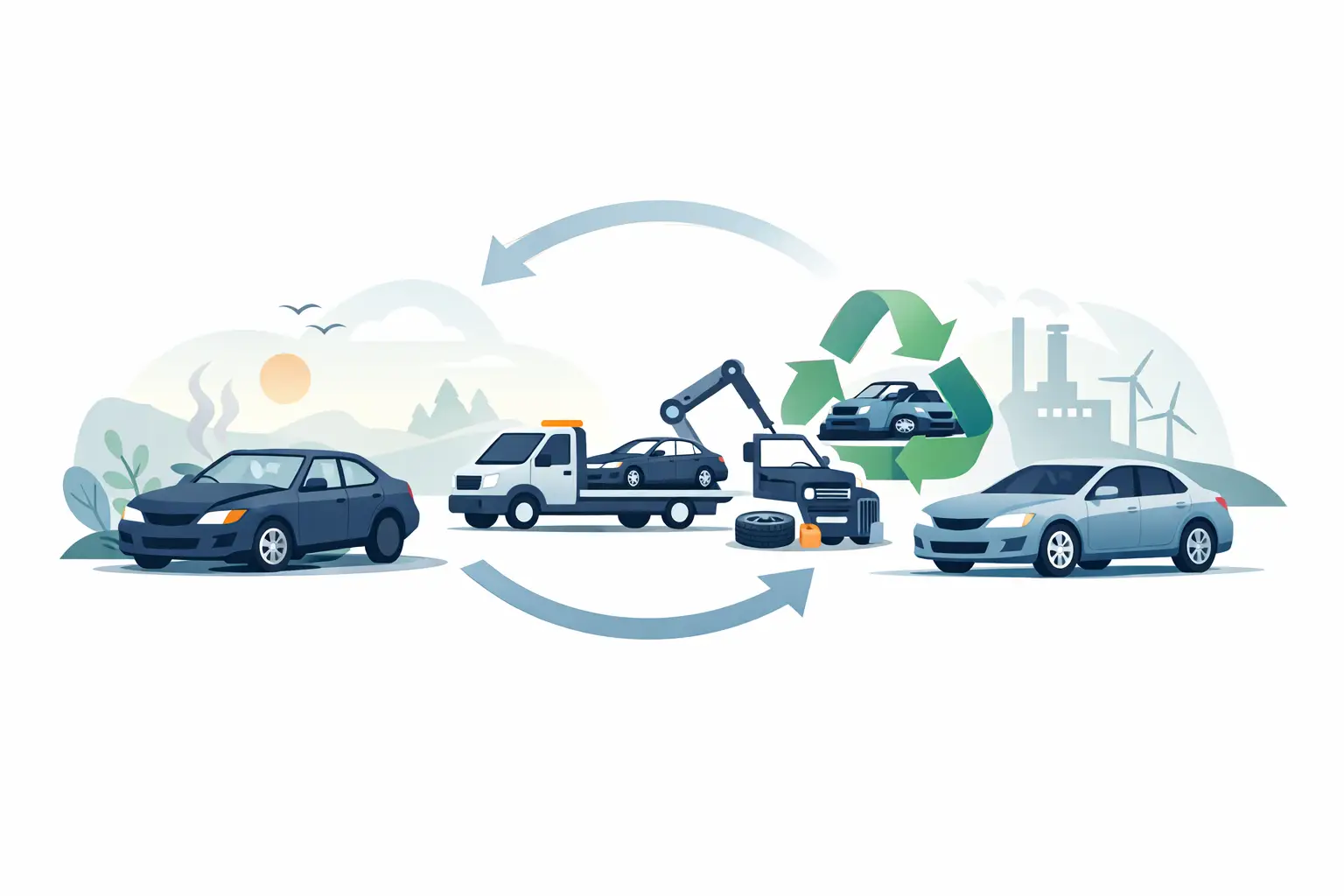
That moment usually comes without much warning. One failed MOT, a repair bill that makes no sense, or a car that has been sitting on the drive for months and still will not start. If you are at that point, this end of life vehicle guide will help you work out what to do next, what paperwork matters, and how to get the vehicle removed without turning it into a bigger job than it needs to be.
For most owners, the real issue is not deciding whether the car is finished. It is knowing how to dispose of it properly, how to avoid wasting time, and how to make sure payment and paperwork are handled the right way. That is where a clear process makes all the difference.
What counts as an end of life vehicle?
An end of life vehicle is a car that is no longer practical, economical or safe to keep on the road. Sometimes it is officially beyond repair. Sometimes it still runs, but the cost of putting it right is more than the car is worth. In both cases, scrappage is often the sensible option.
This can apply to cars with major engine failure, serious accident damage, repeated electrical faults, flood damage, corrosion, or a failed MOT with a long list of advisories and repairs. It also applies to older vehicles that have simply reached the point where every garage visit brings another bill.
There is a difference between a car that is old and a car that is at the end of its useful life. If the vehicle is still reliable and worth selling privately, scrapping may not be the best route. But if you are facing towing costs, storage issues, or repair quotes that exceed the vehicle’s value, scrappage is usually the quicker and cleaner answer.
End of life vehicle guide – first checks to make
Before you arrange collection, it helps to get a few basics in order. This is not about adding hassle. It is about avoiding delays.
Start with the registration number and your postcode. That is normally enough to get a quote from a professional scrap car service. You should also check whether you have the V5C logbook. If you do, keep it ready. If you do not, you can still usually scrap the vehicle, but the process may involve a few extra checks to confirm ownership.
Take a quick look through the car as well. People regularly leave behind sat navs, paperwork, chargers, sunglasses, child seats and tools. Check the glovebox, boot, door pockets and under the seats. Once the vehicle has gone, retrieving personal items is far harder than most people expect.
If the car does not start, has a flat battery, missing wheels or accident damage, say so upfront. Accurate details help avoid collection issues and make sure the quote reflects the vehicle properly.
The paperwork that matters
Paperwork is often the part people worry about most, but it is usually straightforward when handled properly.
The key document is the V5C logbook. If you have it, you will use it to confirm that the vehicle has been transferred for scrap. You should also keep any written confirmation of the sale and collection. A professional buyer will explain what needs to be completed and what happens after collection.
Once the vehicle is passed on, you need to make sure the DVLA is updated. That protects you from future problems such as tax reminders or penalty notices linked to a car you no longer own. If a service says it will support you with the official paperwork, that is worth having. It removes guesswork and reduces the chance of mistakes.
If the car has been written off or is badly damaged, do not assume the process changes completely. In most cases, it is still a matter of confirming ownership, arranging compliant collection and ensuring the transfer is recorded correctly.
How scrap car quotes are worked out
People often ask why one scrap quote is higher than another. The answer is usually a mix of metal value, vehicle weight, make, model, condition and demand within the recycling network.
A larger vehicle may carry more scrap metal value, but that does not always mean it will produce the best price. Some models are worth more because of reusable materials or demand from authorised recycling and dismantling channels. Others are less attractive because they are difficult to move, heavily damaged or incomplete.
This is why instant quotes based on registration and postcode are useful. They cut through the guesswork quickly. Still, quotes depend on accurate information. If a car is listed as complete but the catalytic converter is missing, or it is described as running when it needs winching onto the collection vehicle, the final figure may change.
The fairest process is a clear quote, clear collection terms and fast bank payment once the vehicle is collected and checked. Cash transactions for scrap cars are not the standard route, so bank payment is what most owners should expect.
Collection day – what actually happens
For many owners, collection is the main reason to use a specialist service. If the car is non-running or unroadworthy, you do not want the extra cost and hassle of trying to move it yourself.
On the day, the driver or recovery partner will confirm the vehicle details, collect the car from your home, workplace or another agreed location, and help complete the handover. If the vehicle cannot be driven, it can usually still be collected with the right equipment.
This is one of those areas where convenience really matters. A low quote with no proper collection support often turns into wasted time. A service that can collect seven days a week, including weekends and bank holidays, is far more practical when you need the car gone quickly.
If you are in Peterborough or nearby areas such as Stamford, Spalding, Wisbech, March, Huntingdon or Corby, local collection can also mean a faster turnaround and less waiting around for a suitable slot.
When scrapping is better than selling privately
Private sale sounds attractive until the reality kicks in. If your car has failed its MOT, has body damage, or will not start, buyers tend to expect a bargain and a long negotiation. You may also need to deal with no-shows, messages at all hours, and awkward questions about faults.
Scrappage is not always the highest possible sale route on paper, but it is often the best overall option in practice. That is especially true when the car is not roadworthy, needs collecting, or has become more of a burden than an asset.
There is a trade-off. If your vehicle still has a valid MOT, low mileage and only minor issues, selling it as a used car could bring more money. But if the repairs are substantial or the car has already been off the road for some time, the extra effort usually is not worth it.
Common mistakes to avoid
The biggest mistake is waiting too long. An unwanted car rarely becomes easier to deal with over time. Batteries go flat, tyres deteriorate, paperwork gets misplaced and driveways stay blocked.
Another common problem is accepting a quote without checking what is included. Ask whether collection is free, whether non-runners are covered, and how payment is made. A high headline figure means very little if transport fees or delays are added later.
It is also worth being honest about the condition. If the car has been in a collision, has no keys, or is parked in a difficult spot, mention it early. That gives the buyer a proper picture and helps the collection go smoothly.
Finally, do not ignore the paperwork after handover. Make sure the transfer is completed correctly. It is a simple step, but it protects you.
Choosing a service that keeps it simple
A good end of life vehicle guide should leave you with one clear point. This process does not need to be complicated. The right service will give you a fast quote, arrange free collection, pay promptly by bank transfer and help with the paperwork so you are not left chasing details afterwards.
That is what most car owners want when a vehicle has reached the end of the road – a fair price, no unnecessary delays and a straightforward handover. Scrap Cars Peterborough is built around exactly that approach, using a professional recycler network to secure strong offers while keeping collection and paperwork simple for local sellers.
If your car is no longer worth repairing, the best next step is usually the simplest one. Get the quote, get the collection booked, and get your space back.
Leave a Reply