
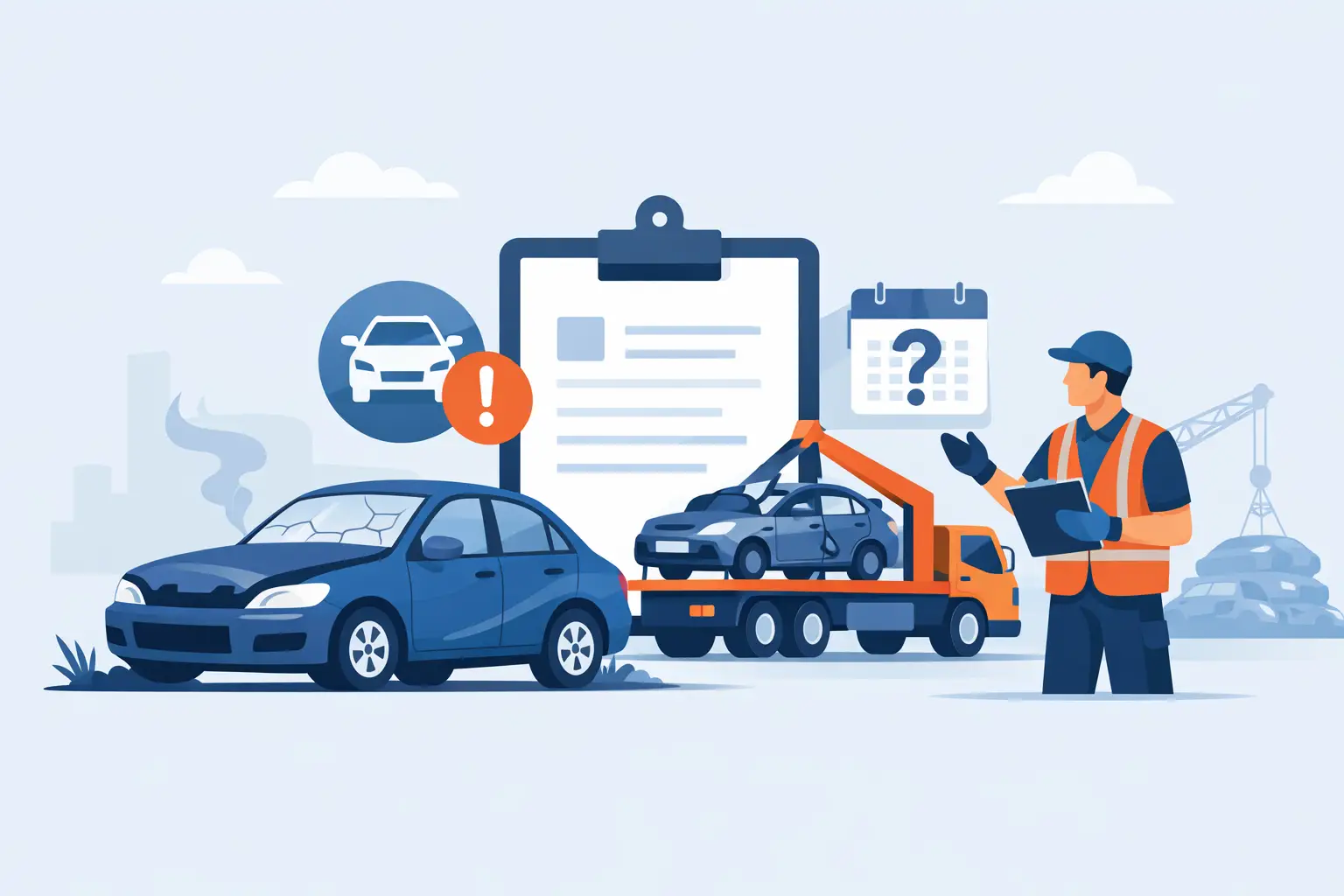
That question usually comes up when a car has been sitting on the drive for weeks, maybe months, and the tax has quietly run out while the vehicle itself has become more trouble than it is worth. If you are asking can I scrap untaxed car, the short answer is yes – in most cases, you can scrap an untaxed car legally in the UK. The key point is that being untaxed does not stop you from selling it for scrap, but it does affect how the car is moved and what paperwork needs to be handled properly.
If the car does not run, has failed its MOT, has been written off, or is simply no longer worth repairing, scrapping it can be the quickest way to draw a line under it. What matters is making sure the vehicle is collected legally, paid for properly, and processed through an authorised route.
Can I scrap an untaxed car if it is off the road?
Yes. If your untaxed car is kept off the public road, you can still sell it to a scrap car service or authorised treatment facility. In fact, many scrap vehicles are untaxed by the time the owner decides to get rid of them. The tax status does not prevent the vehicle from being scrapped.
Where people get caught out is confusing ownership, tax and road use. Tax is about whether the car can legally be used or kept on a public road. It is not a requirement for ownership transfer in the same way. So if your vehicle is parked on private land, such as a driveway, garage, yard or private parking area, it can usually be collected and scrapped without any issue.
The one thing you must not do is drive an untaxed car on the road just to get it to a scrapyard or buyer. That is where a simple disposal job can turn into a fine, penalty or seizure risk.
Can I scrap untaxed car without an MOT?
Usually, yes. An untaxed car often also has no MOT, and that is common with end-of-life vehicles. A valid MOT is not normally needed to scrap the car. If the vehicle is being collected rather than driven, the lack of MOT is rarely a barrier.
This matters for owners of non-runners or damaged cars because there is no point spending money getting a vehicle tested just to dispose of it. If the engine has failed, the gearbox has gone, or repair costs are more than the car is worth, collection is the practical option.
For many sellers, that is the whole reason they scrap it. They do not want to insure it, tax it, book a test, arrange recovery, or spend another weekend chasing a problem that is not worth fixing.
The main rule – do not drive it untaxed
This is the part worth being clear about. You can scrap an untaxed car, but you generally cannot drive it on public roads unless a very specific exemption applies. Most owners are better off assuming they should not drive it at all.
Even if the car starts and still moves, expired tax creates a legal issue straight away. If it also has no MOT or no insurance, the risk becomes even greater. That is why free collection is not just convenient – it is often the correct legal route.
A professional scrap service will arrange collection from your home, workplace, garage or roadside location if the car is already there legally. That saves you the trouble of trying to move an untaxed vehicle yourself.
What paperwork do you need to scrap an untaxed car?
In most cases, the process is straightforward. You will normally need proof that you own the vehicle and the right details from the V5C logbook if you have it. If you do not have the logbook, you can often still scrap the car, but the process may require extra checks.
The important thing is that the change of keeper or end-of-life paperwork is completed properly. Once the vehicle is passed to an authorised treatment facility, you should receive confirmation that it has been processed correctly. That protects you from future issues such as fines, tax reminders or questions about a vehicle you no longer own.
If there is any outstanding tax on the vehicle, you may be able to claim a refund for any full unused months once the DVLA is notified. That is separate from the scrap sale itself, but it is still worth remembering. Some owners assume they lose everything once the car goes, when in fact they may still be due part of the tax back.
What happens if the car is declared SORN?
A SORN car can still be scrapped. In many cases, untaxed cars are already declared off road, which is exactly what they should be if they are being kept on private land and not used.
Declaring SORN does not stop you from selling or scrapping the vehicle. It simply confirms the car is not being used on public roads. If anything, it can make the position clearer. The vehicle stays off road, a collection is arranged, and the car is removed without you needing to tax it again.
That is often the cleanest route for owners who have had a broken or unwanted car sitting at home for a while.
When scrapping an untaxed car makes the most sense
There is usually a point where putting more money into a vehicle stops being sensible. Sometimes it is obvious, such as serious accident damage or a failed engine. Other times it is a build-up of smaller issues – no tax, no MOT, flat battery, warning lights, worn tyres, and a repair bill that keeps growing.
At that stage, scrapping often beats trying to sell privately. A private buyer may expect the car to be movable, may haggle heavily, or may simply waste your time. An untaxed vehicle is not attractive to many buyers unless it is especially valuable or repairable.
Scrapping is often the practical answer when you want the car gone quickly, do not want strangers coming round, and need the collection handled for you. For owners in and around Peterborough, that local collection element can make the difference between sorting it this week and letting it sit there for another month.
How the process usually works
A proper scrap car service should keep things simple. You provide the registration and postcode, get a quote, agree a collection time, show ID if required, and the vehicle is removed. Payment is made by bank transfer, and the paperwork is handled in line with legal requirements.
That matters more with untaxed vehicles because you want a service that understands the practical side. The car may not start. It may be blocked in. It may have been off the road for a long time. A no-nonsense collection service is built for exactly that situation.
The best approach is to be upfront about the condition. Say whether it starts, whether it rolls, whether keys are available, and whether the logbook is present. Accurate details help avoid delays on collection day and make it easier to secure a fair quote from the outset.
Common concerns about scrapping an untaxed car
One worry is whether untaxed means unsellable. It does not. Another is whether the lack of tax reduces the scrap value. Usually, the vehicle’s value depends far more on weight, make, model, age, catalytic converter, and overall condition than on whether the tax has expired.
People also ask whether they need to retax the car before collection. In normal scrap collection cases, no. If the vehicle is being collected and not driven by you on the road, taxing it again just to get rid of it would usually be wasted money.
The bigger issue is choosing a legitimate service. You want the vehicle removed by professionals, payment made properly, and the disposal recorded correctly. That is what gives peace of mind after the car has gone.
A simple answer to can I scrap untaxed car
Yes, you can scrap an untaxed car. The practical condition is that it should not be driven on public roads without meeting legal requirements, so collection is usually the safest and easiest option. As long as the paperwork is handled properly and the car goes through an authorised route, being untaxed does not stop you from getting it removed.
If your car is already off the road, no longer worth repairing, or simply taking up space, there is no advantage in letting it sit there any longer. Getting a proper quote, arranging collection, and closing off the paperwork is often the fastest way to move on.
Leave a Reply