
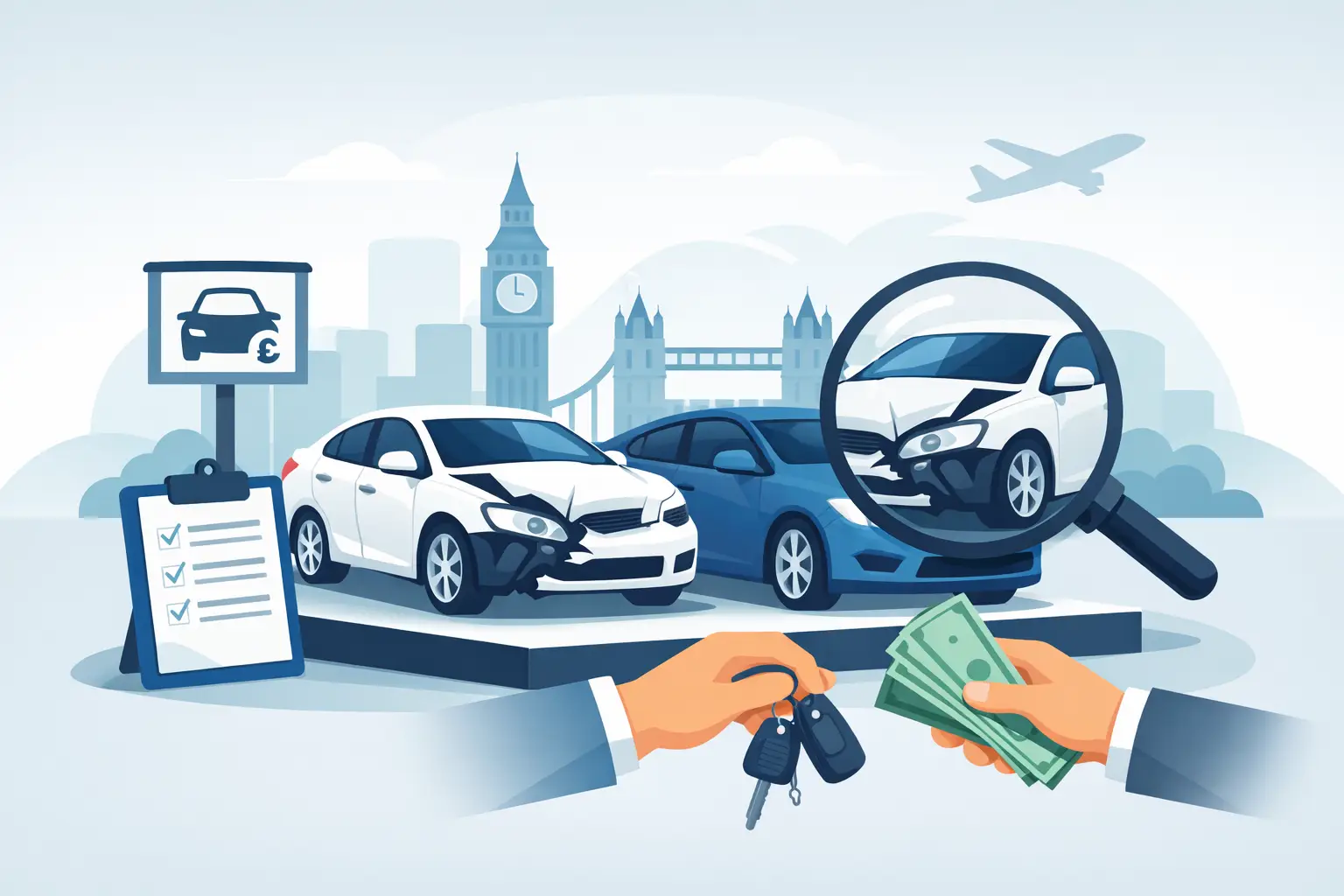
A bent bonnet, a cracked bumper and an airbag light can turn a normal sale into a headache fast. If you are searching for an accident damaged car sale example, you are usually not looking for theory – you want to know what your car might be worth, how the process works, and whether it is worth repairing or selling as it is.
The short answer is that accident-damaged cars can still have real value, but the price depends on more than the damage you can see. Age, mileage, make, model, whether the car still starts, and how costly the repair is all matter. That is why one damaged car might attract a decent offer while another is only worth its end-of-life value.
A realistic accident damaged car sale example
Let us take a common situation. A 2014 Ford Fiesta is involved in a front-end collision. The bonnet is crumpled, one headlight is smashed, the radiator support is pushed back, and the car will not drive safely. Before the accident, a private sale might have been around £3,500 to £4,200 depending on mileage and condition.
After the accident, the same car becomes a different proposition. A private buyer will worry about repair costs, hidden damage, insurance history and whether the car is economical to fix. If the repairs are likely to cost more than the car is worth on the open market, the value drops sharply.
In this example, the sale price for the damaged vehicle might fall into a range of roughly £700 to £1,600. That is a wide gap, and there is a reason for it. If the engine is fine, the car is complete, the mileage is sensible, and the damage is mostly limited to bolt-on panels and front-end components, the offer will sit higher. If the chassis is affected, the airbags have deployed, or the car is a non-runner with heavier structural damage, the offer will sit lower.
That is the part many sellers miss. They compare the pre-accident value with the current offer and assume the quote is unfair. In reality, the buyer is pricing in repair risk, transport, paperwork, and the fact that a damaged car has a much smaller resale market.
What affects an accident damaged car sale example most?
The biggest factor is not always the age of the car. It is the relationship between repair cost and end value. A newer car with expensive electronic systems can become uneconomical surprisingly quickly after a moderate crash. An older car with simpler construction may also be written off because even a basic repair bill can exceed what the car is worth.
Damage type matters. Cosmetic damage is one thing. Structural damage is another. A dented wing and broken mirror are far less serious than suspension damage, deployed airbags, or signs that the chassis legs have shifted. Cars with flood damage after an accident-related event can also be harder to value because electrical faults may appear later.
The mechanical condition before the accident also matters. If the car already had gearbox issues, MOT advisories, warning lights or very high mileage, that will reduce the offer. If it was otherwise sound before the collision, buyers are more likely to make a stronger bid.
Then there is demand. Some makes and models hold more value even when damaged because there is still interest from recyclers and specialist buyers. Others do not. This is why quote comparisons can vary so much from one vehicle to another.
When repairing the car makes less sense
Owners often ask the same question first: should I fix it or sell it damaged? The answer depends on numbers, not sentiment.
If a garage estimate comes back at £2,800 and the car would only be worth £3,200 after repair, that is usually poor value. You are taking on the risk of extra faults, time off the road, and further costs that can appear once work starts. On paper it can look close. In practice it rarely feels worthwhile.
On the other hand, if the car is relatively new, the damage is limited, and the repair restores a clear resale value, fixing it may still be the better route. The problem is that many accident-damaged vehicles are already older, have average wear, and sit near the point where a repair bill wipes out any benefit.
That is why many owners choose a direct sale. It gives certainty. You know what the car is worth in its present condition and you avoid pouring money into a vehicle you may still want to move on afterwards.
How the sale process usually works
A straightforward service should not make you chase around for answers. In most cases, you provide your registration and postcode, answer a few questions about the damage, and receive a quote. If the offer works for you, collection is arranged and payment is made promptly once the vehicle is collected and checked.
For sellers with non-running cars, this matters. A damaged vehicle is awkward to advertise privately and even harder to deliver. If it does not start, has steering damage or is not roadworthy, towing it yourself is another cost and another job to organise.
A proper collection service removes that problem. It also helps when the car is sitting on a drive, at a garage, or somewhere you simply need it moved from quickly. For many people, convenience is not a bonus. It is the reason they sell this way in the first place.
Paperwork and write-off concerns
A lot of hesitation comes from paperwork. People worry they will miss something, leave themselves liable, or get caught up in confusing admin. That concern is understandable, especially after an accident when there is already enough to deal with.
The exact paperwork depends on the vehicle and the sale route, but you should expect a clear process. You will normally need proof that you own the vehicle and access to the V5C if you have it. If the car has been declared an insurance write-off, that does not automatically mean it has no value. It simply means the insurer judged repair uneconomical or unsuitable under their terms.
What matters is being accurate about the condition. If airbags have gone off, if the car does not start, or if there is visible structural damage, say so upfront. Good buyers would rather quote properly first than renegotiate later.
Why private sale is often the slowest option
There is always the temptation to list the car online and hope someone offers more. Sometimes that works, but damaged vehicles are not easy private sales. You will get messages asking if it drives, whether it can be repaired cheaply, if you will accept less, and whether you can deliver it. Then there are no-shows and buyers who arrive expecting a completely different car from the one you described.
For a roadworthy car in good order, private sale can make sense. For an accident-damaged one, it is usually slower, more effort, and less certain. That is especially true if the car cannot be moved or if you need a quick result.
A direct buyer gives you a cleaner route. The offer may not match the car’s old retail value, but it reflects the real market for a damaged vehicle today, not the value it had before the accident.
Getting the best outcome from your quote
The easiest way to improve your result is to be precise. Give the registration, correct mileage, and a brief honest description of the damage. Mention if the car starts, moves under its own power, has current MOT, or has had airbags deploy. Good information helps produce a stronger and more reliable quote.
It also helps to move quickly if the car is no longer practical to keep. Damaged vehicles rarely become simpler to sell with time. Storage issues, flat batteries, weather exposure and paperwork delays can all make matters worse.
For local owners dealing with an unwanted damaged car, a service like Scrap Cars Peterborough is built around that reality – quick quotes, free collection and a managed process that saves you from trying to force a difficult private sale.
If your car has been in an accident, the key thing is not what it was worth last month. It is what it is worth now, in its current condition, with the least hassle to you. Once you look at it that way, the right next step is usually much clearer.
Leave a Reply