
June 5, 2026
Car Recycling Payment Review: What to Check
Car recycling payment review - learn what affects your payout, when you should be paid, and how to…
Read article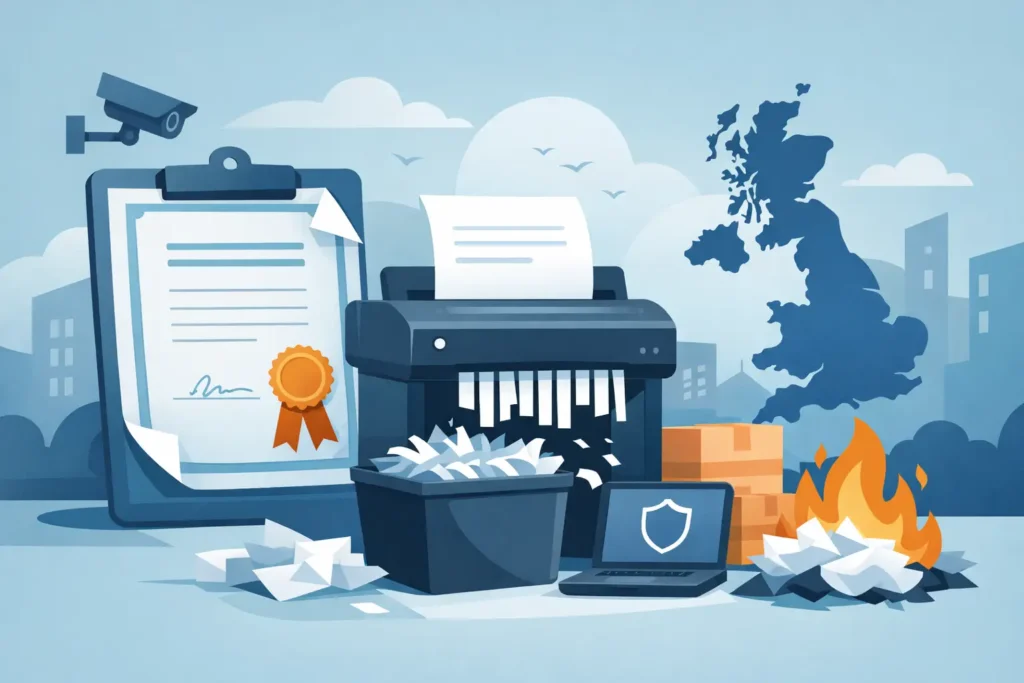
A non-starting car on the drive can quickly become more than an inconvenience. It takes up space, may be costing you in insurance, and leaves one big question: has it been disposed of properly? If you have searched “what is certificate of destruction”, the short answer is that it is official evidence that an end-of-life vehicle has been taken to an authorised treatment facility and destroyed in line with UK environmental rules.
For anyone scrapping a car, this document matters because it gives a clear record of what happened to the vehicle. It is not just a receipt. It can help show that your car has reached its final stage and should not return to the road.
A Certificate of Destruction, often called a CoD, is issued when an authorised treatment facility has accepted and processed a vehicle for destruction. These facilities are approved to handle end-of-life vehicles safely. That includes removing hazardous materials and fluids before the remaining vehicle is recycled.
The certificate confirms that the vehicle has been permanently taken out of use. In practical terms, it is the strongest paperwork you can receive when a car is genuinely being scrapped rather than sold on, repaired or retained for another purpose.
The document is tied to the vehicle’s identity, normally using the registration number and vehicle identification number. It should make clear which vehicle has been accepted, the date it was processed and the authorised facility responsible for destruction.
A legitimate collection service may collect your vehicle from home, work, a garage or the roadside, then deliver it to an authorised treatment facility. The collection itself does not automatically mean a Certificate of Destruction will be issued on the spot. The certificate is issued once the authorised facility has accepted the vehicle for destruction.
Your name on the V5C registration certificate makes you the registered keeper, not necessarily the legal owner, but it also means you need to make sure DVLA records are updated correctly. Leaving this unfinished can create avoidable problems later.
Without the right notification, you could remain linked to a vehicle that has left your possession. That may cause trouble if correspondence, enforcement notices or tax-related queries arise after collection. A Certificate of Destruction gives reassurance that the vehicle has been handled through the proper end-of-life process, while notifying DVLA protects your own record.
It also helps you avoid handing a car to an unapproved operator who may move it on without clear paperwork. A vehicle that seems beyond saving can still have an identity and a future in the wrong hands. Proper disposal reduces that risk and ensures oils, batteries, tyres and other materials are dealt with responsibly.
For most private sellers, the main benefit is simple: you want a clean, documented end to ownership, not uncertainty after the vehicle has been collected.
You should receive a Certificate of Destruction when the vehicle is being permanently scrapped by an authorised treatment facility. However, a certificate is not issued for every unwanted or damaged vehicle collected.
For example, a car may be purchased as a repairable vehicle, or it may be moved on for reuse rather than destroyed. In that situation, it should not receive a CoD because it has not reached the end-of-life destruction stage. The paperwork should instead reflect a transfer or sale to the relevant motor trade business.
This distinction matters most with accident-damaged cars. Severe damage does not always mean a vehicle must be destroyed. Sometimes the value is in repairing it, depending on its condition, age and classification. If your priority is permanent disposal, ask clearly whether the vehicle is going to an authorised treatment facility for destruction and whether a Certificate of Destruction will follow.
The timing can vary. Some certificates are processed promptly once the vehicle reaches the facility, while others may take a little longer if collection has been arranged through a network. Do not treat a vague promise of paperwork as enough. Confirm what document you will receive, who will issue it and when.
A CoD is valuable, but it does not remove the need to make sure the vehicle is recorded as no longer in your possession. The safest approach is to notify DVLA as soon as the vehicle has been handed over, using the appropriate route for a vehicle sent for destruction or transferred to a motor trader.
Keep the details of the business that collected or accepted the car, along with the collection date, registration number and any reference number. If you have the V5C, complete the relevant section as instructed and retain the remaining section or confirmation. If the V5C is missing, do not abandon the process. Tell the collector straight away and ensure you understand how the transfer will be recorded.
Once DVLA has updated its record, any remaining vehicle tax is normally refunded automatically for complete months left on the tax. You should also cancel your insurance after the handover is confirmed. Do not cancel it before collection if the car is still on a public road or needs to be moved lawfully.
A Certificate of Destruction is therefore one part of the process, not the only part. Think of it as proof of the vehicle’s final treatment, while your DVLA notification closes off your responsibility as the registered keeper.
It is easy to assume a CoD covers every aspect of scrapping a car. It does not. It is not proof that you received payment, so keep your bank payment confirmation and collection receipt. It is not a replacement for telling DVLA about the transfer. It also does not prove the car was insured, taxed or MOT-tested at the point of collection.
Equally, it is not always the document you need if the vehicle is being sold as a damaged but repairable car. In that case, asking for a CoD would be the wrong request because the vehicle is not being destroyed. The right paperwork depends on what will actually happen to it after collection.
That is why clear questions are worthwhile before you accept a quote. Ask whether collection is free, whether payment is made by bank transfer, whether the vehicle is heading for destruction, and how your official paperwork will be handled. Straight answers before collection save chasing later.
Start by using a professional service that can explain the process in plain English. You should be able to get a quote based on your registration and postcode, arrange a convenient collection time and know whether the car needs to be accessible or have its wheels fitted for loading.
Before the vehicle goes, remove personal belongings, check the glove box and boot, and take out any documents you need to keep. Have your identification and V5C available if possible. Photographing the car and recording the mileage is sensible too, particularly where there is accident damage or a dispute about condition could arise.
At collection, confirm the registration, make and model with the driver. Ask for a receipt or collection confirmation and retain it. If the car is going for permanent destruction, ask how and when the Certificate of Destruction will be provided.
At Scrap Cars Peterborough, the aim is to make this part straightforward: quick quotes, free collection and support with the official steps, whether your vehicle is in Peterborough, Stamford, Spalding or a nearby area. A car that will not start should not force you to organise transport or guess your way through the paperwork.
The most useful question is not simply, “Will you take my car?” It is, “What will happen to it after you take it?” If it is being permanently scrapped, make sure an authorised treatment facility is involved and that you understand the Certificate of Destruction process. If it may be repaired or reused, make sure the DVLA transfer is completed correctly instead.
A few minutes spent confirming that detail can give you the reassurance you need to hand over the keys and get your driveway back.
Ready to get a fair price for your scrap car?
Get a Free Quote
Car recycling payment review - learn what affects your payout, when you should be paid, and how to…
Read article
Wondering when should I scrap car worries end? Learn the signs, costs and timing that show when it…
Read article
Need scrap cars Stamford services? Get a fair quote, free collection and fast payment for unwanted, damaged or…
Read article