
March 30, 2026
Scrap Car Collection at Home Made Simple
Need scrap car collection at home? Find out how it works, what to prepare, and how to get…
Read article
A vehicle that will not start, has failed its MOT or is taking up space on the drive should not create another difficult job. This guide to vehicle collection appointments explains exactly what happens when a scrap vehicle is collected, what to have ready and how to avoid delays on the day. For most owners, the process is far simpler than arranging transport to a recycling site yourself.
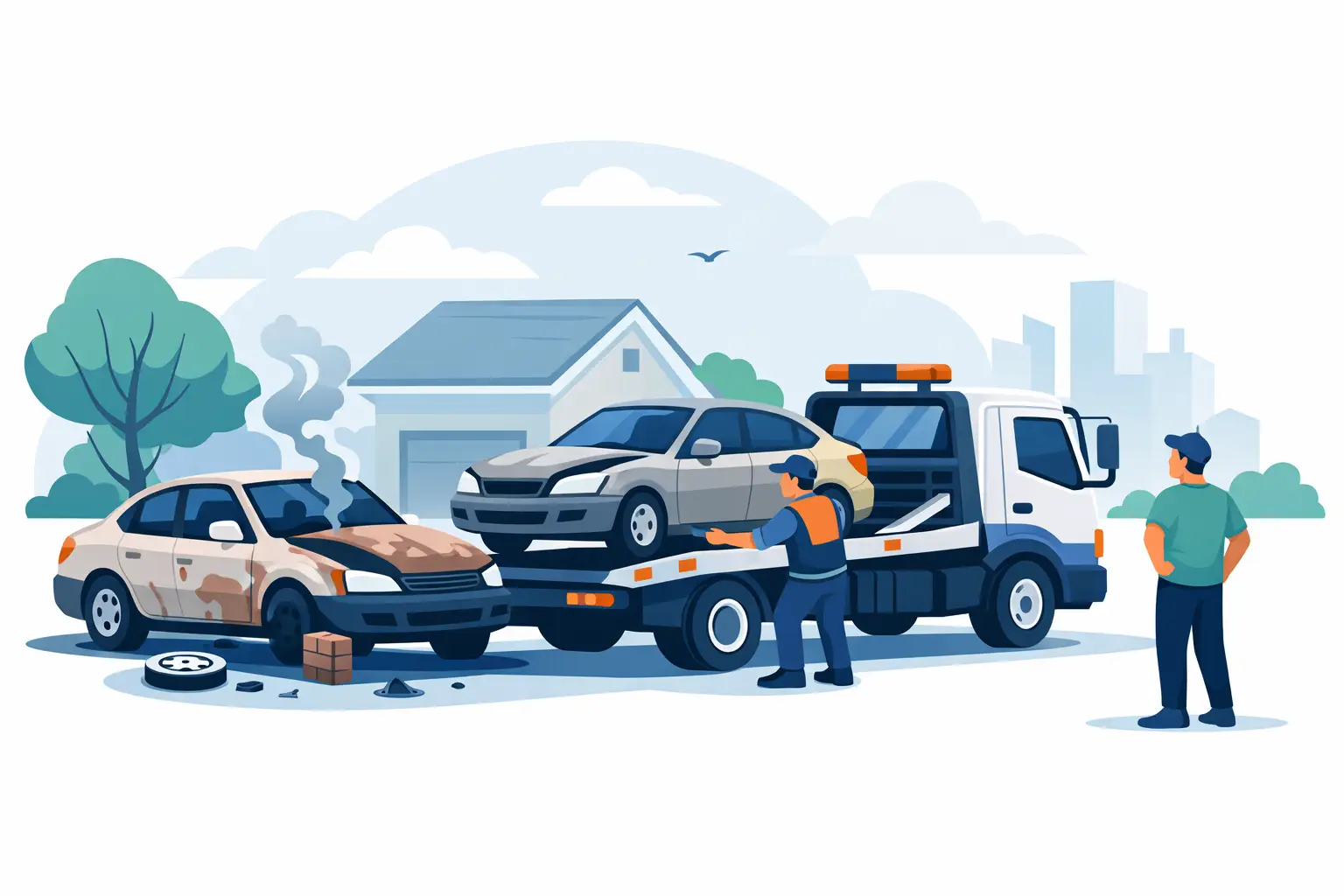
Once you have accepted a quote, you will agree a collection date, a suitable time window and the address where the vehicle is parked. Collection can usually be arranged from a home, workplace, garage, roadside location or other accessible private site. If the car is non-running, that is not normally a problem. The collection vehicle and driver are arranged with this in mind.
On the day, the driver checks the vehicle registration and its general condition against the details supplied for the quote. They will need to confirm that it is the correct vehicle and that it is safe and practical to load. Once everything matches, payment is processed by bank transfer as agreed and the vehicle is loaded for compliant recycling.
The main point is straightforward: accurate information before booking helps the appointment run quickly. A vehicle described honestly as damaged, incomplete or non-running can still be collected. Surprises at the kerbside, however, may affect the quoted price or whether the driver can safely complete the job.
A registration number and postcode are normally enough to start a quote, but it pays to mention anything that affects collection or value. Tell the team if the vehicle has accident damage, flat tyres, missing wheels, severe fire damage, no keys, a locked steering wheel or is blocked in. These details do not automatically prevent collection. They simply allow the right equipment and collection plan to be arranged.
Access matters just as much as the vehicle itself. A car on a clear driveway is usually straightforward. A vehicle on a narrow street, in an underground car park or behind another non-running car may need more planning. Let the collection team know about height restrictions, gates, tight turns, parking controls and any requirement to speak with a site manager or security desk.
If the vehicle is on a public road, make sure it is legally parked and accessible at the agreed time. Do not leave it where a recovery vehicle cannot stop safely. A quick conversation before the appointment can prevent a wasted journey and a frustrating rebooking.
You must be entitled to sell the vehicle. Have the V5C registration certificate available if you have it, as this makes the paperwork easier. If the V5C has been misplaced, do not assume collection is impossible, but say so before booking. You may be asked for photographic identification and proof of address to confirm the sale.
If the car belongs to a family member, a company or the estate of someone who has died, explain the situation in advance. Extra documents or written authority can be needed. Sorting this out before the driver arrives is quicker than trying to resolve it on the doorstep.
You do not need to wash, repair or make a scrap car presentable. In fact, spending money on a vehicle that is heading for recycling rarely makes sense. Preparation is about removing your belongings, making the vehicle accessible and keeping the handover clear.
Before collection, check the glovebox, door pockets, boot, under-seat storage, centre console and sun visors. People often leave sunglasses, paperwork, tools, house keys, parking permits and old phones behind. Remove personal documents that are not needed for the sale, including insurance papers and service records you want to keep.
Use this short appointment checklist:
If you cannot be there yourself, ask whether another adult can meet the driver on your behalf. They will need the authority and documents required to hand the vehicle over. Never leave keys and paperwork unattended unless this has been specifically agreed as part of the collection arrangement.
A clear price and payment process remove most of the worry from selling a scrap vehicle. Before your appointment, confirm the agreed amount, whether the quote relies on any condition stated by you, and the bank account into which payment will be made. Check the sort code and account number carefully when providing them.
The exact timing can depend on the collection arrangement and banking systems, but you should know the process before the vehicle is taken away. If a driver finds that the vehicle materially differs from the description – for example, it is missing major components that were included in the quote – they should explain any revised offer before collection proceeds. You are not obliged to feel rushed into a decision.
Be wary of vague pricing, pressure to accept less without a reason or requests to pay unexpected collection charges. Free collection should mean exactly that where it has been agreed. A professional service will explain the price, the paperwork and the handover in plain language.
Selling a vehicle for recycling is not only about getting it off your drive. You also need to make sure the registered keeper record is updated correctly. After the handover, notify DVLA that you have transferred the vehicle to the relevant motor trader or recycling business, following the current V5C process. This is the best way to protect yourself from future tax, enforcement or correspondence linked to the vehicle.
Keep a record of the collection date, the company details, the payment confirmation and any receipt or certificate provided. Where the vehicle is being scrapped, appropriate official disposal documentation should be handled through the authorised recycling process. If anything is unclear, ask before the vehicle leaves rather than after it has gone.
You may also need to cancel your insurance once the sale is complete. If you have paid vehicle tax in advance, check the current DVLA process for any refund that may be due. These are small final steps, but they ensure the vehicle is fully off your hands.
Life gets in the way, particularly when a broken vehicle is involved. If you need to change the date, cannot find the keys or discover that access will be difficult, contact the collection team as soon as possible. Early notice gives the best chance of moving the booking without unnecessary delay.
Weather, traffic, earlier recoveries and difficult loading jobs can occasionally affect arrival times. Collection services should keep you informed if the schedule changes. It is sensible to allow for the agreed time window rather than arranging something that requires you to leave at an exact minute.
For owners in Peterborough, Stamford, Bourne, Spalding, Wisbech, March, Huntingdon and Corby, a seven-day collection option can be especially useful when weekday commitments make a standard appointment impractical. Weekend and bank holiday availability may depend on the booking schedule, so it is worth asking when you request your quote.
The best vehicle collection appointments are not complicated. Describe the car accurately, make it reachable, keep your documents close and confirm how payment and DVLA notification will be handled. Whether the vehicle is an old runabout, an accident-damaged car or one that has been sitting unused for months, a properly arranged collection turns an awkward problem into a finished job.
Ready to get a fair price for your scrap car?
Get a Free Quote
Need scrap car collection at home? Find out how it works, what to prepare, and how to get…
Read article
Car breaker vs scrapyard - what’s the difference, and which pays more? Learn what each does and the…
Read article
Learn how to dispose seized vehicle legally in the UK, including DVLA steps, collection, paperwork, and when to…
Read article