
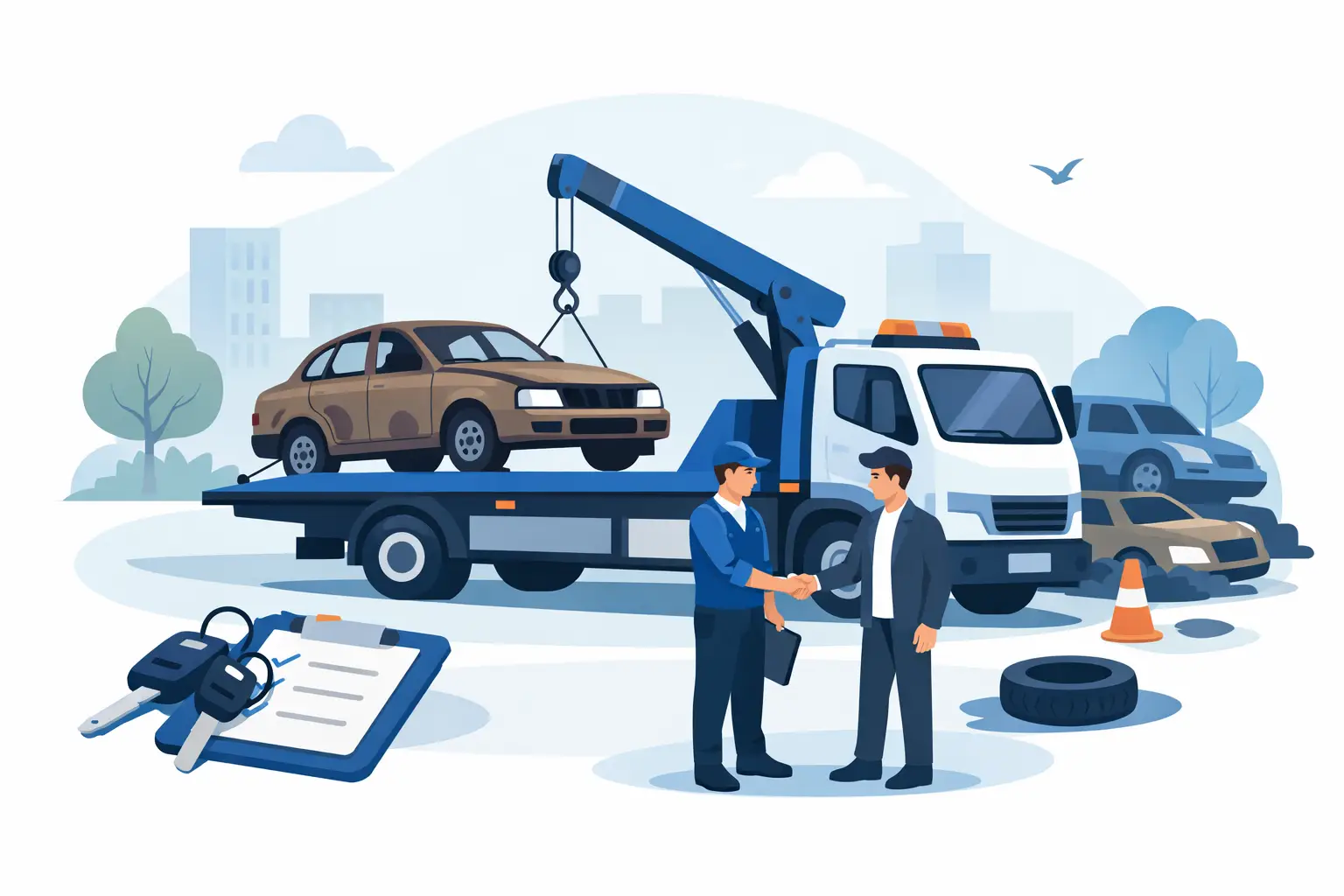
A car that will not start, has failed its MOT, or is simply taking up space on the drive usually becomes a problem faster than most people expect. That is where a free scrap car collection service makes a real difference. Instead of paying to move an unwanted vehicle or trying to arrange transport yourself, you can have it valued, collected, and processed properly with far less hassle.
For most owners, the main issue is not deciding whether the car has to go. It is working out how to get rid of it without losing time, paying recovery costs, or getting stuck with confusing paperwork. If the vehicle is non-running, accident-damaged, or no longer worth repairing, collection is often the part that matters most.
What a free scrap car collection service actually includes
A proper free scrap car collection service is more than a tow. It should cover the practical parts that usually cause stress – pricing, booking, transport, payment, and support with the official process.
In straightforward terms, you enter your registration and postcode, receive a quote, agree a collection slot, and have the vehicle removed from your home, workplace, garage, or roadside location. Once collected, the car is passed into the authorised recycling or dismantling process, and you receive payment by bank transfer.
That sounds simple because it should be. If a service starts adding unexpected transport charges, vague collection windows, or unclear payment terms, it stops being convenient very quickly.
Why free collection matters more than people think
When a car still drives, owners sometimes assume they can just drop it off somewhere. In reality, many scrap vehicles are not in a condition to be driven legally or safely. Some are uninsured, some have no valid MOT, and some have mechanical faults that make any short journey a risk.
That is where free collection changes the maths. If you had to pay for recovery, your final return could drop sharply. A car worth a modest scrap amount can stop being worth scrapping at all if transport costs are taken off the total. For non-runners, seized engines, damaged suspension, missing parts, or electrical faults, collection is not an extra benefit – it is the only practical route.
There is also the time factor. Most people who need a car scrapped want it dealt with quickly. They do not want to ring around recovery firms, compare towing rates, and then separately negotiate with a buyer. One arranged service removes all of that.
How the process usually works
The best services keep things short and clear. You request a quote with basic vehicle details, usually just the registration and postcode to start. From there, the offer is based on factors such as make, model, age, condition, weight, and demand for salvageable parts or recycled materials.
If you accept the quote, collection is booked for a suitable day. Flexible availability matters here, especially for people balancing work, school runs, or a vehicle stranded at a relative’s address. Weekend and bank holiday collections can be particularly useful when the car needs to go quickly.
On the day, the driver or collection partner arrives, checks the vehicle details, and loads it for transport. Payment is then made by bank transfer, and the scrappage paperwork is handled in line with the legal process. For the seller, that is the point of the service – one booking, one collection, and no need to organise separate steps.
What affects the price you are offered
A free scrap car collection service does not mean a fixed scrap value. Prices vary, and they should. A realistic quote depends on the vehicle itself and the market at the time.
Heavier vehicles can sometimes command stronger prices because of the metal content. Popular models may also have reusable parts that improve the overall offer. If a car is complete, accessible, and easy to collect, that can help too. On the other hand, severe damage, missing components, or difficult access can affect what is practical for a recycler to pay.
Location can play a part as well. A UK-wide network of recyclers and collection partners can often compare options more effectively than a single local yard working in isolation. That broader coverage may help secure a stronger offer, especially on vehicles with breaker value as well as scrap value.
It is worth remembering that the highest headline price is not always the best outcome. If one buyer offers more but charges for transport, delays payment, or cannot collect for several days, the better overall choice may be the service that offers a fair price and handles everything properly.
Free scrap car collection service for non-runners and damaged cars
This is where collection earns its keep. A non-running car is difficult to sell privately and awkward to move. Most buyers do not want the complication, and private sales can become a cycle of missed messages, no-shows, and offers that bear no relation to the vehicle’s real value.
A damaged car creates similar problems. Even if the engine runs, body damage, suspension issues, or deployed airbags can make it unsuitable for normal sale. Owners are then left trying to judge whether the car is repairable, whether the repair is worth the cost, and how to move it if it is not.
Scrappage is often the cleaner solution. You avoid spending money on repairs that do not add enough value back into the vehicle, and you avoid the uncertainty of selling an obviously compromised car on the open market.
The paperwork side should not be left to chance
One reason people delay scrapping a vehicle is uncertainty around the paperwork. That is understandable. Nobody wants to find out later that a car is still showing in their name or that the disposal was not handled correctly.
A professional service should make this part clear and manageable. The exact steps can depend on the vehicle’s status and where it is going in the recycling chain, but the key point is that the process should be explained properly and handled in a compliant way.
That matters for peace of mind as much as legality. Once the vehicle has gone, you want confidence that the transfer and disposal have been dealt with correctly, without you having to chase for answers.
What to check before you book
Speed is useful, but clarity matters just as much. Before confirming any booking, make sure the quote includes collection and ask whether there are any deductions for non-runners, missing keys, or difficult access. It is better to clear that up at the start than argue about it on collection day.
You should also check how and when payment is made. Bank transfer is the standard route, and it gives a cleaner, traceable transaction. Ask what information the driver will need and whether you need identification or vehicle documents ready.
Finally, think about access. If the car is blocked in, parked in a tight space, or stored off-road, say so early. A good collection team can usually work around awkward situations, but only if they know what they are arriving to collect.
Why many owners prefer an end-to-end service
There is a reason this type of service appeals to busy households and anyone dealing with a car that has become more burden than asset. It removes friction. You do not have to arrange towing, negotiate with strangers, or wonder whether the buyer will actually turn up.
That is particularly useful when the vehicle has already caused enough disruption. If the car has broken down on the drive, failed unexpectedly, or been written off economically, most people do not want a drawn-out selling process. They want a fair offer, a prompt collection slot, and payment without chasing.
That is the value of a managed process. Services such as Scrap Cars Peterborough are built around that expectation – quick quotes, free collection, fast bank payment, and support with the official side of scrappage, without making the customer do the heavy lifting.
When free collection is the best option
If the vehicle is old, unwanted, damaged, non-running, or uneconomical to repair, free collection is usually the most practical route. It saves money, saves time, and removes a lot of the uncertainty that comes with trying to sort everything yourself.
Not every car should be scrapped immediately. If it is roadworthy and holds decent resale value, a private sale might return more. But for many end-of-life vehicles, especially those that no longer drive or need expensive repairs, the fastest route is also the most sensible one.
If your car is already more inconvenience than transport, the right next step is usually the simple one – get a clear quote, book the collection, and let the vehicle go without turning it into a bigger job than it needs to be.
Leave a Reply