
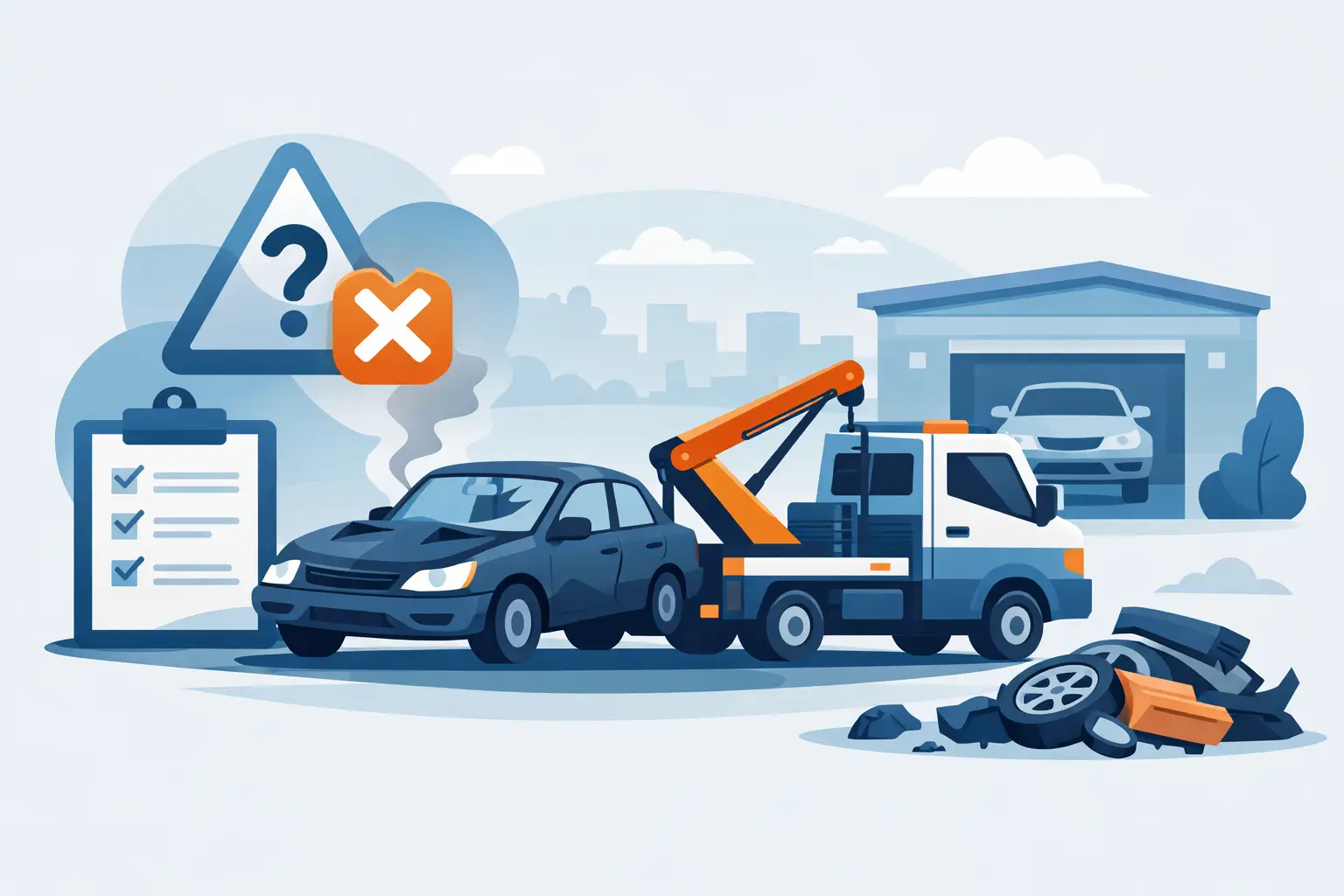
An MOT failure can turn a usable car into a problem overnight. If you need to scrap a car after a failed MOT, the main question is simple – is it worth repairing, or are you better off taking the money and moving on? For many owners, especially when the car is old, non-running or facing multiple faults, scrapping is the quickest and least stressful option.
A failed MOT does not automatically mean your car is finished. Some failures are minor and relatively cheap to put right. Others point to deeper issues such as corrosion, suspension wear, brake problems or emissions faults that can quickly push repair costs beyond the value of the vehicle. That is where a clear, practical decision matters.
When to scrap a car after a failed MOT
The tipping point is usually cost versus value. If the repair bill is close to, or more than, the car is worth once it has a fresh MOT, spending the money rarely makes sense. The same applies if the vehicle has a history of repeat failures or is starting to become unreliable in other ways.
Age matters, but only up to a point. A well-kept older car can still be worth repairing. On the other hand, even a newer vehicle can become uneconomical if it has major structural issues. Severe rust, subframe damage, engine faults, gearbox trouble and electrical problems often turn a failed MOT into a final one.
There is also the practical side. If the car has failed and cannot be driven legally away without repairs, arranging transport to a garage, waiting for work to be done and paying upfront can be more hassle than the car is worth. If you are already thinking about replacing it, scrapping may be the cleaner option.
Repair it or scrap it after a failed MOT?
This is where being realistic saves money. Start with the MOT failure sheet and look at the advisories as well as the actual fails. A car may only fail on two items, but if there are several advisories for tyres, corrosion, exhaust wear or suspension play, more bills may be coming soon.
If the garage quotes a modest amount and the car is otherwise dependable, repairing it can still be the right call. But if you are looking at a long list of work, plus the risk of extra faults being found once repairs begin, scrapping becomes a sensible route.
A useful rule is this: if the cost of repair feels hard to justify before you even start, it probably is. Many owners hold on because they have recently spent money on tyres, servicing or a battery. That is understandable, but past spending should not decide what you do next. The better question is what gives you the best result from today.
What affects scrap value after an MOT failure
A failed MOT does not mean your car has no value. Scrap prices still depend on several factors, and some vehicles are worth more than owners expect.
The biggest factor is usually weight. Larger vehicles often return more because they contain more recyclable material. Make, model and age also play a part, as does whether the vehicle is complete. If catalytic converters, wheels or other major items are missing, the value can drop.
Condition matters too, but not always in the way people think. A non-runner can still have a decent scrap value if it is complete and easy to collect. Likewise, a car with serious body damage may still attract a fair offer. What tends to lower value is when the vehicle is incomplete, heavily stripped or difficult to access.
Current market demand also shifts prices. Metal values change, and some models attract stronger offers than others. That is why a quick quote is usually the fastest way to see where you stand rather than guessing from the MOT result alone.
Can you drive a car after it fails its MOT?
This is where many owners get caught out. A failed MOT does not automatically make the car illegal in every situation, but it depends on the fault and whether the vehicle is still roadworthy. If the MOT has expired and the car has failed, driving it can put you at risk unless you are taking it to a pre-booked test or repair appointment and the vehicle is still safe to drive.
If the failure includes dangerous defects, you should not drive it. In practical terms, once a car has failed on serious items such as brakes, tyres, steering or structural corrosion, collection is usually the safer and easier route. It removes the risk of arranging transport yourself and avoids any confusion over whether the vehicle should still be on the road.
Paperwork to sort before scrapping
The process is usually straightforward, but getting the paperwork right matters. In most cases, you will need the V5C logbook if you have it. If you cannot find it, you can still usually scrap the car, but you should say so upfront.
You will also want to remove all personal belongings from the vehicle before collection. Check the glovebox, boot, door pockets and under the seats. It sounds obvious, but plenty of people leave paperwork, sunglasses, chargers and even house keys behind in cars they no longer use.
Once the vehicle is collected, make sure the transfer is handled properly and keep any confirmation for your records. A compliant service should guide you through that so you are not left wondering what happens next.
Why scrapping is often easier than selling privately
Trying to sell a failed MOT car privately sounds fine until the messages start. Buyers often want to negotiate hard, ask if it can be driven home, or expect you to know every mechanical detail. If the car is off the road, you may also need to deal with viewings at home and arrange recovery if someone actually buys it.
Scrapping cuts through all of that. You get a price based on the vehicle as it is, collection is arranged, and the transaction moves quickly. For owners who just want the car gone without extra delay, that simplicity matters as much as the payment.
This is especially useful if the vehicle is taking up space on a drive, stuck at a garage or parked somewhere inconvenient. In those situations, waiting around for a private buyer often costs more in time and frustration than it saves.
How the collection process usually works
If you decide to scrap a car after a failed MOT, the process should be simple. You provide the registration and postcode, receive a quote, agree a collection slot, and the vehicle is picked up from your home, workplace or garage. Payment is then made by bank transfer, and the paperwork is completed properly.
That matters even more when the car will not start or should not be driven. In Peterborough and nearby areas, having free collection available seven days a week can make the difference between solving the problem quickly and letting it drag on for another fortnight.
Speed is useful, but so is clarity. A good service will tell you exactly what is needed, confirm the collection details and keep the process moving without endless phone calls.
Common situations where scrapping makes sense
Some MOT failures are clear turning points. If your car has failed on corrosion underneath, needs expensive emissions work, or has a clutch or engine issue on top of the test failure, the numbers often stop adding up. The same goes for cars that have been sitting for months and then fail as soon as you try to put them back on the road.
It also makes sense when you simply do not want to invest any more money into the vehicle. That is a valid decision. Not every car is worth one more repair, one more test fee and one more round of hoping it passes next time.
For local owners who want a fast, no-fuss option, Scrap Cars Peterborough offers the kind of straightforward quote-and-collection service that suits this exact situation. The aim is not to complicate the choice – it is to make it easy to act on it.
If your car has failed its MOT and the repair bill feels like money you will not get back, trust that instinct. A clean break, a fair price and a booked collection can be far better than throwing more cash at a car that is already telling you it is done.
Leave a Reply