
June 22, 2026
Scrap Cars Wisbech – Fast Quotes and Collection
Need scrap cars Wisbech collection fast? Get a fair quote, free pickup, quick bank payment and help with…
Read article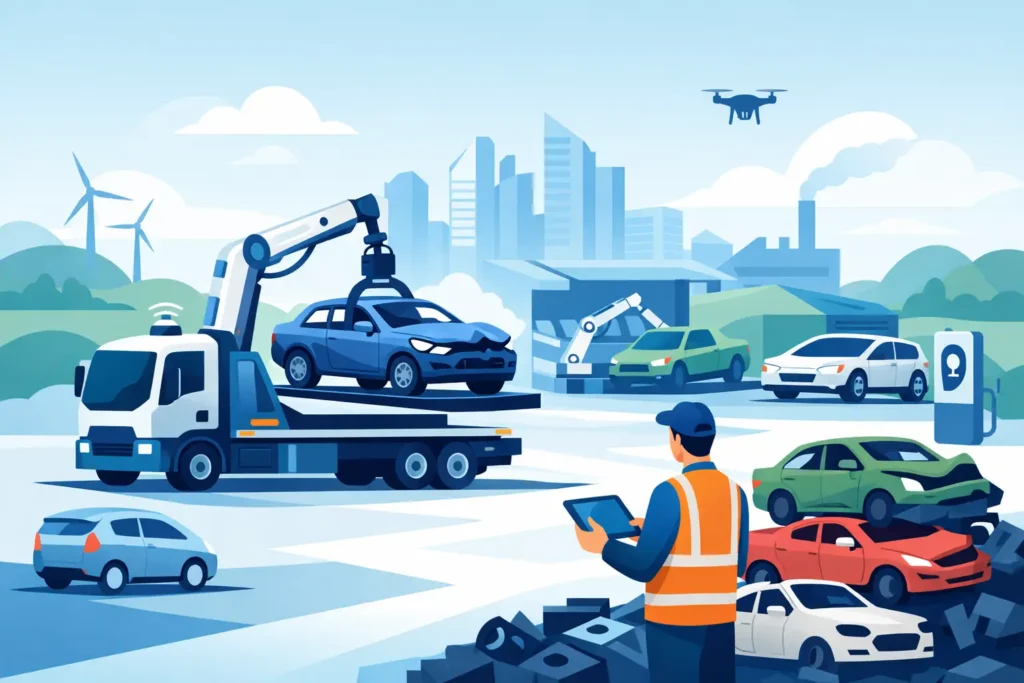
A car that will not start on the drive can become an urgent problem quickly. It takes up space, may be costing money to insure or keep taxed, and is rarely worth the effort of trying to sell privately. The future of scrap car collection is about removing more of that stress: faster quotes, better collection planning, clearer paperwork and a more responsible route for every end-of-life vehicle.
For drivers in Peterborough and the surrounding area, the biggest change will not be a complicated new process. It should be a simpler one. You enter your registration and postcode, receive a realistic quote, choose a collection time and receive payment by bank transfer when the vehicle is collected. Behind that straightforward experience, though, the industry is changing fast.
Older vehicles are becoming more complex. A typical end-of-life car may contain advanced electronics, safety systems, batteries, sensors and a wider mix of materials than cars built a decade or two ago. Electric and hybrid vehicles add high-voltage battery systems to the picture. That means collection and recycling must be handled with greater care, by properly equipped businesses and through compliant channels.
At the same time, motorists expect the same speed and visibility they receive from other local services. Waiting days for someone to confirm a collection, wondering whether a quote will change on arrival, or chasing paperwork after the vehicle has gone is no longer acceptable. A reliable service needs to give clear answers before collection, not after it.
Environmental standards will continue to raise expectations too. The aim is not simply to remove an unwanted car from a property. It is to make sure it enters the correct recycling route, with fluids, batteries and materials dealt with safely and legally.
The future of scrap car collection will rely increasingly on accurate vehicle data. Registration look-ups already allow collectors to identify a vehicle’s make, model, age and basic specification quickly. As systems improve, quotes can better reflect the details that genuinely affect value, such as vehicle weight, condition, location, whether it is complete and current market demand for recyclable materials.
That does not mean every online quote will be identical to the final payment in every situation. A car described as complete but found to be substantially stripped, severely fire-damaged or missing key components may need reassessment. The fair approach is to explain what affects the offer from the start and to ask the right questions before booking.
For most owners, a registration, postcode and honest description will be enough to get the process moving. This is particularly useful when a vehicle is non-running, has failed its MOT, has been damaged in an accident or has been parked for months. There should be no need to arrange a tow or attempt a risky journey to dispose of it.
Collection is where good service matters most. A vehicle may be on a narrow residential road, at a workplace, in a garage, or on a driveway where it cannot be moved. The next generation of collection services will use better scheduling and route planning to give owners more realistic arrival windows and reduce unnecessary delays.
For the customer, the result should be practical: a suitable vehicle arrives, the collection is completed safely, and payment is arranged promptly. Seven-day availability matters because a broken vehicle rarely becomes convenient between nine and five. Weekend and bank holiday collection options can make a genuine difference to people balancing work, school runs and family commitments.
There will still be occasions where access needs to be checked in advance. If a car is locked behind another vehicle, has flat tyres, is in a restricted parking area or cannot be reached by a recovery vehicle, say so when booking. A few clear details early on help prevent a wasted visit and keep collection on track.
Electric and hybrid cars will be one of the clearest changes in the years ahead. Their batteries are valuable, but they also require specialist handling, transport and treatment. A damaged electric vehicle is not simply another collection job. Its condition, battery location and any signs of impact or heat damage can affect how it is recovered.
Owners do not need to become technical experts before arranging collection. They do, however, need to tell the collector that the vehicle is electric or hybrid and disclose accident damage where relevant. This allows the right arrangements to be made and helps protect everyone involved.
The same principle applies to modern petrol and diesel cars. More technology can mean more questions, but it should never mean more hassle for the person selling the vehicle. A professional collection service handles the operational side while keeping the customer informed in plain English.
Paperwork is often the part people worry about most, especially when the car no longer drives and they want it gone quickly. The future is likely to bring more digital checks, quicker confirmation and fewer unclear handovers. But the basic responsibility remains the same: the registered keeper should make sure the vehicle’s transfer or disposal is reported correctly to DVLA.
Keep your vehicle details available and check what documents or identification are needed before collection. If you have the V5C log book, have it ready. If it is missing, do not assume collection is impossible, but raise it at the quote stage so the process can be explained properly.
When a vehicle reaches an authorised treatment facility for scrapping, the official process should provide the relevant confirmation of destruction where applicable. Retaining records gives you reassurance that the vehicle has been handled correctly. It also helps avoid the worry of receiving future correspondence connected to a car you no longer own.
Payment will continue to move towards clear bank transfers rather than cash. That is safer for sellers, provides a record of the transaction and supports compliance with scrap metal rules. The best experience is simple: agree the price, complete the handover, receive payment and retain the confirmation.
Scrap value will always be influenced by metal markets, vehicle size, collection costs and condition. A larger vehicle may contain more recoverable material, while a complete vehicle will generally have a different value from one that has been heavily damaged or has major items missing. There is no honest fixed price for every car.
What is changing is the ability to recover more materials responsibly. Steel remains a major part of the equation, but aluminium, copper, glass, plastics and battery materials all matter. As recycling methods improve and manufacturers use more recyclable materials, end-of-life vehicles can become a more useful source of raw materials rather than a disposal problem.
That is good news for the environment, but it also reinforces why compliant collection matters. The highest offer is only worthwhile when it comes with proper collection, traceable payment and the right paperwork. A vague promise, an unexplained reduction on arrival or a request for cash should make any seller pause.
The future does not require motorists to wait for some distant technology before getting a good service. The standard to look for now is clear communication, a fair quote based on the information provided, free collection where offered, prompt bank payment and support with the official process.
At Scrap Cars Peterborough, that practical approach means helping local owners move an unwanted vehicle on without arranging transport themselves. Whether the car is outside a home in Peterborough, stranded after a breakdown or sitting unused in a nearby town, the priority is to make disposal straightforward and properly managed.
Before requesting a quote, gather the registration, postcode, a clear description of the vehicle’s condition and details of any access issues. Mention if it is non-running, accident-damaged, electric or hybrid. The more accurate the information, the more confidently a collector can quote and plan the job.
The industry will keep becoming more digital, more specialised and more focused on responsible material recovery. For car owners, the best part is much simpler: when an old vehicle reaches the end of its road, disposing of it should feel like one less problem, not another job to manage.
Ready to get a fair price for your scrap car?
Get a Free Quote
Need scrap cars Wisbech collection fast? Get a fair quote, free pickup, quick bank payment and help with…
Read article
Scrap car market trends affect what your vehicle is worth. See what drives prices, demand and timing so…
Read article
Learn how to dispose seized vehicle legally in the UK, including DVLA steps, collection, paperwork, and when to…
Read article