
May 19, 2026
Can I Scrap a SORN Car? Yes – Here’s How
Can I scrap a SORN car? Yes. Learn the rules, paperwork, collection process, and how to scrap a…
Read article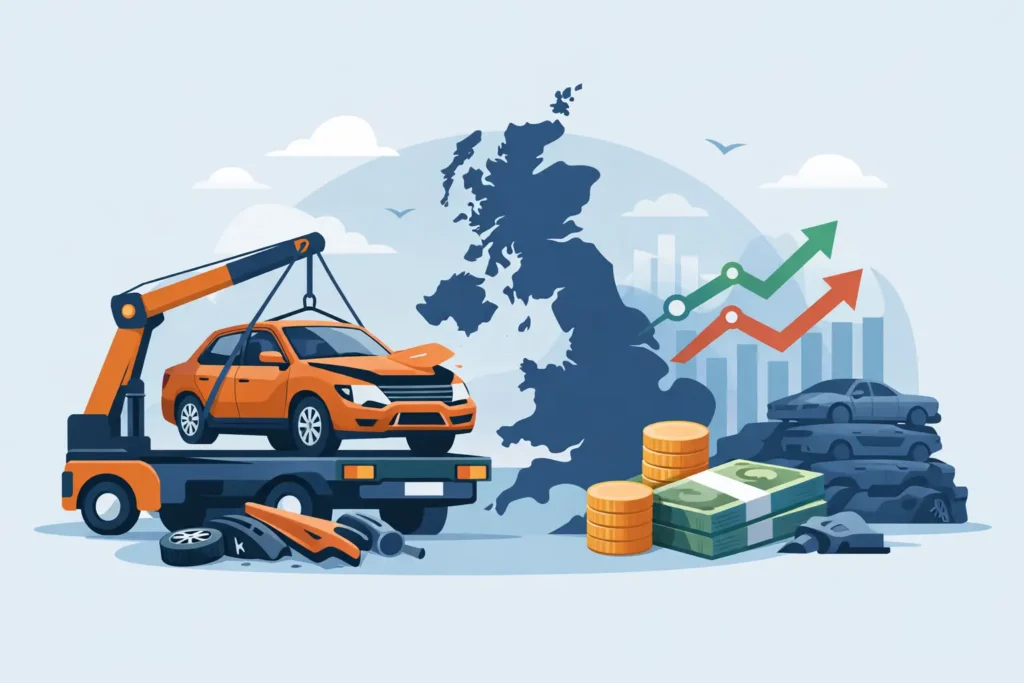
One week a non-runner looks barely worth collecting. The next, it brings a noticeably stronger offer. That is how scrap car market trends work in practice – and if you are trying to get rid of an old, damaged or end-of-life vehicle, those shifts matter more than most people realise.
For private sellers, the main question is simple: why does one car attract a better price than another, and why can values change so quickly? The answer usually comes down to a mix of metal prices, parts demand, recycling capacity, export activity, fuel type, and how easy the vehicle is to collect and process. If you understand those moving parts, you are in a better position to judge when to sell and what kind of quote is realistic.
When people hear the phrase, they often think only about scrap metal. That is part of it, but not the full story. A scrap car is valued as a combination of recyclable materials, reusable components, current breaker demand and processing costs.
That means two vehicles of a similar age can produce very different quotes. A popular model with strong demand for tested used components may achieve more than a less common vehicle, even if both are in poor condition. Equally, a heavier car may carry more metal value, but that does not always guarantee the best return if collection is awkward or disposal costs are higher.
The market is also local as well as national. In and around Peterborough, access to recyclers, transport routes and collection availability can affect how efficiently a vehicle moves through the system. Efficiency matters because lower handling costs can support a stronger offer.
The strongest force behind most short-term changes is the value of scrap metal. Steel remains the backbone of most end-of-life vehicle pricing, so when commodity prices move up or down, scrap values tend to follow. Aluminium and catalytic converter content can also influence pricing, especially on certain makes and models.
But the metal price is only one part of the quote. Salvageable parts still matter. If a car has a sought-after engine, gearbox, alloy wheels or electronic modules, that can improve the figure. This is why accident-damaged vehicles sometimes perform better than owners expect. If the damage is limited to one area and key components are intact, the car may hold more value than a complete non-runner with widespread mechanical failure.
Mileage, condition and completeness all play a role too. A vehicle missing major parts is usually worth less because the recycler loses potential resale and recovery value. If the catalytic converter has already gone, for example, that can reduce the offer straight away. The same applies if the car has been stripped or left standing so long that recovery is more difficult.
Not all vehicles move with the market in the same way. Small petrol cars often remain steady because they are common, easy to process and relatively cheap to move. Older diesel cars are more mixed. Some still have worthwhile metal and parts value, but demand can be softer where age, emissions concerns or low resale appeal reduce interest.
Vans can be stronger than many owners expect because they tend to be heavier and often contain more recoverable metal. Larger 4x4s can also attract decent quotes for the same reason, though collection and handling costs can eat into that advantage if access is poor.
Hybrid and electric vehicles are changing the picture. They bring new dismantling requirements, battery handling considerations and a different value structure. In some cases, specialist demand can support pricing. In others, the extra processing complexity means values are less predictable. This is one of the areas where the market is still finding its feet.
Timing does matter, but not in a magic formula sort of way. There is no perfect month that guarantees the best scrap value every year. Still, some patterns do show up.
When metal markets are strong, quotes tend to firm up quickly. When recyclers are dealing with high processing volumes, values can either rise because demand is healthy or soften because yards are full and transport capacity is stretched. It depends on what is driving the volume.
Seasonal pressures can affect logistics too. Bad weather, holiday periods and demand for collection slots can all influence how smoothly a vehicle is moved. If a car is taking up space on your drive, blocking access or at risk of further deterioration, waiting for a slightly better market can backfire. A delayed sale only makes sense if the likely gain outweighs the added inconvenience and risk.
A common mistake is assuming every scrap car is priced only by weight. That is rarely true. Another is comparing quotes without checking what is actually included. A higher figure on paper may not look so strong once collection charges, admin delays or awkward payment terms appear.
There is also the issue of roadworthiness. If a vehicle does not start, has accident damage, flat tyres or steering problems, collection becomes a bigger part of the job. Sellers sometimes expect a quote based on a drive-in vehicle, then feel disappointed when the reality is different. Accurate details help avoid that.
Paperwork is another area people underestimate. A compliant sale is not just about getting the car removed. You need the process handled properly so the vehicle leaves your name at the right point and the disposal trail is clear. Speed is useful, but proper handling matters just as much.
For most private owners, the practical impact of scrap car market trends is straightforward. First, quote ranges can vary more than expected. Second, convenience has real value. A fair quote with free collection, quick bank payment and help with the paperwork is often the better outcome than chasing a slightly higher number with more hassle attached.
This is especially true for non-runners and damaged cars. Selling privately can be slow, uncertain and full of time-wasting messages. If the car is beyond economical repair, the strongest market move is usually not waiting for a private buyer who never appears. It is getting a realistic price from a professional service that can actually collect.
In places such as Peterborough and the surrounding area, local coverage can make a noticeable difference. If collection can be arranged quickly, including weekends, sellers avoid storage issues, towing costs and the headache of trying to move an unroadworthy vehicle themselves.
The best approach is practical rather than speculative. Start by getting an up-to-date quote based on the vehicle as it actually is, not as it was six months ago. Be honest about damage, missing parts and whether it starts. That usually leads to a firmer offer and fewer surprises on collection day.
If you receive more than one quote, compare the full service, not just the number. Check whether collection is included, how quickly payment is made, and whether the paperwork support is clear. A strong service saves time and removes risk, which has value in its own right.
If the market is rising and your car is safe to hold for a short period, waiting may make sense. If the vehicle is deteriorating, leaking, taking up space or causing you stress, there is rarely much to gain by dragging it out. Market trends matter, but so does your situation.
The market is likely to stay changeable. Metal prices remain sensitive to wider economic conditions, energy costs affect recycling operations, and shifts in the UK car parc will continue to alter demand for parts and dismantling capacity. The growth of hybrid and electric vehicles will add another layer over time, especially as more of those vehicles reach end-of-life.
For sellers, that means one thing: flexibility will remain important. The strongest outcomes usually come from acting when the price is fair and the service is ready, rather than trying to second-guess every market swing.
At Scrap Cars Peterborough, that is why the focus stays on quick quotes, free collection and a straightforward process that gets unwanted vehicles gone without wasting your week. Market conditions will always move up and down. The value of a simple, properly managed service does not.
If your car is old, damaged, non-running or simply no longer worth keeping, the smart move is not to obsess over every price fluctuation. It is to get a current quote, see where the market stands today, and make the job easy on yourself.
Ready to get a fair price for your scrap car?
Get a Free Quote
Can I scrap a SORN car? Yes. Learn the rules, paperwork, collection process, and how to scrap a…
Read article
Learn how the future car recycling process will handle EVs, batteries, plastics and data, and what it means…
Read article
Looking for the best options for non runners? See how to sell, scrap or remove a broken car…
Read article